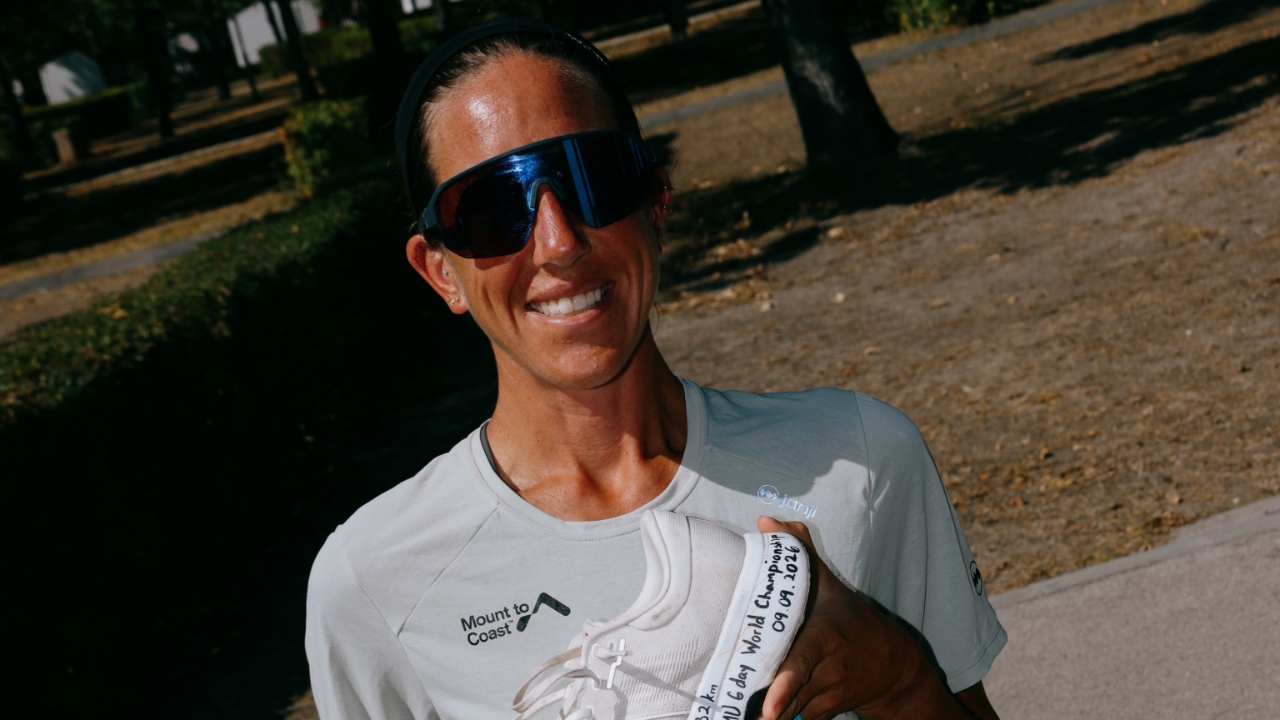


Megan Eckert has become the first woman in history to run more than 1,000 kilometres in six days after producing a record-breaking performance at the EMU-GOMU 6-Day World Championships.
The American covered 1,024.319km – 636.482 miles – during 144 hours of racing around a short loop in Balatonfüred, Hungary.
That represented a new women’s six-day world record and also took Eckert beyond the outright American record previously held by Joe Fejes.
And Eckert didn’t just rewrite the record books. Her distance was enough to win the entire race outright, finishing more than 124km ahead of men’s champion Simen Holvik, who completed 899.996km.
As usual, the record performances remain subject to ratification.
Beyond 1,000km
Eckert arrived in Hungary as the existing women’s world-record holder, having covered 970.685km – 603.155 miles – at the 2025 GOMU World Championships in France.
That performance made her the first woman to surpass 600 miles in a six-day race, but she raised the standard by another 53.634km in Hungary.
Her final total was also 48.666km farther than the outright US record of 975.653km set by Fejes at the same event in 2015, albeit on a different course.
Eckert moved ahead of her own world-record schedule within the opening six hours and was beyond Fejes’ American-record pace after around 30 hours.
She reached her previous six-day best after 135 hours and 38 minutes, leaving more than eight hours in which to extend the women’s world record.
Just 32 minutes later, Eckert surpassed Fejes’ mark to become the outright American six-day record holder.
Another historic moment followed when she reached 1,000km after 139 hours, 55 minutes and 46 seconds.
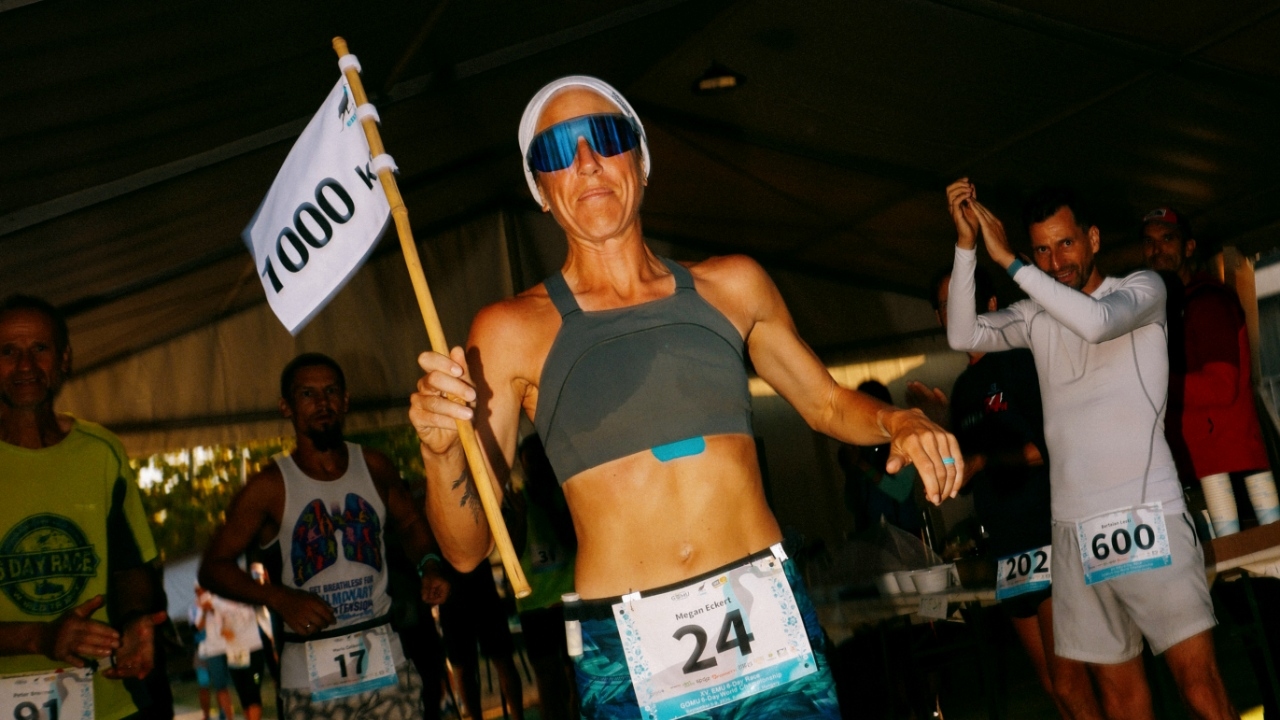
With more than four hours still remaining, Eckert continued accumulating distance until the full 144 hours had elapsed.
“It’s the longest and shortest thing,” she said after the race.
“It’s unbelievable. How do you describe a six-day? There’s so much that goes on, so many ups and downs.
“But we had a good time! It’s going to take a long time to process.”
Remarkable consistency
Eckert averaged 7.113 kilometres per hour – or 4.42mph – across the entire six days.
That calculation includes every minute spent sleeping, eating and attending to the physical or logistical problems presented by a race lasting 144 consecutive hours.
By the halfway point at 72 hours, Eckert had completed 550.596km.
That narrowly surpassed the previous women’s 72-hour best of 550.542km recorded by fellow American Camille Herron in 2024.
The 72-hour distance is recognised by the Global Organization of Multi-Day Ultramarathoners, although it is not an official International Association of Ultrarunners world-record discipline.
Eckert had reached approximately 667km after 90 hours and 797km at the three-quarter mark after 108 hours.
She then maintained her progress deep into the closing stages, despite daytime heat and the extreme fatigue accumulated over more than four days of almost continuous movement.
Her strategy included two-hour periods of sleep and shorter 15-minute naps, with stops otherwise kept to a minimum.
That consistency was particularly significant during the final 36 hours, when performances in six-day races often begin to slow dramatically.
Eckert had covered around 884km with 21 hours remaining and continued increasing her advantage over both her previous world-record schedule and Fejes’ American-record pace.
How does a six-day race work?
Rather than following a traditional point-to-point ultramarathon route, six-day races ask competitors to cover as much distance as possible within 144 hours.
The clock never stops, leaving athletes to decide when and for how long to sleep, eat, change clothing or address problems such as blisters, muscle pain and stomach issues.
The 15th edition of the EMU 6-Day Race was held on a flat, fully paved 898.2-metre circuit and also incorporated the 2026 GOMU World Championships.
Competitors repeatedly lapped the course, changing direction at designated intervals, with Eckert completing 1,140 full laps before additional distance from her final partial lap was measured.
The event holds an IAU Gold Label and has been the setting for several previous record-breaking performances.
From a missed 5K to world records
Eckert works as a middle-school special education and mathematics teacher in Santa Fe, New Mexico, while also coaching high-school track and cross country.
Remarkably, Hungary represented only her third attempt at the six-day discipline.
Her journey into running had begun far more tentatively. Eckert trained for a 5K in 2008 but was so worried about failing that she did not make it to the start line.
She returned to running several years later after meeting her future husband, Joe, initially completing a half marathon before being drawn towards progressively longer challenges.
Eckert made her six-day debut at the 2024 Six Days in the Dome, where she covered approximately 526 miles and won the event outright.
Later that year, she set a women’s backyard ultra world best at Big Dog’s Backyard Ultra, completing 87 successive hourly loops and more than 362 miles.
Her breakthrough six-day world record followed in France in 2025, when she became the first woman to pass 600 miles in the discipline.
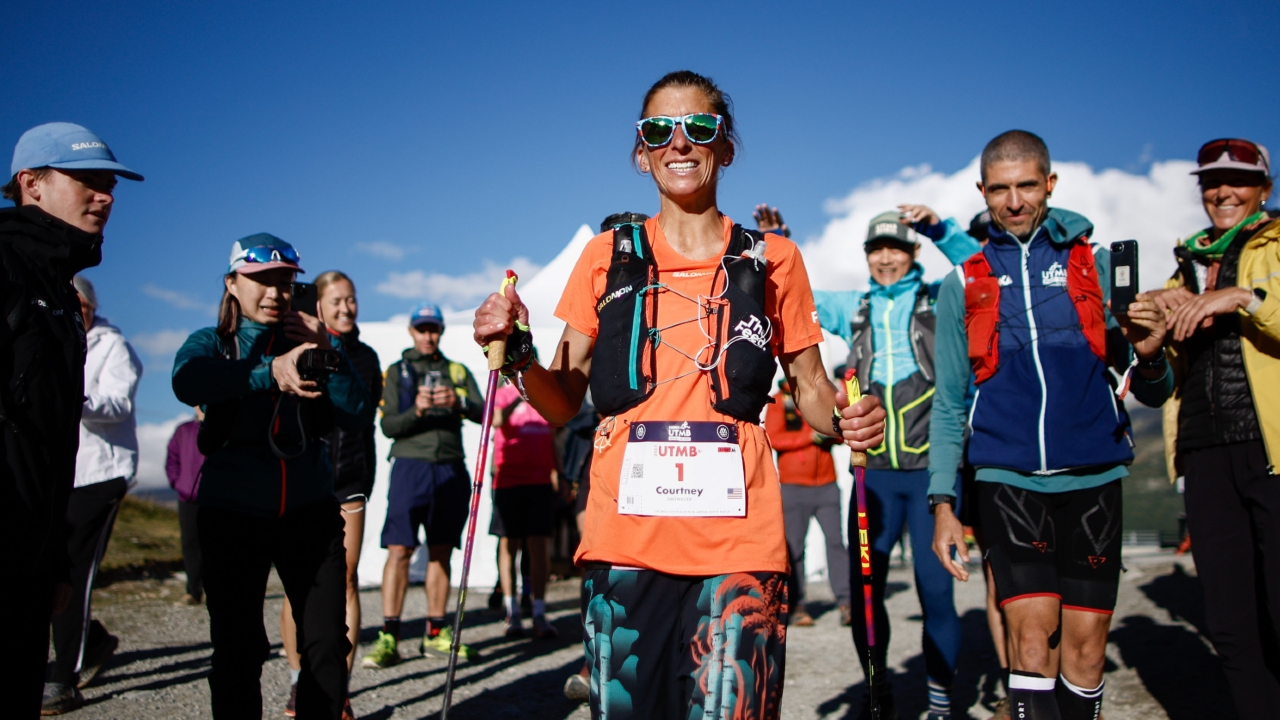
Eckert has also demonstrated her ability away from short-loop events. She finished third behind Rachel Entrekin and Courtney Dauwalter at the Cocodona 250 earlier this year before winning the Vermont 100 Mile.
But her performance in Hungary established an entirely new benchmark.
Eckert became the first woman to run beyond 1,000km in six days, surpassed every previous American athlete over the duration and defeated the entire World Championship field.