
Foot strength affects running performance by helping the foot control movement, support the arch, stabilize each landing, and create a firm base for pushing away from the ground. The foot contains numerous muscles, tendons, ligaments, bones, and joints that work together during every stride. Some muscles are located within the foot, while larger muscles in the lower leg also control the foot and ankle. Strong feet do not automatically make a runner faster. Running performance still depends heavily on aerobic fitness, training consistency, running economy, strength, recovery, and appropriate pacing. However, the feet are the body’s direct contact point with the ground. Improving their ability to tolerate and control repeated loading can support stable, efficient running, particularly as mileage, speed, hills, or technical terrain increase.

In Short
- Foot muscles help stabilize the foot during landing.
- Strong feet contribute to arch control.
- The foot helps transfer force between the body and ground.
- Foot strength works together with calf and ankle strength.
- Stronger feet may improve control on uneven surfaces.
- Foot fatigue can affect movement during longer runs.
- Foot strength alone will not make a runner faster.
What Does Foot Strength Mean?
Foot strength is the ability of the muscles controlling the foot to produce and resist force. This includes small intrinsic muscles located within the foot as well as muscles originating in the lower leg that act on the foot and ankle.
These muscles help control:
- The arch.
- Toes.
- Ankle position.
- Foot stability.
- Movement during landing.
- Push-off.
The foot is not supposed to remain completely rigid during running. It changes shape as it accepts load and then becomes more stable as you move toward push-off. Foot strength helps control this process rather than preventing movement altogether.
Strong Feet Help Control Each Landing
Running repeatedly places your body on one foot at a time. When your foot contacts the ground, it needs to tolerate load while your body continues moving forward. Runners naturally differ in:
- Anatomy
- Foot strike
- Pronation
- Stride length
- Movement patterns
The wider principles in running form tips for beginners are useful because effective running technique involves the whole body rather than one isolated part of the foot. Foot strength should support natural movement, not force every runner into the same gait.
Foot Strength Supports the Arch
The arch of the foot is dynamic. It can change shape under load and contribute to the way the foot stores, transfers, and manages forces while running. Muscles within the foot help support this structure. A stronger foot may be better able to maintain control as running duration increases, but runners should not assume that a lower arch automatically means weak feet or poor running performance. Foot shape varies naturally. The goal of strengthening is to improve capacity and control, not to create a specific-looking arch.
Strong Feet Work With the Calves and Ankles
The foot does not function independently.
- Your calves
- Achilles tendon
- Ankle
- Foot work
together during stance and push off. For this reason, a complete strengthening program should not focus only on small toe exercises. Calf raises, single leg exercises, and other lower leg strength work can complement direct foot training. The principles behind what strength routine should runners do to stay injury-free are relevant because running strength should address the complete movement chain.
Foot Strength Can Support Force Transfer
During running, the foot needs to adapt when it lands and then provide a stable platform as you push away from the ground. This transition contributes to effective force transfer. That does not mean stronger feet automatically produce faster race times. Speed depends on many factors. Improving how to improve running pace requires appropriate:
- Endurance
- Faster training
- Running economy
- Recovery
- Pacing
rather than relying on foot exercises alone. Foot strength is one supporting component.
Foot Fatigue Matters During Long Runs
The feet perform thousands of loading cycles during longer runs. As fatigue develops, some runners notice that their feet feel less stable, their toes work harder, or their overall running form becomes less controlled. This can be particularly noticeable when training volume increases. Developing endurance through how to run longer distances without burning out requires gradual progression across the entire body, including the tissues of the feet and lower legs. Foot strength training may improve local capacity, but running volume still needs to increase progressively. No exercise completely protects the feet from an excessive jump in workload.
Trail Running Places Extra Demands on the Feet
Uneven surfaces require constant adjustments.
- Rocks
- Roots
- Slopes
- Loose ground
- Changing camber
alter where and how the foot contacts the ground. Foot and ankle strength contribute to controlling these changes. Trail runners also need strength higher up the body, particularly around the calves, knees, hips, and trunk. Improving how can you improve stability while trail running therefore involves more than strengthening the feet. Vision, balance, coordination, terrain experience, and whole body strength all contribute.
Foot Strength May Support Running Economy
Running economy describes how much energy a runner requires to maintain a given speed. Strength and stiffness throughout the lower limb can influence how efficiently forces are managed during running. The foot contributes to this system, but it should not be treated as a single shortcut to better running economy. A runner with strong feet but poor aerobic conditioning will not suddenly become highly efficient. Likewise, improving foot strength will not compensate for excessive training fatigue. Think of it as one piece of the larger system that supports efficient movement.
Does Foot Strength Prevent Injuries?
Strong feet may help runners tolerate loading, but no strengthening routine guarantees injury prevention.
Running injuries can involve:
- Sudden mileage increases.
- Excessive intensity.
- Previous injuries.
- Inadequate recovery.
- Rapid changes in terrain.
- Changes in footwear.
- Individual biomechanics.
- Insufficient tissue capacity.
The principles in how to avoid running injuries as mileage increases remain important even if you regularly strengthen your feet. A stronger foot can still become overloaded. Training progression matters.
Weak Feet Are Not the Only Cause of Foot Pain
Foot pain does not automatically mean the muscles are weak. Pain can have many causes, and different conditions require different management. Simply performing more foot exercises can make some problems worse if the tissue is already irritated. Persistent, worsening, or recurrent pain deserves appropriate assessment. This is particularly important if pain affects normal walking, changes your running gait, or prevents you from completing normal training. Do not continue increasing strengthening exercises because you assume soreness always means the foot is adapting.
How Can Runners Strengthen Their Feet?
Foot exercises can be simple.
Useful options may include:
- Short-foot exercises.
- Controlled toe raises.
- Toe spreading.
- Single leg balance.
- Calf raises.
- Single leg calf raises.
- Controlled barefoot walking.
- Balance exercises on stable surfaces.
Quality matters more than completing large numbers of repetitions.
Running Itself Strengthens the Feet
Do not overlook the training effect of running. Every run loads the feet repeatedly. As your running volume progresses, the tissues of the foot adapt alongside the rest of the body, provided the increase is manageable. This is why adding a large foot strength routine at the same time as a major mileage increase may be unnecessary. The guidance in how to increase running volume without getting injured applies to additional strength work as well. New exercises create training stress and need recovery. Add them gradually rather than introducing everything at once.
What About Barefoot Running?
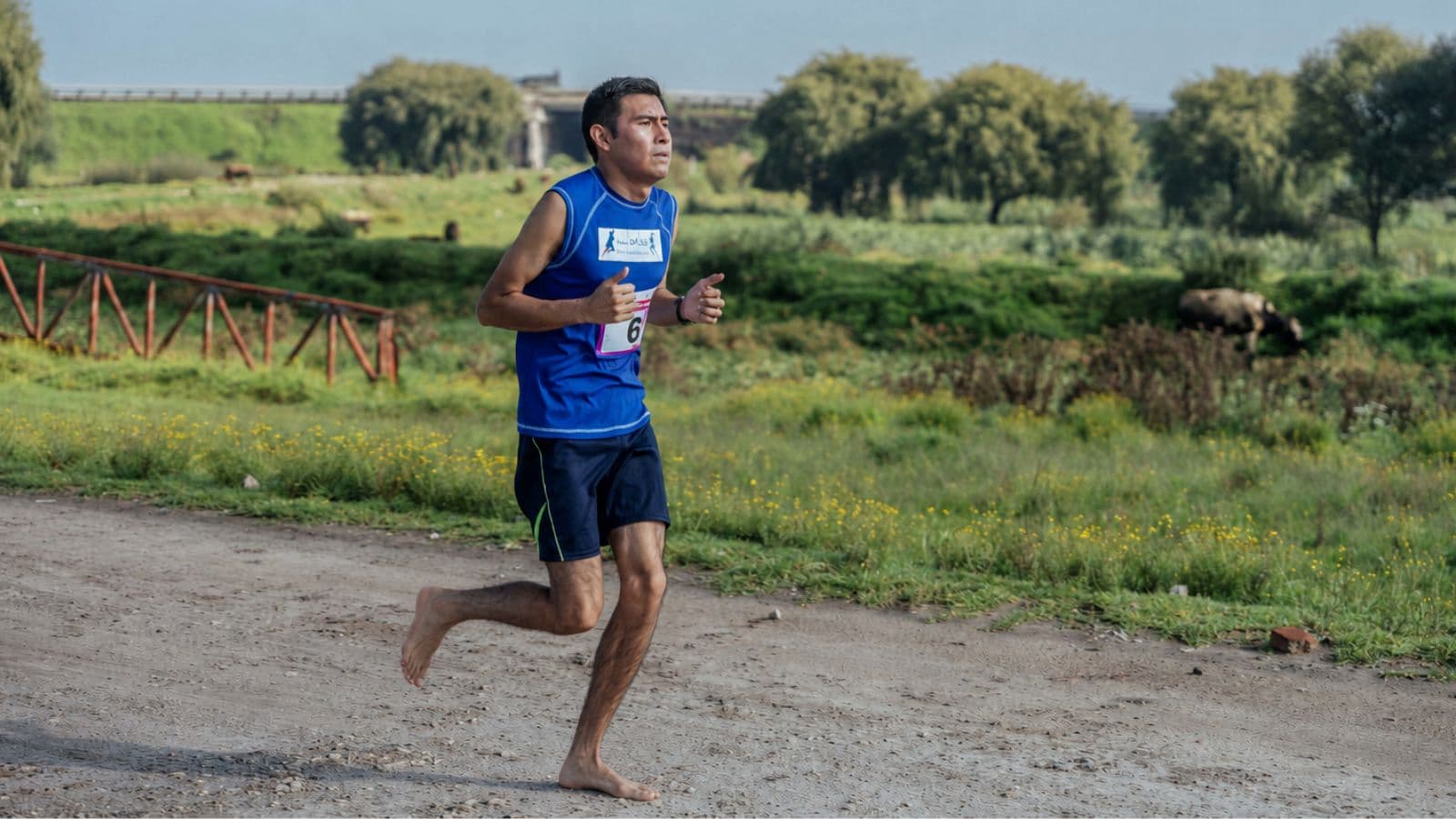
Barefoot running and minimalist footwear can place different demands on the feet and lower legs. They may increase loading on structures that were previously less stressed, particularly if a runner has spent years using conventional shoes. That makes gradual adaptation essential. Understanding what is barefoot running and how do i start safely is important before using barefoot running as a foot-strengthening strategy. You do not need to become a barefoot runner to develop stronger feet. Simple exercises and normal running can provide substantial loading without completely changing footwear or running style.
Should You Change Shoes to Strengthen Your Feet?
Do not change footwear simply because you believe cushioned shoes make feet weak. Running shoes vary widely in:
- Cushioning
- Stiffness
- Heel-to-toe drop
- Geometry
- Support
- Fit
A comfortable shoe that works well for your training does not need to be abandoned solely to make the foot work harder. If you want to introduce a different type of shoe, do so gradually. Changing footwear while simultaneously increasing mileage or intensity can make it difficult to identify which change caused a problem if symptoms develop.
Foot Strength Should Progress With Training
Beginners do not need complicated foot workouts. Start with basic exercises that can be performed consistently and without pain.
A simple progression might be:
| Stage | Example focus |
|---|---|
| Beginner | Toe control and two leg calf raises |
| Developing | Single leg balance and calf raises |
| Stronger | Loaded calf raises and harder single-leg work |
| Sport-specific | Hopping or plyometric work when appropriate |
Plyometric exercises create greater forces and are not the starting point for everyone. They should be introduced after adequate basic strength and according to the demands of your training.
Strength Is Most Useful When Combined With Consistent Running
Foot exercises cannot replace running. To improve running performance, you still need appropriate aerobic training, harder workouts when suitable, recovery, and progressive mileage. Consistency is central to this process. The principle behind why is consistency more important than intensity for running success applies to strength work as well. Small amounts performed regularly are often more practical than occasional aggressive sessions that leave the feet sore. Foot strengthening should support running, not repeatedly interfere with it.
Common Mistakes
- Assuming stronger feet automatically mean faster running.
- Doing too much barefoot work too quickly.
- Treating foot pain as proof of weakness.
- Ignoring calf and ankle strength.
- Adding foot exercises during a sudden mileage increase.
- Focusing on the feet while ignoring hip and leg strength.
- Expecting foot exercises to correct every gait issue.
Practical Tips
- Start with simple foot and calf exercises.
- Train both feet individually when appropriate.
- Progress resistance gradually.
- Keep movements controlled.
- Continue developing whole-leg strength.
- Avoid major footwear changes during heavy training.
- Seek assessment for persistent foot pain.
Actionable Takeaways
Foot strength supports running performance by helping control the foot, stabilize each landing, support the arch, and transfer force as you move through each stride.
- Aerobic fitness
- Training consistency
- Running economy
- Strength
- Recovery
- Appropriate workload
remain more important to overall running performance. Use foot strengthening as part of a complete program.
Simple toe exercises:
- Calf raises
- Balance work
- Progressive single leg strength
can develop foot and lower-leg capacity without requiring complicated equipment. Most importantly, progress gradually. Running already places substantial repeated load on your feet. Additional strength work should improve their ability to handle that load without creating enough fatigue to interfere with the running training you are trying to support.
FAQs
Foot strength can support efficient movement, but it does not directly guarantee faster running.
Strong feet help control movement, support the arch, stabilize landing, and transfer force during each stride.
Short sessions two or three times per week can be practical for many runners, depending on their training and recovery.
Calf raises, toe-control exercises, short-foot exercises, and single-leg balance are useful starting options.
Foot strength may influence load tolerance, but running injuries usually involve multiple factors rather than weakness alone.
Yes. Running repeatedly loads the muscles and other tissues of the feet, creating a training stimulus.
They can support foot and ankle control on uneven terrain, alongside balance, coordination, and whole-body strength.