

To celebrate Global Running Day this week, Garmin has released data which suggests the running boom is showing no signs of stopping – and no wonder given that it also highlights the multiple health benefits associated with it.
Nowhere is the boom more evident than the UK, with the leading smartwatch brand saying nearly two thirds of Brits (63%) now identify as runners.
The number of running activities increased across the board for all Garmin users – with indoor running seeing the biggest rise of 12.6% per capita in 2025 compared to 2024, while outdoor running activities went up 3.2%.
The 30–39 age group recorded the largest year-over-year increase of average activities per user, followed by those ages 20–29, 60–69, over 70+ and 40–49.
In terms of the overall picture take a look below at some of the headline findings to see how you stack up.
Average distance by run – and per week
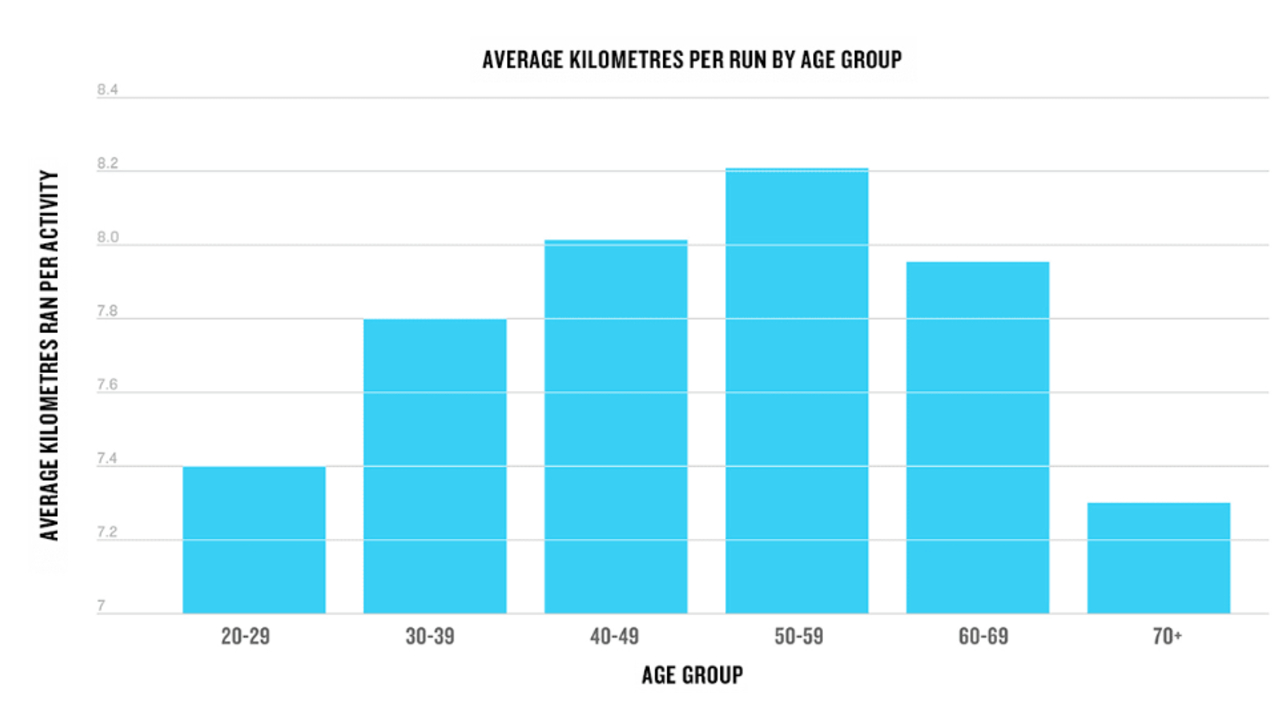
The average distance on a run for all users was 7.76 kilometres – or 4.82 miles.
But the group with the highest average distance run may surprise you – those aged 50-59.
For typical weekly distance, the 9-16km band was the most popular, with nearly 40% of runners falling in that category.
Next was 17-32km (28%). Only 7% of users ran between 33-48km a week and just 3% ran more than 49 km each week.
In terms of the most popular month for running, that was August. And in a typical week the day most likely to feature the longest run was Saturday.
How fast do Garmin users run?
The average pace per kilometre was 5:49 for men and 6:32 for women.
As you might expect, the younger age groups ran a bit faster than the older ones, with an average speed of 5:45 per kilometre for those 20-29 compared to +6:45 per kilometre for those over 70.
European locales clocked the fastest average pace, with Ireland leading the way at a 5:41 minutes per kilometre pace. Portugal came next at 5:43/km, with Italy (5:44/km) rounding out the podium.
And an interesting snippet was that nowhere is more popular than France, home of UTMB, for trail running activities logged.

Does running help sleep and resting heart rate?
The Garmin data suggests a very firm ‘yes’ to the above question.
Let’s start with sleep, which is essential to recovery, and runners tended to sleep better than those who didn’t run.
The average sleep score of all Garmin runners (out of a max of 100) was 73 if they ran between 0-10 miles, or 74 if they ran between 11-30 or more. Non-runners, who used their smartwatches to log other activites, had an average sleep score of 70.
Meanwhile the resting heart rate of non-runners sat at around 62 bpm and the more kilometres a user committed to running, the lower that number dropped.
Garmin found that on average a user who ran 0-7 kilometres per week had a resting heart rate of 59 bpm, while a user who ran more than 49 kilometres a week had a resting heart rate of 55 bpm.
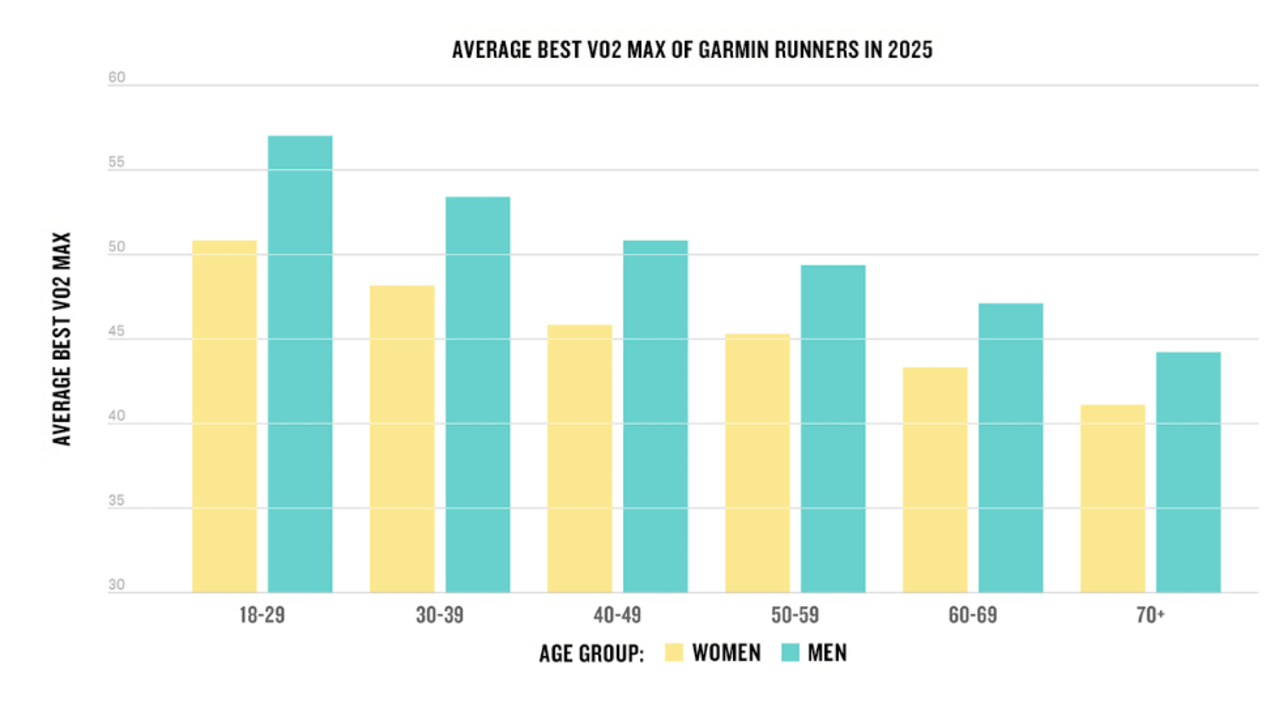
Average best VO2 max scores by age
VO2 max is a number that defines your cardiovascular endurance and is calculated on many Garmin smartwatches.
A higher VO2 max, which means your body is better at taking oxygen from the air and using it in your muscles, is better than a lower one. The average VO2 max for all Garmin runners was 50 but VO2 max varies significantly when it comes to gender and age as the chart below shows.
Mix it up
Strength training – or mixing up your fitness regime – can help runners avoid injury and that linked in to one standout stat from the report.
When comparing 2024 to 2025, Garmin found a 23% increase of runners recording a run and strength training activity in the same week.
And it’s not just about physical health, though 60% did say improving physical fitness motivated them to start running.
Nearly half (47%) stated that improving mental health and reducing stress encouraged them to take it up, with around three quarters (74%) now using running as a tool to manage emotional wellbeing, while close to two thirds (64%) say it has helped reduce feelings of loneliness.