Hip strengthening exercises can help runners develop better lower-body stability, improve movement control, and build the muscular capacity needed for consistent training. Exercises such as glute bridges, clamshells, lateral band walks, and single leg squats strengthen muscles that support the pelvis and legs during running. Every running stride requires the hips to stabilize the body while transferring force through the lower limbs. The glutes, hip flexors, and surrounding muscles work together to control movement during landing, push off, and changes in direction. When these muscles lack sufficient strength or endurance, runners may find it harder to maintain controlled movement as fatigue increases. However, hip weakness is not the only cause of poor running mechanics, and individual movement patterns vary. The good news is that hip strengthening does not require expensive equipment or long gym sessions.
In Short
- Strong hips support running stability.
- Glute strength helps control lower-body movement.
- Single-leg exercises improve balance.
- Resistance bands provide accessible training options.
- Strength work should progress gradually.
- Two weekly sessions are a practical starting point.
- Hip mobility and strength serve different purposes.
- Consistency matters more than excessive exercise volume.
Why Hip Strength Matters for Running?
The hips connect the trunk to the legs and play an important role in running mechanics.
Several muscle groups contribute to movement:
- Gluteus maximus: Supports hip extension and propulsion.
- Gluteus medius and minimus: Help stabilize the pelvis.
- Hip flexors: Assist with bringing the leg forward.
- Hip adductors: Support hip control and movement.
- Deep hip rotators: Help control femur positioning.
Understanding why is hip mobility important for running can help runners distinguish between having enough movement available and having the strength to control it. Strength and mobility complement each other, but improving one does not automatically improve the other.
Glute Bridges
Glute bridges are a beginner-friendly exercise for strengthening the gluteus maximus. They can be performed at home without equipment.
How to perform:
- Lie on your back with your knees bent.
- Place your feet flat on the floor.
- Tighten your abdominal muscles gently.
- Lift your hips until your shoulders, hips, and knees form a straight line.
- Lower slowly with control.
Suggested volume: 2–3 sets of 10–15 repetitions.
Avoid arching your lower back excessively. Once comfortable, progress to single-leg bridges or add resistance.
Clamshells
Clamshells target muscles involved in hip rotation and stabilization. They are particularly useful as a low-load exercise for beginners.
How to perform:
- Lie on your side with your knees bent.
- Keep your feet together.
- Raise your upper knee without rotating your pelvis backward.
- Pause briefly.
- Lower slowly.
Suggested volume: 2 sets of 12–15 repetitions per side.
A light resistance band can increase difficulty. Understanding what muscle imbalances commonly cause injuries in trail runners can help athletes appreciate why balanced strength development may be useful, although muscle imbalances do not automatically cause injury.
Lateral Band Walks
Lateral band walks challenge the hip abductors, particularly the gluteal muscles. These muscles help control pelvic movement during single leg support.
How to perform:
- Place a resistance band above your knees or around your ankles.
- Stand with your knees slightly bent.
- Step sideways while maintaining band tension.
- Keep your trunk stable.
- Repeat in the opposite direction.
Suggested volume: 2 sets of 10–12 steps each way.
Avoid dragging your feet or allowing your knees to collapse inward.
Single Leg Romanian Deadlifts
Single leg Romanian deadlifts strengthen the posterior chain while challenging balance. They involve the glutes, hamstrings, and stabilizing muscles.
How to perform:
- Stand on one leg.
- Maintain a slight bend in the supporting knee.
- Hinge forward from the hips.
- Extend the opposite leg behind you.
- Return to standing with control.
Suggested volume: 2–3 sets of 8–10 repetitions per side.
Beginners can hold a wall for balance. Understanding how does posture affect running performance can help runners appreciate the importance of trunk positioning and controlled movement. Avoid rounding the back or twisting the pelvis excessively.
Step Ups
Step ups strengthen the glutes and quadriceps through a movement that resembles aspects of running. They also challenge single leg stability.
How to perform:
- Stand in front of a stable step.
- Place one foot on the platform.
- Push through the leading leg.
- Stand upright on the step.
- Lower slowly.
Suggested volume: 2–3 sets of 8–12 repetitions per leg.
Start with a low step and increase height only when you can maintain control. Understanding how does hill running improve fitness, strength, and endurance can help runners recognize why hip and leg strength are valuable when tackling inclines.
Side Lying Leg Raises
Side-lying leg raises strengthen the hip abductors without requiring complex equipment.
How to perform:
- Lie on one side with your legs straight.
- Keep your hips stacked.
- Raise the upper leg slowly.
- Avoid rotating your body.
- Lower under control.
Suggested volume: 2 sets of 12–15 repetitions per side.
Keep the movement controlled rather than lifting the leg as high as possible.
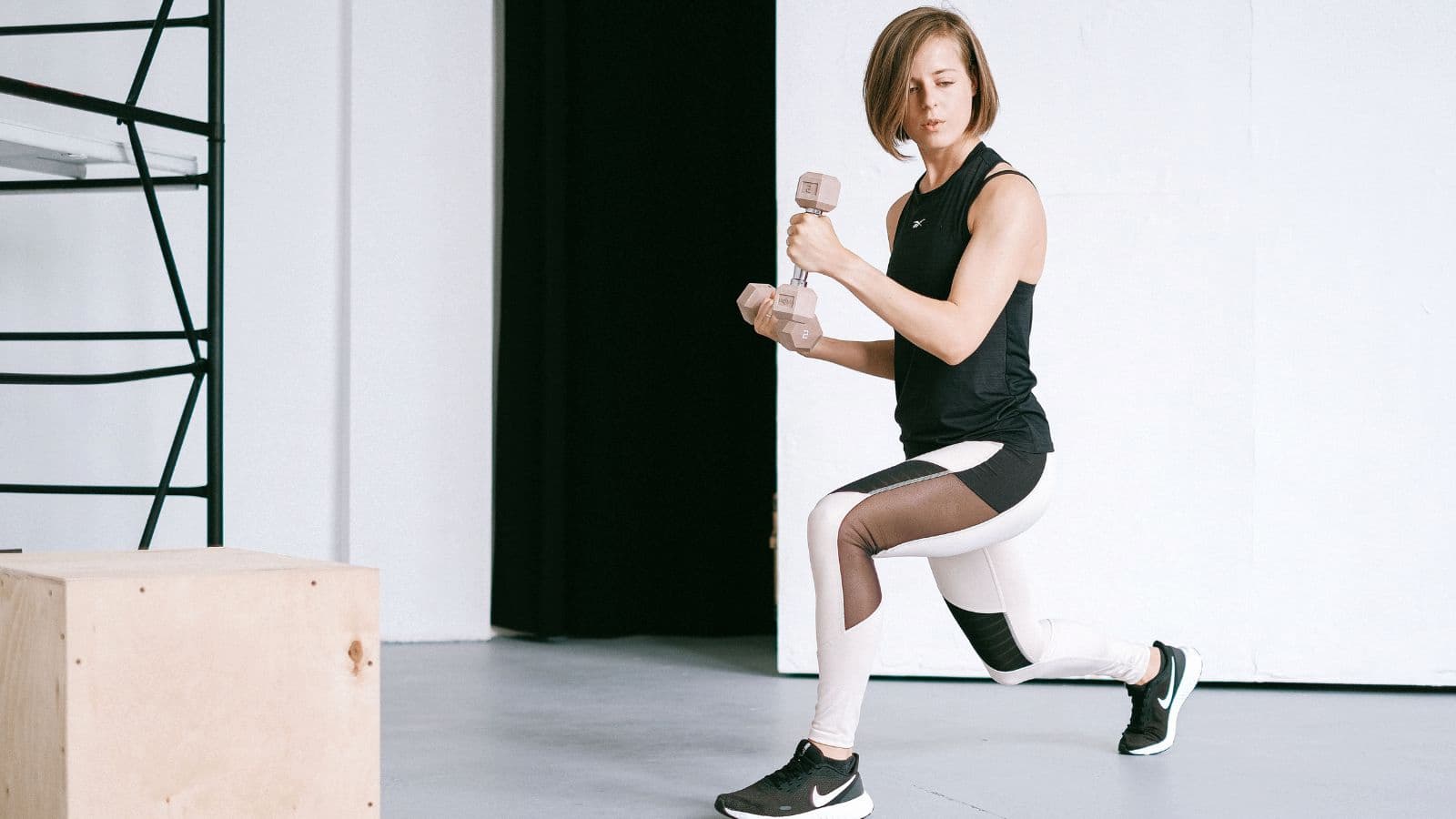
Split Squats
Split squats develop hip and leg strength while challenging stability. They are useful for runners who want to progress beyond basic floor exercises.
How to perform:
- Stand with one foot forward and the other behind.
- Lower your body by bending both knees.
- Keep your torso controlled.
- Push through the front leg to rise.
- Repeat before switching sides.
Suggested volume: 2–3 sets of 8–10 repetitions per leg.
Understanding what strength routine should runners do to stay injury-free can help runners combine hip exercises with a broader strength program. Progress by adding dumbbells once bodyweight repetitions feel manageable.
Single Leg Squats
Single leg squats are more demanding because they combine strength, balance, and coordination. Beginners should start with a shallow movement or use a chair for support.
How to perform:
- Stand on one leg.
- Bend the supporting knee gradually.
- Keep your pelvis relatively level.
- Lower only as far as you can control.
- Return to standing.
Suggested volume: 2 sets of 6–8 repetitions per side.
Understanding how can trail runners improve balance on uneven terrain can help runners recognize how single-leg control contributes to stability. Avoid forcing deep repetitions if balance or strength is insufficient.
A Simple Weekly Hip Strength Routine
Runners do not need to perform every exercise in one session. Choose four or five exercises and complete them twice weekly.
| Exercise | Sets | Repetitions |
|---|---|---|
| Glute bridges | 2 | 12 |
| Lateral band walks | 2 | 10 each direction |
| Step-ups | 2 | 10 per leg |
| Single-leg Romanian deadlifts | 2 | 8 per leg |
| Clamshells | 2 | 12 per side |
Allow adequate recovery between demanding strength sessions. Understanding how should runners balance easy and hard training can help athletes schedule strength work without interfering with important running workouts.
How to Progress Hip Strength Training?
Strength improves when exercises become gradually more challenging.
Progression options include:
- Adding repetitions.
- Increasing resistance.
- Using heavier weights.
- Moving from two-leg to single-leg variations.
- Improving movement control.
Understanding how does progressive overload improve training results of a marathon can help runners appreciate why gradual increases in training demands are more effective than sudden changes. Increase one variable at a time and avoid progressing through pain.
Can Hip Strengthening Prevent Running Injuries?
Hip strengthening can improve muscular capacity and movement control, but it cannot guarantee injury prevention. Running injuries involve multiple factors, including training load, previous injuries, recovery, and individual biomechanics. Understanding how to prevent running injuries with strength and mobility training can help runners develop a more complete approach. Strengthening is most useful when combined with appropriate running progression, recovery, and attention to persistent symptoms.
Common Mistakes
- Using resistance that is too heavy.
- Rushing repetitions.
- Ignoring single-leg exercises.
- Training through sharp pain.
- Neglecting recovery.
- Performing exercises inconsistently.
- Increasing difficulty too quickly.
- Expecting immediate changes in running speed.
Practical Tips
- Begin with bodyweight exercises.
- Train hips twice weekly.
- Focus on controlled movement.
- Strengthen both sides.
- Progress resistance gradually.
- Combine strength with mobility.
- Schedule recovery between sessions.
- Seek guidance for persistent pain.
Actionable Takeaways
- Strong hips support stable running.
- Glute bridges and step-ups are good starting exercises.
- Single-leg movements improve control.
- Train consistently and progress gradually.
- Combine hip strength with balanced running training.
FAQs
Strong hips help stabilize the pelvis, control lower-body movement, and support force production during running.
Glute bridges, lateral band walks, step-ups, split squats, and single-leg Romanian deadlifts are practical options.
Two strength sessions per week are a reasonable starting point for many runners, depending on training load and recovery.
Hip weakness may contribute to certain movement patterns associated with knee discomfort, but knee pain has many possible causes.
Strength training may improve physical capacity and running economy, but hip exercises alone do not guarantee faster race times.
Light activation exercises can be performed before running. More demanding strength sessions are usually better scheduled when they will not compromise key workouts.
Yes. Beginners can start with glute bridges, clamshells, and supported step-ups before progressing to harder movements.
Some improvements may appear within several weeks, but meaningful strength development generally requires consistent training over time.