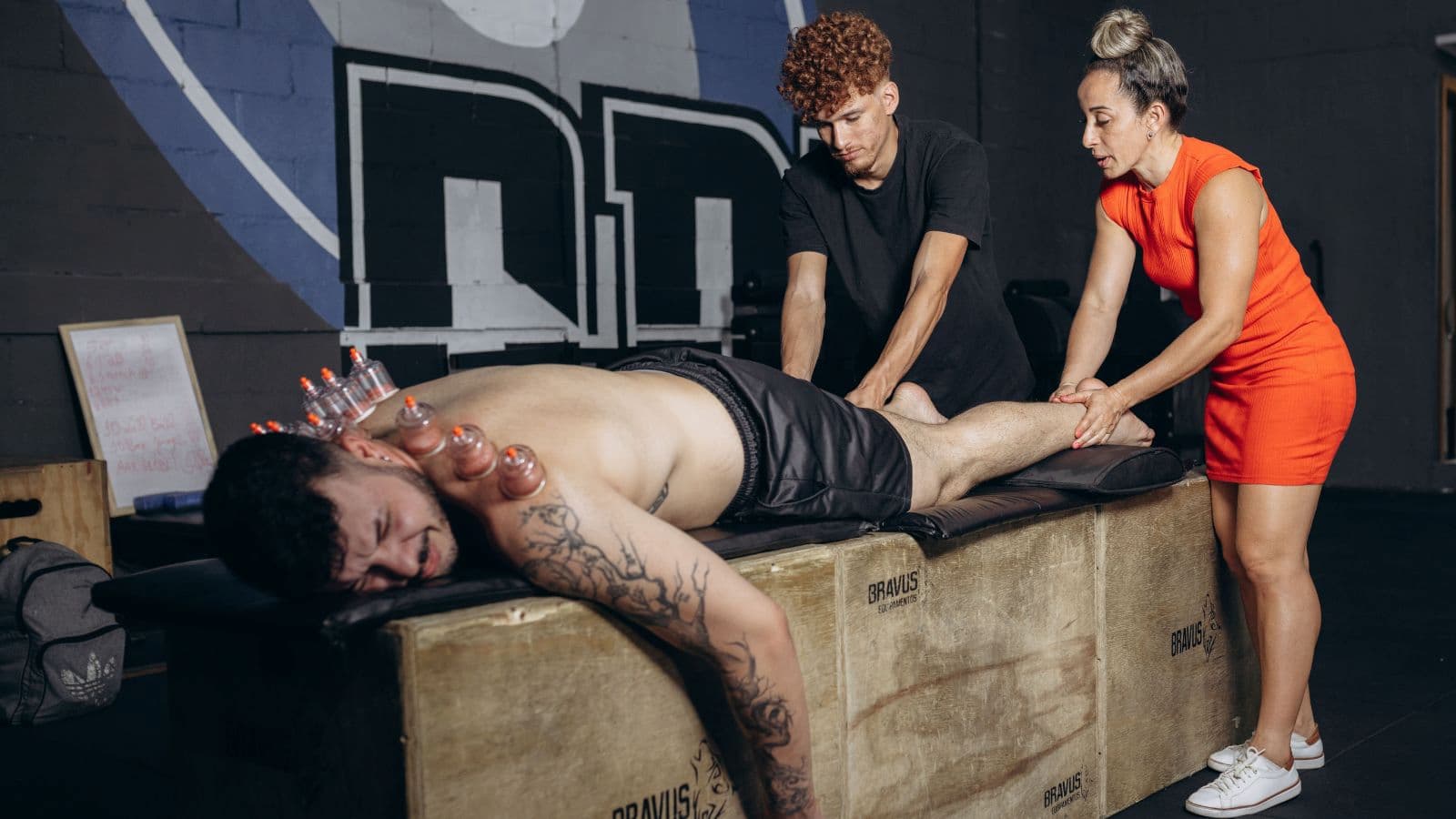
Yes, massage can help runners recover in some ways, particularly by reducing the feeling of muscle soreness and helping tight or tired muscles feel more comfortable. Many runners also find massage relaxing after demanding training or racing. However, massage should not be viewed as something that instantly repairs damaged muscle or makes you ready for another hard workout. Feeling looser after a massage does not necessarily mean your body has completely recovered from the training that caused the fatigue. Massage is best treated as an optional recovery tool. Sleep, adequate nutrition, hydration, rest, and sensible training remain more important for long term recovery and performance. A gentle massage may feel useful shortly after a hard effort, while aggressive deep pressure on already sore muscles can be uncomfortable and may not be appropriate immediately after demanding training or racing.
In Short
- Massage may reduce perceived muscle soreness.
- It can help runners feel less stiff.
- Some runners find it relaxing.
- Massage does not replace sleep or rest.
- It does not instantly repair muscle damage.
- Harder massage is not always better.
- Timing and pressure matter.
- Massage should not be used to hide an injury.
- Self massage can also be useful.
- Recovery should always consider total training load.
How Can Massage Help Runners?
The most noticeable benefit for many runners is how their muscles feel afterward.
Massage may help with:
- Perceived soreness.
- Muscle stiffness.
- Relaxation.
- General comfort.
- Short term flexibility.
These effects can make the period after a hard run feel more manageable. However, recovery is broader than muscle soreness. Following a demanding workout, your body may also need to restore energy, repair tissue, and recover from accumulated training stress.
Can Massage Reduce Muscle Soreness?
Massage may help reduce the perception of delayed onset muscle soreness, commonly called DOMS.
DOMS often develops after:
- Hard races.
- Long runs.
- Hill sessions.
- Unfamiliar workouts.
- Increased training load.
Soreness commonly becomes more noticeable during the day or two after demanding exercise. Runners experiencing heavy soreness after hilly races may also benefit from understanding how to reduce muscle soreness after downhill running, because downhill running creates substantial eccentric muscle loading that massage alone cannot prevent.
Does Massage Speed Up Muscle Repair?
This is where runners should keep expectations realistic. A massage can make your legs feel better without necessarily meaning that muscle tissue has completely recovered.
Your body still needs:
- Time.
- Sleep.
- Energy.
- Protein.
- Appropriate training load.
This distinction matters because feeling less sore can tempt runners to resume hard training prematurely. A sensible recovery nutrition strategy for runners supports the underlying recovery process rather than relying entirely on how fresh your legs feel.
Does Massage Improve Running Performance?
Massage should not be considered a direct performance booster.
You should not expect one massage to suddenly improve:
- Running speed.
- VO2 max.
- Endurance.
- Lactate threshold.
- Race fitness.
Its value is more likely to come from helping you feel comfortable and relaxed during recovery. Long term improvements still depend on consistent training and adequate recovery. Understanding how do you balance training recovery and tapering effectively can help place massage within a complete training plan instead of treating it as the main recovery strategy.
When Should Runners Get a Massage?
Timing depends on the purpose and intensity of the massage. After a demanding race, very deep massage immediately afterward may feel excessive because the muscles are already stressed. A gentler approach may be more comfortable. Before a race, massage should also be familiar. Race week is not the ideal time to experiment with an aggressive treatment that leaves your legs sore.
Think about:
- Training intensity.
- Current soreness.
- Upcoming workouts.
- Race schedule.
- Personal response.
Schedule stronger massage far enough from an important session that you know how your body responds.
Is Deep Tissue Massage Better?
Not necessarily. More pressure does not automatically create more recovery.
An aggressive massage can leave some runners feeling:
- Tender.
- Sore.
- Bruised.
- Heavy.
If your legs are already extremely sore from a race or difficult workout, adding substantial pressure may simply create more discomfort. Tell the massage therapist how recently you trained and whether any areas are unusually painful.
Massage Should Not Replace Rest
One common mistake is using recovery treatments to justify excessive training. If you repeatedly need massage just to feel capable of completing your next workout, your overall training load may need attention.
Persistent fatigue can be influenced by:
- Excessive intensity.
- Rapid mileage increases.
- Inadequate sleep.
- Poor nutrition.
- Too few recovery days.
The principles in how to schedule rest days during marathon training remain more important than trying to compensate for insufficient recovery with massage.
Can Massage Help After a Long Run?
Massage can be useful after long runs when the goal is relaxation or reducing the feeling of soreness.
However, your main recovery priorities should still include:
- Eating.
- Drinking appropriately.
- Sleeping.
- Resting.
- Allowing enough time before the next demanding workout.
If long runs regularly leave you extremely sore or exhausted, consider whether the progression itself is appropriate. Using how to run longer distances without burning out can help you manage long run stress before relying on recovery techniques afterward.
What About Massage After a Marathon?
Marathons create considerable muscular stress, particularly during the later stages. Immediately after finishing, prioritize basic recovery.
Focus on:
- Food.
- Fluid.
- Warm clothing when needed.
- Gentle movement.
- Rest.
Massage can be considered later depending on how your body feels. If you are still significantly sore, a gentle treatment may be more appropriate than aggressive pressure. The wider principles in how to recover faster after a marathon can help runners place massage alongside more important post race recovery habits.
Can You Massage Your Own Muscles?
Yes. Self massage can be a practical alternative when professional treatment is unavailable.
You can use:
- Your hands.
- A massage ball.
- A foam roller.
- Other suitable self massage tools.
The goal does not need to be intense discomfort. Use controlled pressure and avoid repeatedly pressing directly onto an area that produces sharp or unusual pain.
Is Foam Rolling the Same as Massage?
Foam rolling and massage are not identical, but runners often use them for similar reasons. Both may help muscles feel less stiff or uncomfortable temporarily.
Foam rolling has the advantage of being:
- Accessible.
- Inexpensive.
- Easy to control.
- Convenient at home.
Neither should be considered a replacement for recovery time. Mobility work may also be useful, and what mobility routine should runners do daily can help runners decide where gentle movement fits alongside massage.
Massage Cannot Fix Poor Sleep
A runner who is consistently sleeping too little cannot compensate by booking more massages. Sleep supports numerous recovery processes and affects how prepared you feel for subsequent training.
Poor sleep can contribute to:
- Greater fatigue.
- Reduced training quality.
- Poor concentration.
- Slower perceived recovery.
Understanding how does poor sleep affect running performance can help explain why basic recovery habits should come before optional treatments.
Do Not Massage an Injury Without Knowing What It Is
Normal muscle soreness and injury pain are not the same.
Be cautious with symptoms such as:
- Sharp pain.
- Significant swelling.
- Sudden weakness.
- Pain that changes your running gait.
- Pain that becomes progressively worse.
Aggressively massaging an injured area may not address the underlying problem. Persistent or concerning pain should be appropriately assessed. This is especially important when following how to stay motivated during recovery after run, because returning successfully requires patience rather than repeatedly trying to make pain disappear.
Massage Works Best as Part of a Recovery Routine
Massage is most useful when it complements good training habits.
A complete recovery routine should prioritize:
- Adequate sleep.
- Enough food.
- Appropriate hydration.
- Easy days.
- Rest days.
- Gradual training progression.
Massage can then be added if you enjoy it and find it helpful.
Runners who repeatedly feel excessively sore should first review training load before adding more recovery treatments.
Common Mistakes
- Expecting massage to instantly repair muscle damage.
- Assuming harder pressure is always better.
- Getting aggressive massage immediately before a race.
- Using massage to avoid taking rest days.
- Treating injury pain like normal soreness.
- Returning to hard training because massage reduced soreness.
- Ignoring poor sleep or nutrition.
- Massaging a swollen or acutely painful area without assessment.
- Believing professional massage is essential for recovery.
Practical Tips
- Use massage as an optional recovery tool.
- Tell your therapist about recent training.
- Adjust pressure according to soreness.
- Avoid aggressive treatment before important workouts.
- Keep post race massage gentle when muscles are very sore.
- Use self massage when convenient.
- Stop if massage causes sharp pain.
- Prioritize sleep and nutrition first.
- Monitor how your body responds afterward.
Actionable Takeaways
- Massage can help reduce soreness and stiffness.
- Do not confuse feeling better with complete recovery.
- Choose pressure and timing carefully.
- Keep sleep, nutrition, and rest as your priorities.
Following what strength routine should runners do to stay injury-free can also help build greater physical resilience, while massage remains a supporting recovery option rather than the foundation of training.
FAQs
Massage may reduce perceived muscle soreness and stiffness, helping some runners feel more comfortable during recovery.
They can, but massage is optional. Food, sleep, hydration, and appropriate rest remain more important.
Gentle massage may help reduce the feeling of soreness, although it does not instantly repair muscle tissue.
It can be useful for some runners, but deeper pressure is not automatically better and may cause temporary soreness.
Timing depends on the workout and massage intensity. After very demanding running, a gentler approach may be more comfortable.
A familiar light massage may be suitable, but avoid unfamiliar or aggressive treatment close to an important race.
Massage should not be relied upon to prevent injuries. Training progression, recovery, strength, and load management are more important.
Both may temporarily reduce feelings of stiffness or soreness, but they are different techniques and neither is essential for recovery.