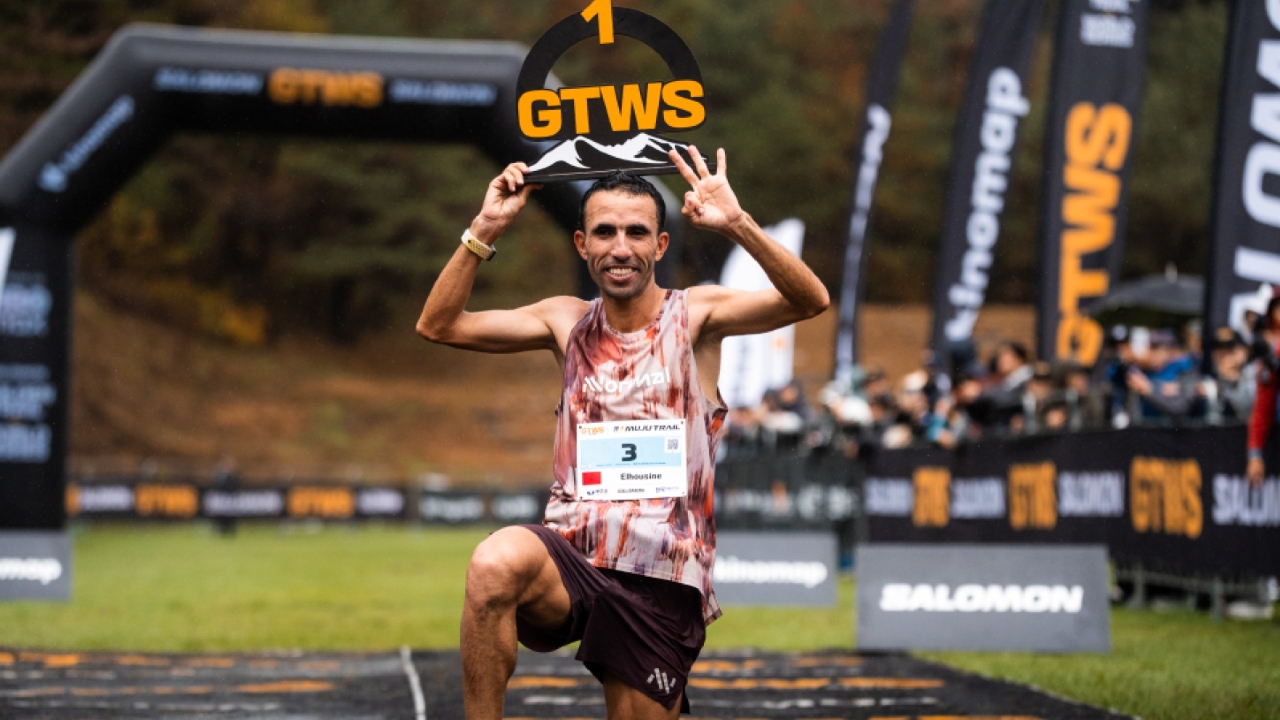
Downhill trail running can be one of the fastest and most enjoyable parts of a run, but it can also be where runners lose the most confidence. Rocks, roots, loose gravel, steep gradients and rapidly changing terrain leave little time to make decisions, and simply trying to run faster can quickly lead to excessive braking or poor foot placement. Better downhill running comes from developing control first and allowing speed to follow. Regular practice also develops the confidence needed to make faster decisions without becoming reckless. The goal isn’t to descend as aggressively as possible. It’s to become fast enough that you can maintain momentum while still feeling capable of responding when the trail changes.

In Short
- Build control before chasing speed.
- Look ahead rather than directly at your feet.
- Keep your steps relatively quick and light.
- Avoid excessive backward leaning.
- Let your arms help with balance.
Why Is Downhill Trail Running Difficult?
Descending combines speed with unpredictable terrain.
Unlike running downhill on a smooth road, trails may contain:
- Loose stones.
- Tree roots.
- Mud.
- Sharp turns.
- Uneven steps.
- Wet rocks.
- Sudden changes in gradient.
Your brain must continuously assess the terrain while your body absorbs greater forces than it typically experiences on flat ground. That combination makes downhill running both a technical and physical skill.
Look Ahead, Not Straight Down
One of the most important downhill skills is learning where to look. Staring directly at your feet gives you very little time to react.
Instead, scan several steps ahead so you can identify:
- Rocks.
- Roots.
- Corners.
- Loose surfaces.
- Better landing areas.
Your vision should continually move between the immediate trail and what is coming next. The earlier you recognise an obstacle, the less dramatic your correction needs to be.
Choose Your Line Before You Reach It
Experienced downhill runners don’t simply react to individual rocks. They look for a route through the terrain.
Before entering a technical section, identify:
- Stable surfaces.
- Clear gaps.
- Safer corners.
- Areas with better traction.
- Places where braking may be necessary.
Line choice becomes faster and more automatic with experience. Beginners developing how to start trail running safely as a beginner should prioritize predictable terrain first before gradually progressing towards more technical descents.
Keep Your Steps Quick
Long reaching strides can make downhill running harder to control. When your foot lands far ahead of your body, it can create a stronger braking effect and make rapid direction changes more difficult.
Instead, aim for relatively:
- Quick.
- Light.
- Responsive.
steps. This doesn’t mean deliberately forcing an extremely high cadence. Your stride should naturally adapt to the gradient and terrain. Understanding how does increasing running cadence help prevent knee injuries also provides useful context for why avoiding excessive over-striding can matter during running.
Avoid Leaning Too Far Back
A common reaction to steep terrain is leaning backwards. It feels safer because you’re trying to resist gravity, but excessive backward leaning can increase braking and make your movement stiff. Instead, aim to remain balanced over your feet. Your body position should adapt naturally to the gradient without feeling as though you’re sitting behind your stride. Good overall alignment becomes easier when you understand how does posture affect running performance, particularly as fatigue begins changing your running mechanics.
Use Your Arms for Balance
Your arms aren’t only responsible for forward-and-back movement. On technical descents, they may move slightly wider to help stabilize your body.
Allow your arms to respond naturally when:
- Cornering.
- Stepping around rocks.
- Changing direction.
- Landing on uneven ground.
Trying to keep your arms rigidly beside your body can make technical running unnecessarily difficult. The principles in how do arm swings improve running form help explain how upper-body movement contributes to overall balance and coordination.
Don’t Brake With Every Step
Some braking is necessary on steep or technical descents. The problem occurs when every landing becomes a major braking action.
Constant braking can:
- Increase muscular fatigue.
- Interrupt rhythm.
- Reduce momentum.
- Make descending feel harder.
Instead, allow controlled momentum when the trail is safe and use stronger braking strategically when approaching corners, obstacles or particularly steep sections.
Control Speed Before Technical Sections
If you need to slow down, try to do so before reaching the most difficult part of the trail. Entering a rocky corner too quickly and then attempting to brake aggressively can reduce control.
A better sequence is:
- Assess the terrain.
- Reduce speed if necessary.
- Choose your line.
- Enter the technical section under control.
- Accelerate again when the trail opens.
This approach makes speed more deliberate rather than reactive.
Relax Your Upper Body
Fear often creates tension.
Runners may:
- Raise their shoulders.
- Clench their fists.
- Lock their elbows.
- Stiffen their torso.
That rigidity makes it harder to respond naturally to uneven terrain. Keep your shoulders and hands relaxed while allowing your body to move with the trail. Working on how to improve your running form without overthinking it can help you develop efficient movement without becoming obsessed with maintaining one perfect position.
Build Stability for Uneven Terrain
Technical descents repeatedly challenge your ability to stabilise your body after each landing.
Good stability helps you adjust when:
- A rock moves.
- Your foot lands unevenly.
- The trail changes direction.
- The surface becomes slippery.
Exercises that develop single-leg balance and lower-body control can complement trail practice. However, strength work cannot completely replace running on trails. You still need regular exposure to the terrain itself.
Strengthen the Muscles Used During Descending
Downhill running places substantial eccentric demand on the quadriceps. Eccentric muscle action occurs when the muscle produces force while lengthening, which happens repeatedly as your legs control each downhill landing.
Useful strength exercises may include:
- Split squats.
- Step-downs.
- Lunges.
- Single-leg squats.
- Calf raises.
Following what strength routine should runners do to stay injury-free can help develop the general strength required to tolerate demanding trail terrain.
Downhill Running Can Cause Significant Soreness
Fast or prolonged descending can produce considerable muscle damage, especially when your body isn’t accustomed to it. The quadriceps are particularly vulnerable. That’s why runners often experience soreness one or two days after races containing long descents. Gradually increasing downhill exposure is more effective than suddenly completing a huge descent session. If you’ve already completed demanding downhill training, how to reduce muscle soreness after downhill running provides relevant strategies for managing the recovery period.
Practise on Easy Descents First
Don’t begin downhill training on the steepest technical trail available.
Start with:
- Gentle gradients.
- Predictable surfaces.
- Good visibility.
- Wide trails.
Once you can descend these comfortably, progress towards:
- Steeper gradients.
- Loose terrain.
- Sharper corners.
- More technical surfaces.
Progressive exposure builds skill and confidence simultaneously.
Use Short Downhill Repetitions
Short repetitions are useful for developing technique without accumulating excessive fatigue.
For example:
- Choose a safe moderate descent.
- Run downhill for 20–60 seconds.
- Focus on relaxed technique.
- Recover while walking or jogging back.
- Repeat several times.
The objective isn’t maximum speed.
Each repetition should feel controlled enough that you can focus on line choice, cadence and body position.
Confidence Comes From Repetition
Fear often makes runners slower than their physical ability requires. But confidence shouldn’t come from forcing yourself to take greater risks. It should develop through successful repetition.
Each controlled descent teaches your brain:
- How much traction you have.
- How quickly you can change direction.
- Which surfaces are stable.
- How your body responds at speed.
Gradually expanding your comfort zone is safer and more effective than trying to copy experienced downhill racers immediately.
Learn From Hill Training
Hill workouts can develop more than climbing fitness. Running varied hills regularly exposes you to repeated changes in gradient and teaches you how to transition between climbing, cresting and descending. However, avoid turning every descent into an all-out effort. Understanding what mistakes should you avoid during hill workouts can help you use downhill sections productively without creating excessive fatigue or unnecessary risk.
Slow Down in Poor Conditions
Downhill speed should always reflect the conditions.
Reduce your pace when dealing with:
- Wet rocks.
- Ice.
- Deep mud.
- Poor visibility.
- Loose gravel.
- Unfamiliar terrain.
A pace that is controlled on a dry trail may become inappropriate after heavy rain. Being a skilled descender means knowing when not to run quickly.
Footwear Can Affect Confidence
Trail shoes should provide appropriate traction for the terrain you’re running.
Consider:
- Outsole grip.
- Lug depth.
- Fit.
- Stability.
- Terrain suitability.
No shoe can eliminate the risk of slipping, but appropriate footwear can improve confidence on loose or wet surfaces.
Fatigue Changes Downhill Technique
Descending becomes more difficult late in long runs and races.
Fatigue can reduce:
- Coordination.
- Reaction time.
- Leg strength.
- Concentration.
- Balance.
This means a descent you comfortably run early in a session may require greater caution several hours later. Training through what is the best way to train for long trail runs can improve the endurance and durability needed to maintain better control later in longer events.
Don’t Copy Faster Runners Blindly
Watching an experienced runner fly down a technical descent can make their technique look effortless.
But they may have years of:
- Trail experience.
- Technical practice.
- Strength development.
- Terrain familiarity.
Run according to your own skill level. Progress comes from gradually increasing the difficulty and speed of your training, not matching someone else’s risk tolerance.
Common Mistakes
- Staring directly at your feet.
- Taking excessively long strides.
- Leaning too far backwards.
- Braking heavily with every step.
- Entering corners too quickly.
- Keeping the upper body rigid.
- Increasing downhill volume too quickly.
- Chasing experienced runners beyond your ability.
Practical Tips
- Scan several steps ahead.
- Choose your line early.
- Keep steps quick and responsive.
- Stay balanced over your feet.
- Relax your shoulders and hands.
- Control speed before obstacles.
- Practise on easier descents first.
- Increase downhill difficulty gradually.
Actionable Takeaways
Running downhill faster isn’t about removing caution and allowing gravity to take control. Fast trail descending comes from improving your ability to read terrain, choose good lines and maintain balanced, responsive movement while carrying momentum.
Develop control first. Practise on predictable descents, keep your steps relatively quick, look ahead and gradually expose yourself to more technical terrain. As these skills become automatic, speed often increases naturally without requiring you to take unnecessary risks.
The best downhill runners aren’t simply the athletes willing to run fastest. They’re the runners who can recognise when speed is appropriate and remain capable of adapting when the trail suddenly changes.
FAQs
Downhill trail running combines higher speeds with uneven terrain, greater impact forces and rapid decision-making, making control more challenging than running on flat ground.
You should generally remain balanced rather than dramatically leaning forward or backward. Your body position should adapt naturally to the gradient.
Relatively quick, responsive steps can improve control and make it easier to adjust your line compared with excessive reaching or over-striding.
Look several steps ahead while continuously scanning the trail so you can identify obstacles and choose your line before reaching them.
Practice on easier gradients where you feel comfortable allowing more natural momentum, then progressively move towards steeper terrain as your confidence improves.
Regular practice on progressively more challenging terrain helps develop confidence, balance, line selection and awareness of your capabilities.
Descending places substantial eccentric loading on the quadriceps as they repeatedly control your body during landing and braking.
Yes. Short, controlled downhill repetitions on safe terrain can help develop technique and confidence without requiring an extremely long descent.
Usually, you should reduce speed when traction is poor. Wet rocks, mud and slippery roots can significantly increase the risk of losing control.
Terrain awareness is fundamental. Looking ahead and choosing an appropriate line gives you more time to adjust your speed, foot placement and direction.