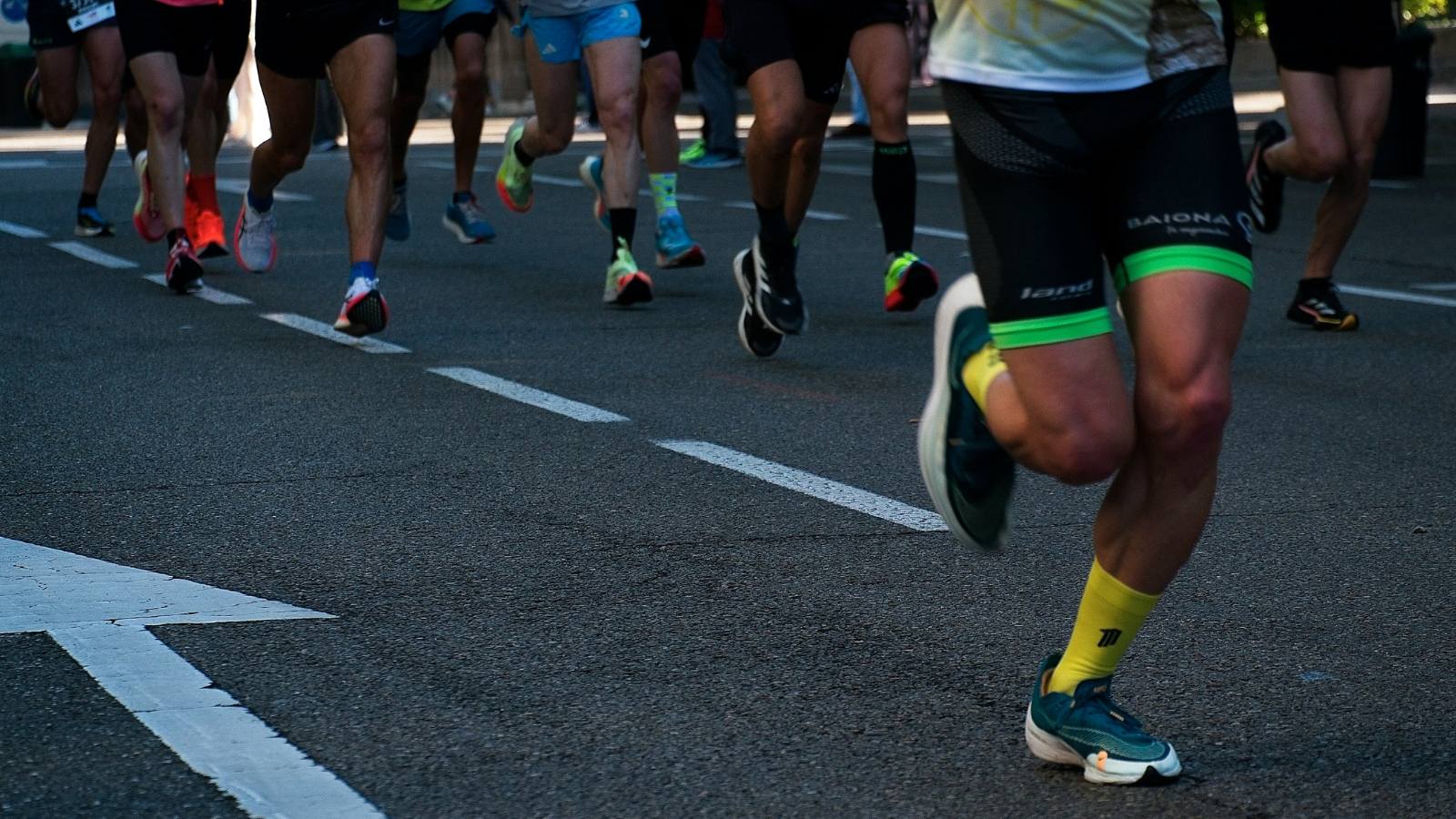



Pacing is the distribution of effort across a race. It determines whether you maintain speed, fade, or finish strong. Each distance demands a different pacing strategy because energy systems, fatigue rate, and glycogen usage change as duration increases. Get pacing right and performance is maximised; get it wrong and time is lost regardless of fitness.

What Pacing Means in Running?
Pacing is the control of speed relative to your physiological limits. It’s not just about running evenly, it’s about matching effort to distance so that energy is used efficiently. Short races rely more on anaerobic contribution, while longer races depend heavily on aerobic efficiency and glycogen management.
Key Pacing Principles Across All Distances
Even pacing or slight negative splits consistently produce better results than starting fast and fading. Effort should feel controlled early and progressively harder toward the finish. External factors like terrain, wind, and temperature should influence pace decisions. Heart rate, perceived effort, and pace data should align, if one drifts, adjustments are needed.
For deeper insights into pacing strategy and race execution, see our guide on how to improve running pace.
How to Pace a 5K?
The 5K is short but intense. It sits close to your VO2 max effort, meaning pacing errors show quickly. Starting too fast leads to rapid lactate accumulation and a sharp drop in pace. The goal is controlled aggression. The first kilometer should feel fast but not maximal. By halfway, effort should be high but sustainable. The final kilometer is where you push beyond comfort.
Practical pacing:
- KM 1: Slightly conservative (2 to 3 seconds slower than average pace)
- KM 2 to 4: Settle into goal pace
- Final KM: Increase effort progressively
Mistake to avoid: sprinting the first kilometre and trying to “hold on.” Check our beginner’s guide on couch to 5k training program.
How to Pace a 10K?
The 10K requires a balance between speed and endurance. It’s still uncomfortable, but pacing must be more controlled than a 5K. The first 2 to 3km should feel manageable. Effort builds gradually, with the hardest section typically between 6 to 9km. A strong finish depends on holding back slightly early.
Practical pacing:
- KM 1 to 3: Controlled, slightly below race pace
- KM 4 to 8: Lock into goal pace
- KM 9 to 10: Gradual acceleration
Fueling is less critical here but still relevant.
How to Pace a Half Marathon?
The half marathon is where pacing discipline becomes critical. It’s long enough for glycogen depletion to impact performance but short enough to maintain a strong pace throughout. Effort should feel comfortable early, almost too easy. Many runners go too fast in the first 5km and pay for it later. The race truly begins after 15km.
Practical pacing:
- KM 1 to 5: Slightly conservative
- KM 6 to 15: Steady at goal pace
- KM 16 to 21: Gradual increase if energy allows
Even pacing or slight negative splits work best.
How to Pace a Marathon?
Marathon pacing is about energy conservation. Starting too fast leads to glycogen depletion and significant slowdown in the final 10 to 12km. The first half should feel controlled. The real challenge is maintaining pace beyond 30km when fatigue and energy depletion peak.
Practical pacing:
- KM 1 to 10: Controlled, slightly below goal pace
- KM 11 to 30: Maintain steady pace
- KM 31 to 42: Hold pace or slow minimally
Fueling and pacing are closely linked. Poor fueling leads to pacing collapse.
Negative Split vs Even Pace
A negative split means running the second half faster than the first. This is often the most effective strategy across all distances because it conserves energy early and allows stronger finishes. Even pacing is also effective, especially in shorter races. Positive splits (starting fast and slowing down) are generally less efficient.
Effort vs Pace: What to Trust
Pace is a guide, but effort is the limiter. On hills, heat, or wind, maintaining the same pace may not be optimal. Adjust based on perceived effort and heart rate.
For example:
- Uphill: maintain effort, not pace
- Downhill: controlled increase in speed
- Heat: reduce pace slightly to manage heart rate
Common Pacing Mistakes
- Starting too fast due to adrenaline leads to early fatigue.
- Ignoring conditions results in unsustainable pacing.
- Relying only on pace without monitoring effort causes breakdown.
- Not practicing pacing in training leads to poor execution.
Practical Checklist
- Know your goal pace per kilometre
- Start slightly conservative
- Build effort gradually
- Adjust for conditions
- Practice pacing in training runs
- Use race data (HR, splits) to stay controlled
What You Should Do
Train at your goal pace regularly so it feels familiar. Use tempo runs and race simulations to understand effort levels. Plan your pacing strategy before race day and stick to it early. Most races are lost in the first third, not the last. Execution matters more than fitness. The athlete who paces correctly almost always outperforms one who doesn’t.
FAQ
Start controlled and build effort. Avoid going all-out in the first kilometre.
Yes for most distances. It improves efficiency and finishing strength.
Based on recent race results or time trials over similar distances.
Both work, but negative splits often produce better outcomes.
Yes. Heat and wind require slower pacing to maintain effort.
Helpful but not essential. Perceived effort is equally important.
Poor fueling leads to energy drops and pace decline, especially in longer races.