


Men and women do not automatically need different levels of running shoe cushioning. Although average differences in body size, foot shape, and biomechanics can influence how manufacturers design men’s and women’s shoes, sex alone does not tell you whether you need a soft, firm, highly cushioned, or more minimal shoe. Two runners of the same sex can have completely different preferences. A lighter runner may enjoy a highly cushioned shoe, while a heavier runner may prefer something firmer. Running distance, speed, injury history, foot shape, terrain, and comfort can all influence the decision. Cushioning is also only one part of a running shoe.
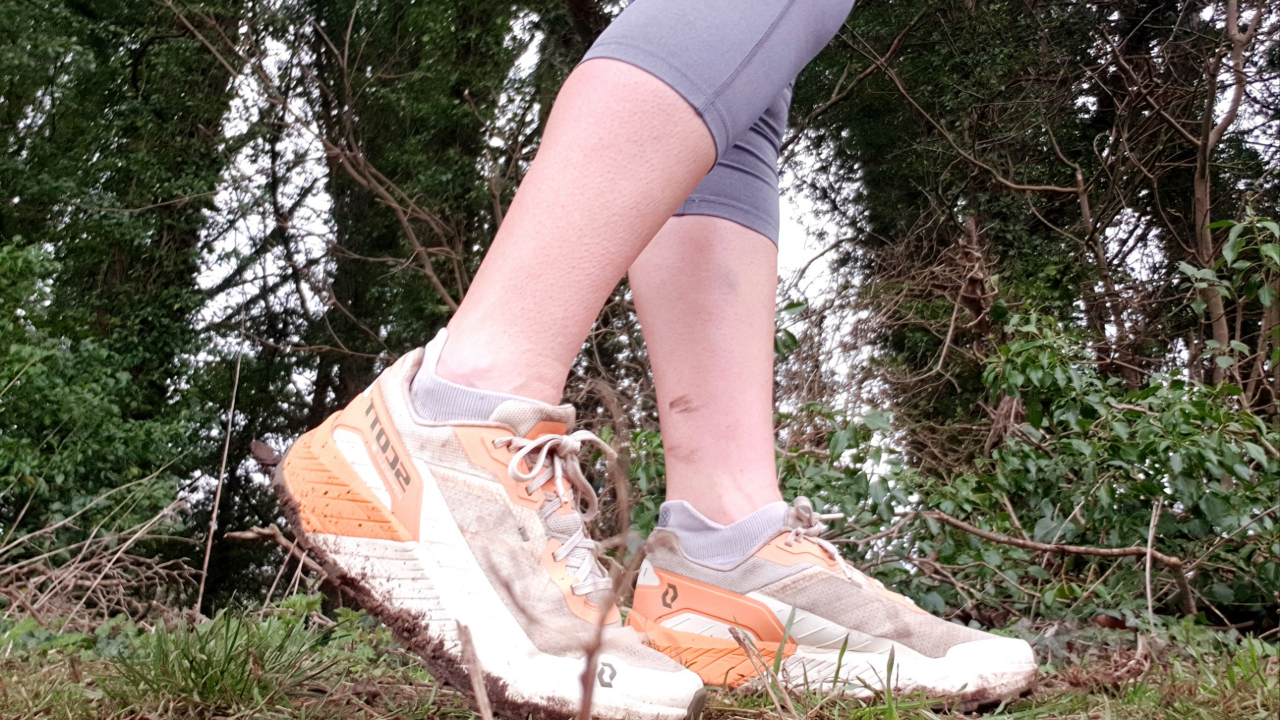
Fit, midsole geometry, heel to toe drop, stiffness, stability, weight, rocker shape, and outsole design can change how a shoe feels and how you move in it. Instead of choosing cushioning based mainly on a men’s or women’s label, start with fit and comfort. Then consider how the shoe behaves at your normal pace, whether it suits your training, and whether you remain comfortable as the distance increases.
In Short
- Men do not automatically need firmer shoes.
- Women do not automatically need softer shoes.
- Individual cushioning preferences vary considerably.
- Body weight can influence how cushioning feels.
- Foot shape can affect shoe fit.
- Cushioning can influence running mechanics.
- More cushioning is not always better.
- Minimal cushioning is not automatically more natural.
- Different runs may suit different shoes.
- Comfort and fit should guide your choice.
What Does Running Shoe Cushioning Actually Do?
Running shoe cushioning primarily comes from the midsole between your foot and the ground.
Different midsoles can feel:
- Soft.
- Firm.
- Responsive.
- Stable.
- Flexible.
- Highly protective.
Two shoes with similar stack heights can still feel completely different because foam properties and overall construction vary. Cushioning should therefore be judged by how the entire shoe behaves, not simply by how thick the midsole looks.
Men’s and Women’s Shoes Can Be Designed Differently
Some manufacturers create separate men’s and women’s versions using different lasts, which are the foot shaped forms around which shoes are built.
Differences may involve:
- Heel fit.
- Forefoot width.
- Overall volume.
- Available sizes.
- Midsole construction.
- Upper fit.
However, these differences are not universal across brands. A women’s model is not automatically softer, and a men’s model is not automatically more supportive. Choose the model that fits your foot properly.
Body Weight Can Change How Cushioning Feels
The same foam may feel different under runners of different body weights. One runner may compress a soft midsole substantially, while another may experience the same shoe as relatively firm. This means cushioning preference cannot be predicted from sex alone.
Consider:
- Your body weight.
- How much the foam compresses.
- Stability under load.
- Comfort over distance.
- How the shoe feels at your normal pace.
The goal is not to find the softest shoe. It is to find cushioning that remains comfortable and controlled while you run.
Does More Cushioning Mean Less Impact?
A thicker or softer shoe does not simply remove impact from running. Your body can adapt its movement according to the footwear and surface underneath it. That is why cushioning should not be viewed as an automatic injury prevention feature.
Shoes can influence:
- Joint movement.
- Foot motion.
- Stride characteristics.
- Stability.
- Perception of the ground.
Understanding do max cushioned running shoes affect running form is useful before assuming that adding more foam will always make your running mechanics safer.
Running Form Matters More Than Sex Alone
How you run affects how you interact with a shoe.
Relevant factors include:
- Cadence.
- Stride length.
- Landing position.
- Foot strike.
- Speed.
- Fatigue.
A shoe that feels smooth at an easy pace may feel awkward during faster running. Likewise, runners with different gait patterns may respond differently to the same cushioning. The principles in running form tips for beginners can help you consider footwear as one part of overall movement rather than treating shoes as a way to correct every aspect of your form.
Foot Strike Does Not Determine Cushioning by Itself
Heel strikers, midfoot strikers, and forefoot strikers can all use cushioned running shoes. You do not automatically need a particular cushioning level because of where your foot first contacts the ground.
Foot strike may also change with:
- Speed.
- Fatigue.
- Hills.
- Surface.
- Footwear.
This is why what’s the best foot-strike for running a marathon should not be used as a simple rule for choosing between minimal and highly cushioned shoes.
Pronation and Cushioning Are Different Issues
Pronation is a normal movement of the foot during loading. A runner who pronates does not automatically need more cushioning. Likewise, a highly cushioned shoe is not necessarily a stability shoe. Cushioning describes how the shoe manages the sensation and loading underfoot, while stability features are designed to influence how the shoe behaves as you move through it. Understanding how does pronation affect your running gait can help you avoid choosing shoes based on the assumption that all foot movement needs to be controlled.
Fit Should Come Before Cushioning
A beautifully cushioned shoe is still a poor choice if it does not fit.
Check:
- Heel security.
- Midfoot comfort.
- Toe space.
- Width.
- Overall volume.
- Pressure points.
Men and women can have:
- Narrow
- Wide
- High volume
- Low volume feet
Do not assume your foot shape simply because of the category printed on the shoe box. If the opposite sex model provides a better fit and is available in an appropriate size, the label itself should not be the deciding factor.
Cushioning for Long Runs
Many runners prefer additional cushioning for longer sessions because comfort becomes increasingly important as time on your feet increases. But maximum cushioning is not compulsory.
Your long run shoe should feel comfortable when:
- Your legs become tired.
- Your feet begin to swell.
- Your running form changes slightly.
- You spend extended time on hard surfaces.
When building distance, how to run longer distances without burning out is more important than relying on footwear to compensate for inappropriate pacing or excessive progression.
Cushioning for Faster Running
Some runners prefer lighter, firmer, or more responsive shoes for intervals and races. Others perform well in highly cushioned models. The right choice depends on how the shoe works with your stride at faster speeds.
Consider:
- Weight.
- Responsiveness.
- Stability.
- Flexibility.
- Comfort.
Do not assume that soft cushioning is only for easy running or that a firm shoe is automatically faster.
Can Cushioning Prevent Running Injuries?
No cushioning level can guarantee injury prevention. Running injuries usually involve multiple factors.
These can include:
- Training load.
- Previous injury.
- Recovery.
- Strength.
- Sudden mileage changes.
- Running mechanics.
Shoes are only one part of that picture. Following how to avoid running injuries as mileage increases is more useful than expecting a highly cushioned shoe to protect you from an overly aggressive increase in training.
Foot Strength Still Matters
A cushioned shoe does not make foot strength irrelevant. Your feet and lower legs still need to tolerate repeated running loads.
Strengthening can involve exercises for the:
- Calves.
- Feet.
- Ankles.
- Hips.
- Rest of the lower body.
Understanding how does foot strength affect running performance can help you view footwear as equipment rather than a replacement for physical capacity.
Should Men Choose Men’s Shoes?
Usually, starting with the category designed for you makes sense because sizing and fit may be more appropriate. But it is not an absolute rule.
A runner should prioritize:
- Correct size.
- Secure fit.
- Adequate width.
- Comfortable cushioning.
- Suitable ride.
A poorly fitting men’s shoe is not better for a man simply because it carries the correct label.
Should Women Choose Women’s Shoes?
The same principle applies. Women’s models may be shaped or tuned differently, depending on the manufacturer, but every woman’s foot is different. Choose based on actual fit rather than assumptions about female runners.
A shoe should not create:
- Heel slipping.
- Toe pressure.
- Numbness.
- Excessive movement.
- Persistent discomfort.
Your Needs Can Change Over Time
The cushioning you prefer today may not remain your preference forever.
Changes in:
- Mileage.
- Running speed.
- Training goals.
- Injury history.
- Terrain.
can influence what feels comfortable. You may also use several shoes for different purposes rather than expecting one model to handle every session. When increasing training, how to increase running volume without getting injured provides a better foundation than changing cushioning every time your legs feel tired.
Transition Gradually Between Very Different Shoes
Moving suddenly from one extreme to another can change how running loads are distributed. For example, switching directly from a highly cushioned shoe to a very minimal model may place unfamiliar demands on your feet and lower legs. Introduce substantially different footwear progressively. This is particularly relevant to what is barefoot running and how do i start safely, where adaptation matters more than assuming less cushioning automatically produces better mechanics.
Common Mistakes
- Assuming women always need softer cushioning.
- Assuming men always need firmer cushioning.
- Choosing shoes only by stack height.
- Ignoring fit.
- Expecting cushioning to prevent every injury.
- Changing footwear dramatically overnight.
- Copying another runner’s shoe choice.
- Buying shoes only because they feel soft in the store.
- Ignoring how shoes feel late in longer runs.
Practical Tips
- Prioritize fit before cushioning level.
- Test shoes at your normal running pace.
- Consider your usual running distance.
- Check stability as well as softness.
- Leave enough room for your toes.
- Compare several models.
- Introduce very different shoes gradually.
- Replace shoes when performance or comfort noticeably deteriorates.
- Choose for your individual needs, not gender stereotypes.
Actionable Takeaways
- Men and women do not automatically need different cushioning.
- Fit, comfort, training demands, and individual mechanics matter more.
- More cushioning is not automatically safer.
- Choose the shoe that works for your own running.
FAQs
No. Cushioning preference depends on the individual runner rather than sex alone.
Not necessarily. Body weight can change how a midsole feels, but comfort, stability, and individual preference still matter.
They can be. Some brands change fit, shape, sizing, or construction between men’s and women’s models.
Yes, if the sizing, width, fit, and overall design work for their feet.
Yes. The best choice is the shoe that fits properly and suits the runner’s needs.
Not automatically. More cushioning changes how a shoe feels and behaves, but it does not guarantee better comfort, performance, or injury prevention.
Not necessarily. Foot strike alone does not determine the correct cushioning level.
Yes. Footwear can influence aspects of running mechanics, although the response differs between runners.