Downhill running during a marathon can either save energy or destroy the legs depending on technique, pacing, and muscular preparation. Many runners assume downhill sections are simply “free speed,” but poor downhill mechanics often lead to:
- Quad fatigue
- Knee pain
- Heavy legs
- Cramping
- Loss of running economy later in the race
Efficient downhill running is about controlled momentum rather than aggressive braking or reckless speed.
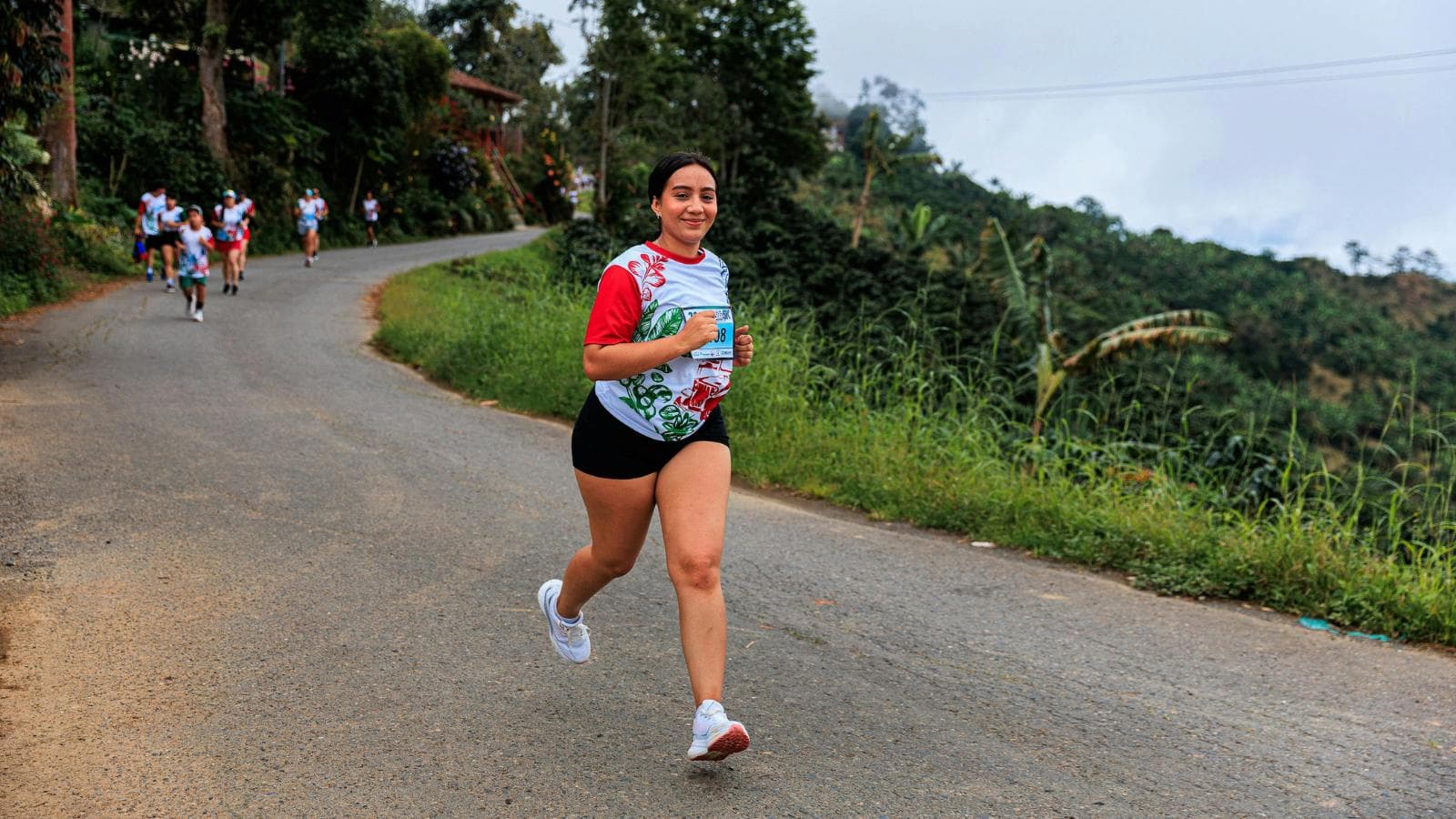
The best marathon downhill technique helps runners:
- Preserve energy
- Reduce impact stress
- Maintain cadence
- Protect the quadriceps
- Keep effort sustainable
This becomes especially important during races with rolling terrain or net downhill profiles discussed in training errors that slow down the running speed, where downhill pacing mistakes often affect the final miles significantly.
Why Downhill Running Feels Difficult?
Running downhill increases eccentric loading on the muscles, especially the quadriceps. Eccentric contractions happen when muscles lengthen while controlling force absorption.
This creates:
- Higher muscular stress
- More impact loading
- Increased soreness
- Greater fatigue accumulation
Even though heart rate may feel lower downhill, muscular damage often increases substantially when technique is poor.
This is why aggressive downhill running early in a marathon commonly destroys running legs later.
Avoid Overstriding Downhill
One of the biggest downhill mistakes is overstriding. Overstriding happens when the foot lands too far ahead of the body.
This increases:
- Braking forces
- Knee stress
- Quad fatigue
- Impact loading
Many runners instinctively lean back downhill and reach forward with their stride, which magnifies these problems.
Efficient downhill running usually involves: - Shorter stride length
- Faster cadence
- Foot landing closer under the body
This reduces unnecessary braking and helps maintain smoother momentum.
Cadence Matters More Than Stride Length
Fast controlled cadence is usually more efficient downhill than long aggressive strides.
Higher cadence helps runners:
- Stay balanced
- Reduce impact stress
- Maintain rhythm
- Control momentum naturally
Trying to cover maximum distance with each stride often creates excessive pounding and muscular fatigue.
Athletes improving rhythm through mobility routine for runners often develop better pacing awareness and smoother cadence naturally over time.
Lean Slightly Forward, Not Backward
Many runners lean backward downhill because they fear losing control.
However, excessive backward lean:
- Increases braking
- Overloads the quadriceps
- Disrupts running rhythm
- Creates unnecessary tension
Efficient downhill posture usually involves: - Slight forward lean from the ankles
- Relaxed upper body
- Stable core
- Balanced posture
The goal is controlled forward momentum rather than fighting gravity aggressively.
Relax the Upper Body
Tension wastes energy downhill.
Runners often tighten:
- Shoulders
- Hands
- Neck
- Jaw
especially on steeper descents.
Relaxed upper-body posture helps: - Improve balance
- Reduce fatigue
- Maintain rhythm
- Conserve energy
Efficient downhill runners usually appear smooth and relaxed rather than rigid or defensive.
Strong Quadriceps Improve Downhill Performance
The quadriceps absorb large amounts of force during downhill running.
Weak quads fatigue quickly, especially during:
- Long descents
- Late-race downhill sections
- Technical terrain
Strength training improves: - Force absorption
- Stability
- Muscular endurance
- Downhill durability
Useful exercises include:
- Split squats
- Step-downs
- Lunges
- Bulgarian split squats
- Single-leg strength work
Athletes applying concepts from strength routine to stay injury free often tolerate downhill stress more effectively.
Downhill Running Increases Muscle Damage
Even controlled downhill running creates muscular stress.
This often causes:
- Delayed soreness
- Quad tightness
- Heavy legs
- Reduced running economy later
The faster and steeper the downhill, the greater the eccentric stress becomes.
This is why runners should practise downhill running during training rather than waiting until race day.
Practising Downhill Running Builds Durability
Downhill running is a skill that improves with repetition.
Training helps the body adapt by improving:
- Muscular resilience
- Coordination
- Balance
- Cadence control
- Descending confidence
Runners who avoid hills entirely often struggle badly during downhill marathon sections because the muscles are unprepared for eccentric loading. This becomes especially important during endurance preparation discussed in lactate threshold in running.
Pacing Downhill Is Critical in Marathons
Many runners lose marathon performance by attacking early downhill sections too aggressively.
Running downhill too hard often creates:
- Early quad fatigue
- Excess glycogen use
- Mechanical breakdown later
- Reduced finishing strength
Controlled pacing usually produces better overall marathon outcomes than chasing short-term downhill speed.
The goal is preserving energy for the later stages of the race.
Footstrike Should Stay Controlled
Efficient downhill runners usually maintain:
- Quiet foot contact
- Balanced posture
- Stable landing position
Aggressive heel striking combined with overstriding often increases braking forces dramatically. However, runners should not force unnatural forefoot mechanics downhill either. Smooth controlled contact matters more than obsessing over exact footstrike style.
Athletes learning pacing efficiency through negative split in running races often improve downhill control by avoiding overly aggressive early pacing.
Core Stability Helps Maintain Balance
A stable core improves:
- Postural control
- Balance
- Force transfer
- Running efficiency
Poor stability often causes: - Excess upper-body movement
- Poor foot placement
- Reduced downhill control
Useful exercises include:
- Planks
- Side planks
- Dead bugs
- Pallof presses
Core endurance becomes especially important during longer marathons where fatigue affects posture significantly.
Trail and Road Downhill Running Differ
Road descents usually allow:
- More consistent rhythm
- Higher speed
- Predictable footing
Trail descents require: - Faster reactions
- More balance
- Greater foot placement awareness
- Technical coordination
Runners should train specifically for the terrain they expect on race day.
Fatigue Changes Downhill Mechanics
As fatigue increases:
- Cadence drops
- Posture collapses
- Braking increases
- Coordination declines
Late-race downhill sections often feel much harder because the quadriceps are already heavily fatigued. This is one reason marathon pacing matters so much overall. Athletes following tempo run for runners progression often improve fatigue resistance through gradual endurance development.
Recovery After Downhill Sessions Matters
Hard downhill sessions create significant muscular stress.
Recovery priorities include:
- Sleep
- Hydration
- Easy recovery runs
- Mobility work
- Proper nutrition
Aggressive downhill workouts too frequently often increase: - Soreness
- Injury risk
- Fatigue accumulation
The body adapts best when downhill exposure increases gradually.
Common Downhill Running Mistakes
Many marathon runners increase fatigue through avoidable habits.
Common mistakes include:
- Leaning backward excessively
- Overstriding
- Running too aggressively downhill
- Tensing the upper body
- Ignoring strength training
- Avoiding downhill practice entirely
Efficient downhill running should feel controlled rather than reckless.
Practical Ways to Improve Downhill Marathon Running
Runners can improve downhill performance by:
- Increasing cadence slightly
- Shortening stride length
- Maintaining relaxed posture
- Strength training consistently
- Practising downhill running regularly
- Avoiding aggressive braking
- Pacing conservatively early
- Building quad durability gradually
The best downhill runners conserve energy while maintaining smooth controlled momentum.
FAQs
Downhill running increases eccentric muscle loading, especially through the quadriceps.
Yes. A slight forward lean from the ankles usually improves balance and reduces braking forces.
Yes. Long descents create significant eccentric stress and muscular fatigue.
Absolutely. Overstriding increases braking forces and quad fatigue.
Usually yes. Faster cadence with shorter strides often improves downhill efficiency.
Yes. Stronger quads and core muscles improve stability and force absorption.
Eccentric muscle contractions create more muscular damage and delayed soreness.
Usually no. Aggressive downhill pacing often causes fatigue later in the race.