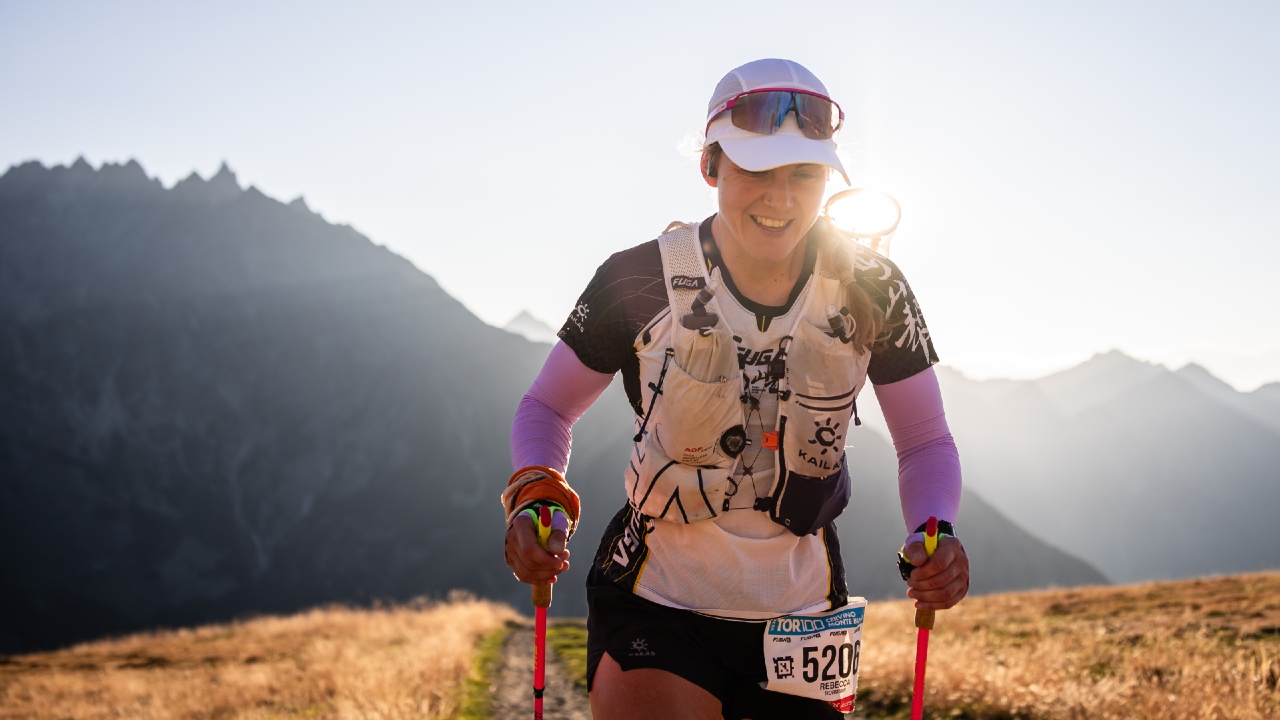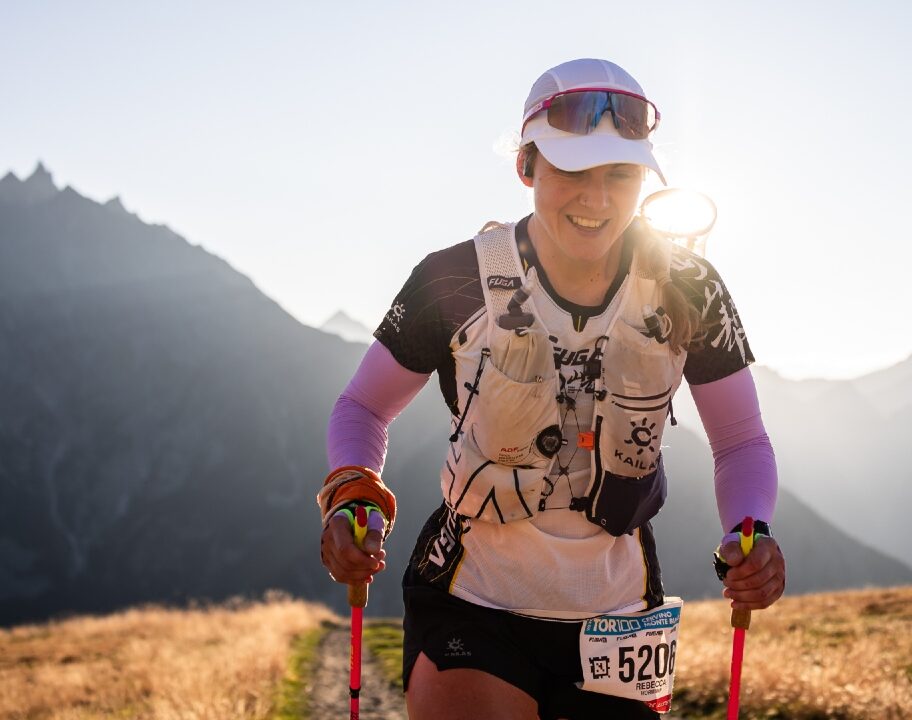


When Chris Myers talks about Western States, there’s no sense of a lottery win, no “I still can’t believe it” energy. If anything, the American sounds almost matter-of-fact about the race that put him on more people’s radar in 2025.
“If I didn’t DNF, I was on the podium,” he tells with a little laugh when we start our in-depth interview on his 2025 accomplishments and 2026 ambitions. “That’s kind of nice to say.”
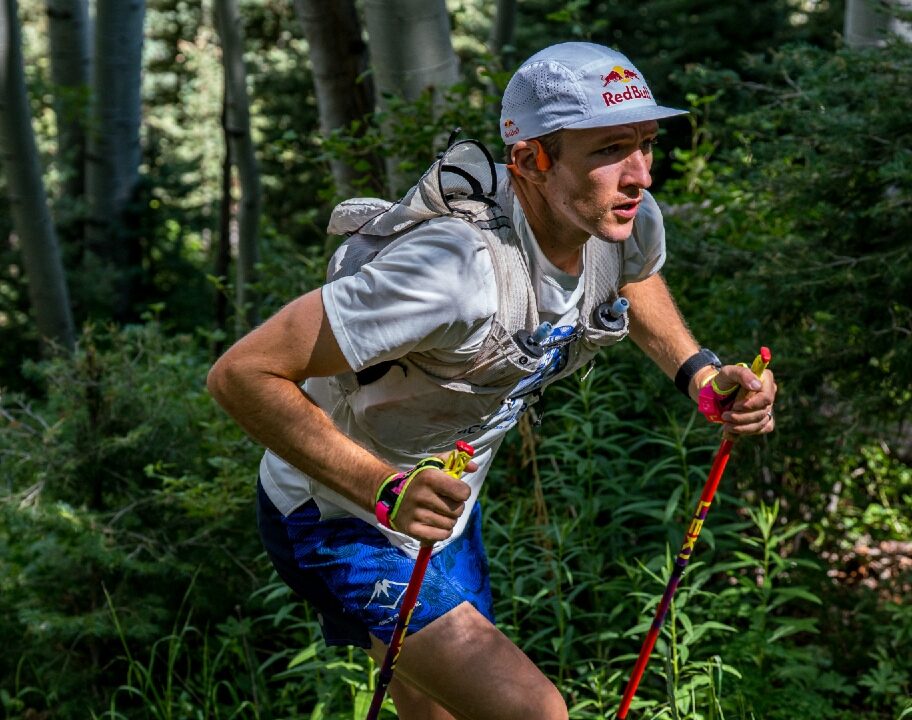
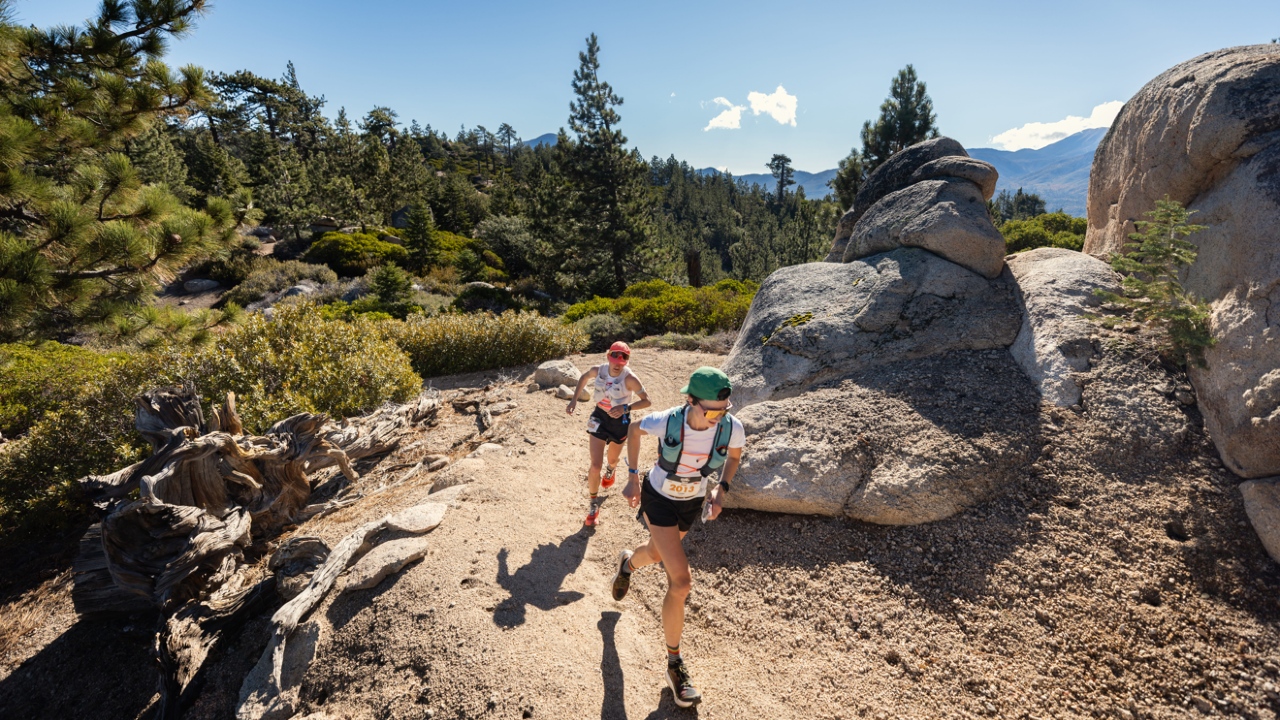
Myers finished second at Western States last year, holding off the GOAT Kilian Jornet in the closing stages and trading blows all day with fellow American Caleb Olson. For many, it was his breakout season. For Myers, the breakthrough actually happened a year earlier – and Western States is just the launchpad for something bigger.
In 2026, the big target is Chamonix and the full UTMB loop.
Western States as launchpad, not destination
When we ask Myers about what he says was his “breakout year” he rewinds to a very specific decision: leaving Los Angeles and moving to Boulder.
“I was living in Los Angeles and that is notoriously the best area for trail running,” he jokes, before correcting himself. “It’s actually got really good trails, it’s just not at elevation.”
Working remotely gave him the freedom to relocate. The logic was simple: if the guys beating him lived at altitude, he would join them.
“I was like, you know what, I’m young, I’m really liking this running stuff. All these people that are beating me live at elevation. I’m going to join them, and I’m actually going to try and see if I can do better.”
About a month after the move, he raced Black Canyon, secured a coveted Western States golden ticket and immediately felt something shift.
“It really put me on the map – like, okay, this is actually pretty serious now.”
Consistency pays off
His first Western States run that year didn’t grab headlines in the same way as his 2025 podium, but the numbers were telling. The time was quick enough that in many editions it would have podiumed, even won.
“It was more or less a historical top 10,” he explains. “I think my time would have gotten me like fifth place or even won in a lot of the years. So it was a little bit disappointing to run a really fast time but not really place super high. But I did leave that year feeling like I could do a lot better.”
The following season he did exactly that. Podiums stacked up, Western States returned, and he arrived in Auburn with momentum – and a reputation for consistency.
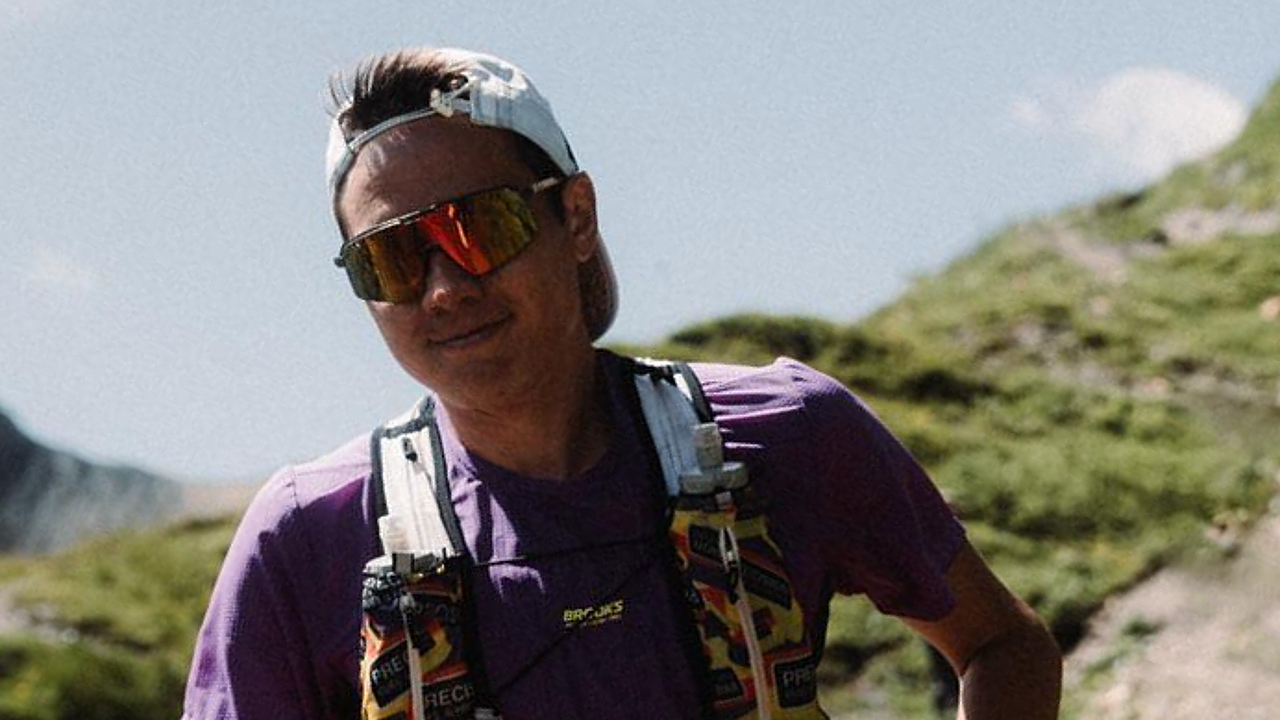
“If I didn’t DNF, I was on the podium,” he says. “I think one of my strengths is to be consistent. Sometimes you see people that train like crazy – oh my God, they’re gonna win this race – and then they just show up tired. I hope that I can be the one who backs up decent training with good racing.”
That special day in Auburn – and the battle with fear
The 2025 Western States podium was as deep as they come. Olson out front, Myers in second, Jornet charging hard behind. The race dynamic was far from static.
“We really separated when I stopped to pee,” Myers laughs. “You lose sight of the person ahead of you and then you might as well be in the middle of nowhere. There might be someone 20 yards ahead of you or five kilometres ahead of you. You never know.”
For much of the day, he and Olson were locked in a kind of long-distance duet.
“We did work with each other for a good bit, but the rest of the race we were just between two and five minutes apart. I’d be coming into aid stations and before I came in, I could hear them cheering for him leaving. So I kind of knew where he was.”
And yet, despite that tug-of-war up front, Myers admits his mind was often more occupied by the chase behind.
“Unfortunately, I was more worried about Kilian behind me than Caleb in front of me. That’s a race dynamic I want to avoid. I want to stop being afraid of who’s behind me and worry more about who’s ahead of me.”
It’s a revealing glimpse into his mindset: outwardly calm and happy to smile his way through races, inwardly wrestling with the same doubts as everyone else.
“When you’re racing, your mind goes to different places,” he says. “Mine was super fixated on just keeping where I was at instead of pushing forward. But I think still staying where I was at was a good move because I didn’t push myself too hard. You never know when you’re going to crack – it could happen at any second and then you just lose everything. It’s like you’re playing Icarus at that point.”
The intriguing part is that, even with that caution, he finished feeling like there was more in the tank.
“In hindsight, it’s nice to know that I feel like I could have pushed harder. That’s something I’m going to maybe experiment with in the future – like, all right, maybe I really do push this as hard as I can.”
Marginal gains and the new Western States
There’s a lot of talk about a “generation battle” at Western States – younger athletes arriving with sports science, tech and data, facing up to the legends who’ve defined the sport for a decade or more. Myers isn’t convinced it’s about age so much as evolution.
“I don’t know if it’s a generation thing,” he says. “I think it’s more just the progression of the sport. People are fuelling better, people are hydrating better, people are cooling better, they’re strategising crew composition, transition times. It’s marginal gains at this point.”
He points to his own race as an example.
“One of the biggest things that was helpful for me is my transition times. I was 11 minutes of total stop time throughout the entire day, which is around 30-something seconds per aid station. I think my moving time was slower than Kilian’s, but my transition time was faster.
“I mean, I don’t know what his actual transition time was, but I’m pretty sure he ran faster than me. It’s little bits of strategy, little bits of people knowing the course.”

And that, in his view, is where experience becomes its own kind of performance enhancer.
“I benefited a lot running it the second year – just from knowing what to expect, knowing how to push myself at certain points. That’s just something no one can tell you how to do.”
Western States may still have headroom. Myers thinks the sub-14 barrier will fall soon.
“I’m not sure where it’s going to plateau,” he says. “But I do think someone’s going to break 14 hours very soon at Western States.”
If he returns, that might be his own big goal.
CCC reality check – and why UTMB has to be different
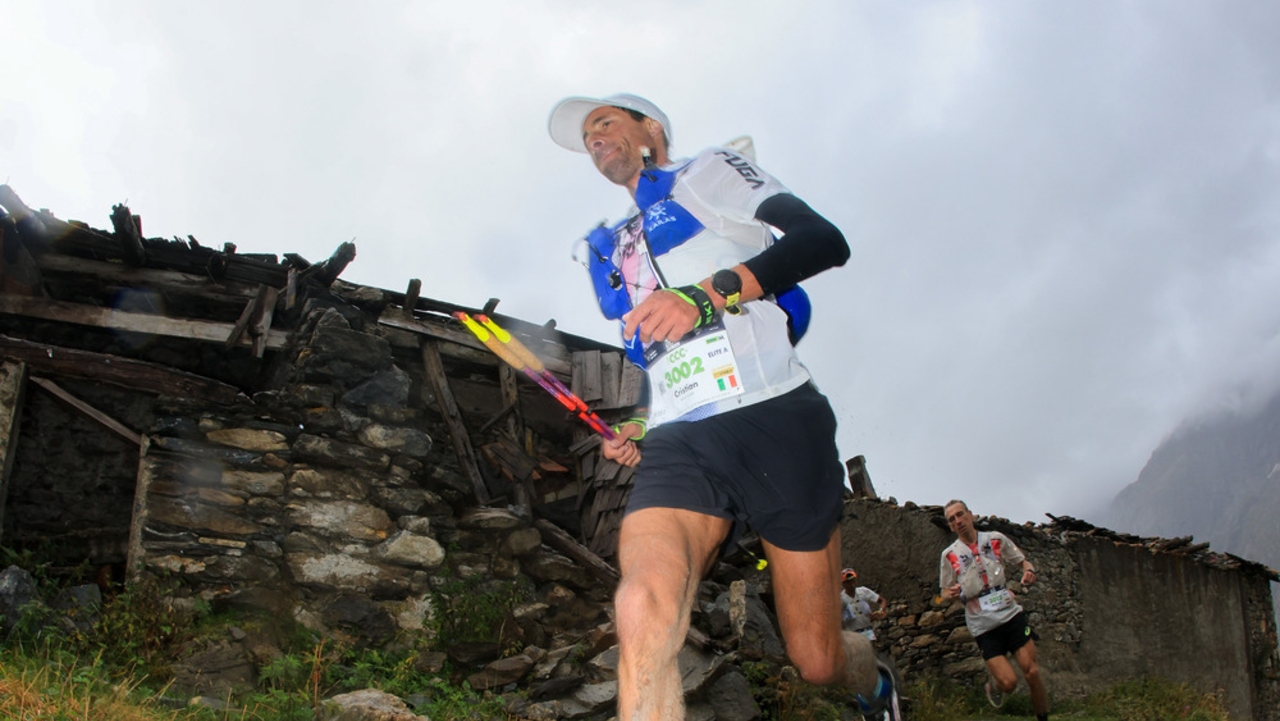
Last year’s UTMB week brought Myers a very different lesson. Having already committed to CCC, he stuck to the plan and headed to Europe barely weeks after Western States.
“Running in the US for that long really exhausts you, which you wouldn’t think,” he admits. “It was probably a bad idea, but I’d already committed to it. I’d set aside the time and I was like, well, I might as well try.”
The reality was brutal. Two to three weeks after Western States he was already in Europe, trying to train. His body had other ideas.
“I did my first full week of running in Europe and I was wrecked. I spent the first three weeks in Europe feeling not good every day. Every day would be a little bit different – this hurt, or that was sore. I was just fatigued. It was an inconsistent three weeks.”
Then, almost on cue, he felt normal again – just in time for race week.
“About two weeks after that I felt normal, like my day-to-day training self, and then it was race time. I don’t think two weeks of feeling like a normal human being is enough to reset, build and race a really fast, competitive 100k.”
Two hours into CCC, the bill arrived.
“I just hit this wall. I just couldn’t move fast. Normally I’m good at running downhills. I got to the top of a big downhill, and I was like, I’m so gassed right now. If I continue I could probably finish at a low gear and just tough it out – but what’s that going to do to my recovery if I’m already very fatigued?”
It was, he says, the kind of lesson you can only learn the hard way.
“If you go and you do well at both, then that’s a great thing to do. But I hadn’t tested it out. Now I kind of know my limits.”
More importantly, CCC crystallised something else: just how badly he wants to experience UTMB feeling good.
“One of the things I really learned at CCC was how badly I wanted to do one of these races feeling good,” he says. “Both times I’ve been in Chamonix have been after States, so I’ve always been tired there. I’ve never really been able to experience running there actually energised.”
Turning UTMB into a project
Which brings us to 2026. This year, the full UTMB loop is the main event, and Myers is determined to treat it differently.
“Yes. Full loop,” he grins. “I’m very excited to do the full loop. While I would love to do another crack at CCC, it seems like UTMB is a much smarter option, the cooler option to do better at.”
On paper, it suits him. Western States is fast, hot and flows like a long trail marathon. UTMB is slower, steeper and more attritional. That plays into the way he sees his own strengths.
“I think I do well at 100Ks,” he says. “But I also think one of my strengths is slogging it out and doing a long distance. I’m not particularly fast but I feel that I can go medium to decently fast for a long time.
“In my gut I feel like I like that stuff a little bit more – I can just be a little bit more mentally strong.”
He also relishes the strategic side.
“For UTMB, I’m not too worried. I feel like the race is so long that you can’t worry too much about how fast you’re going, you have to worry about strategy. That’s exciting for me because I don’t really know what to expect yet. Maybe I don’t know what to be scared of yet.”
This time the build-up will look very different. There’s Black Canyon – where he’ll pace a friend for 50km before racing the 50km himself the next day – and then Fuji 100 in Japan, which he calls a “research race”.
“It’s going to be going to an international country, international setting, running through the night, trying to run a long distance in a new place,” he explains. “All my hundred milers have been Western States, so they’ve been fast and hot. I want to do one that’s different, that’s a little bit more similar to UTMB.”
Alongside that, the everyday training will shift: more time on poles, more hiking, more strength for the climbs and descents. He’s even bought a cross-country ski set-up purely for extra pole work in winter.
“I’m used to running everything and not using poles,” he says. “That’s something I’ve taken into account very early. I want to do more of that training because you can’t really just fake it – you have to practise it.”
An American in Chamonix – and realistic expectations
Myers is under no illusions about how hard UTMB is for American men to crack. Just as Europeans often struggle on their Western States debut, the reverse is true in the Alps.
“That’s why you see Europeans coming over to Western States and notoriously not having amazing days,” he says. “Maybe if they repeat, they can come back and do well – and then vice versa for Americans at UTMB.
“I feel like you need to actually live and breathe the environment, the culture, to do better.”
That’s one reason he’s planning to spend an extended block in Europe before UTMB, potentially including time at coach Robbie Britton’s base in Italy. But even with that, he’s keeping his expectations in check.
“I don’t think I’m going to knock UTMB out of the park on my first try,” he says simply. “It’s so different. I’m going to try and train as best I can in the vacuum of the US – but I expect to learn.”
Longer term, he’d love to shuttle back and forth between the two great 100-mile icons: Western States and UTMB, alternating over the years, chasing both a sub-14 in California and a dream performance in the Alps.
For now, though, 2026 is about one thing: turning “the full loop” into a project in its own right, not an afterthought.
“It’s mostly exciting,” he says again, “because I don’t know what to be scared of yet.”
- Look out for the next two parts of our interview with Chris in the next couple of weeks – his top tips for those taking in their first ultra this year and how he weaves his love for travel and art into his trail running journey.