

Tom Evans has already achieved what only a select handful of ultrarunners ever have.
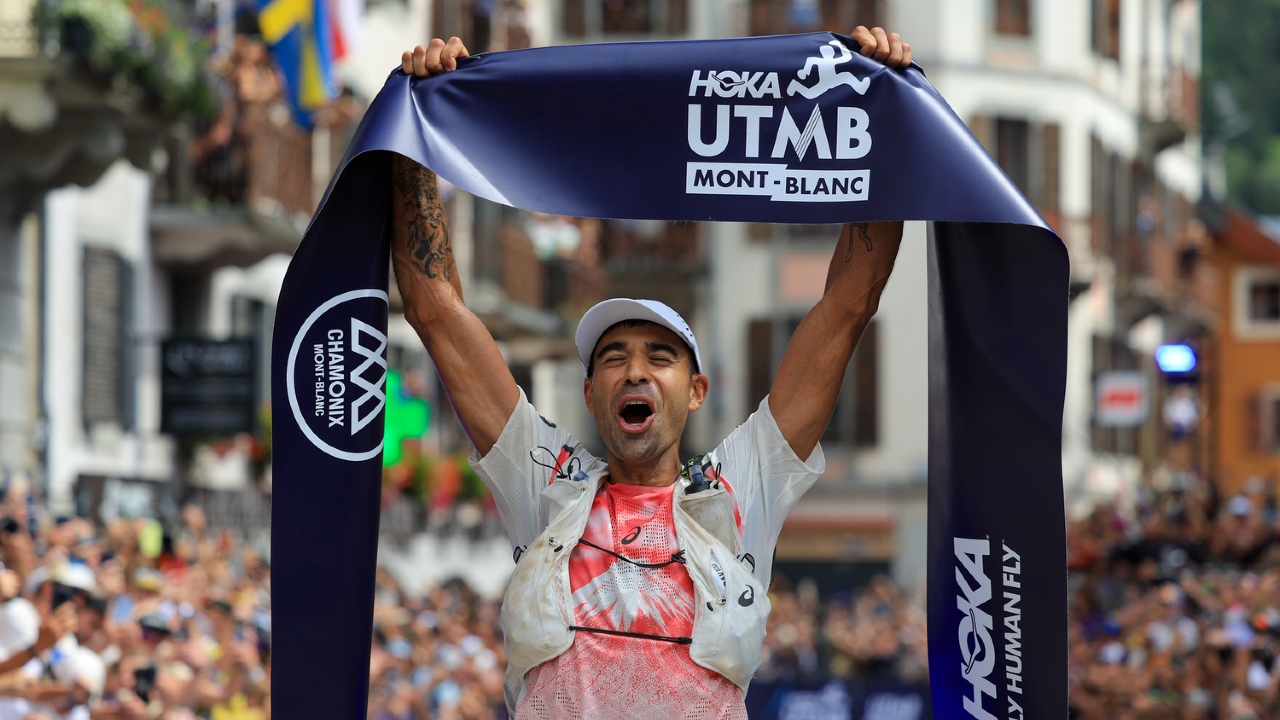
The British star has conquered both Western States and UTMB, trail running’s two most iconic 100-mile races.
Now, as he prepares for his Hardrock 100 debut, coach Scott Johnston has lifted the lid on the meticulous training, altitude preparation and philosophy behind Evans’ latest challenge – with fatigue resistance one of the key aspects.
We’ve got Scott’s inside track ahead of this year’s race which starts on Friday.
Excitement building
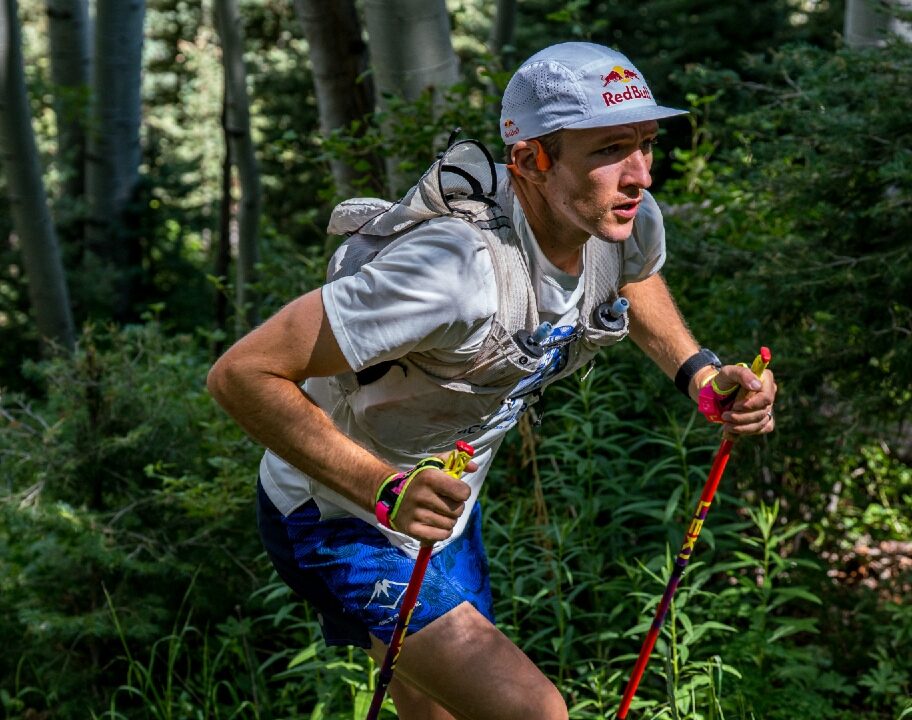
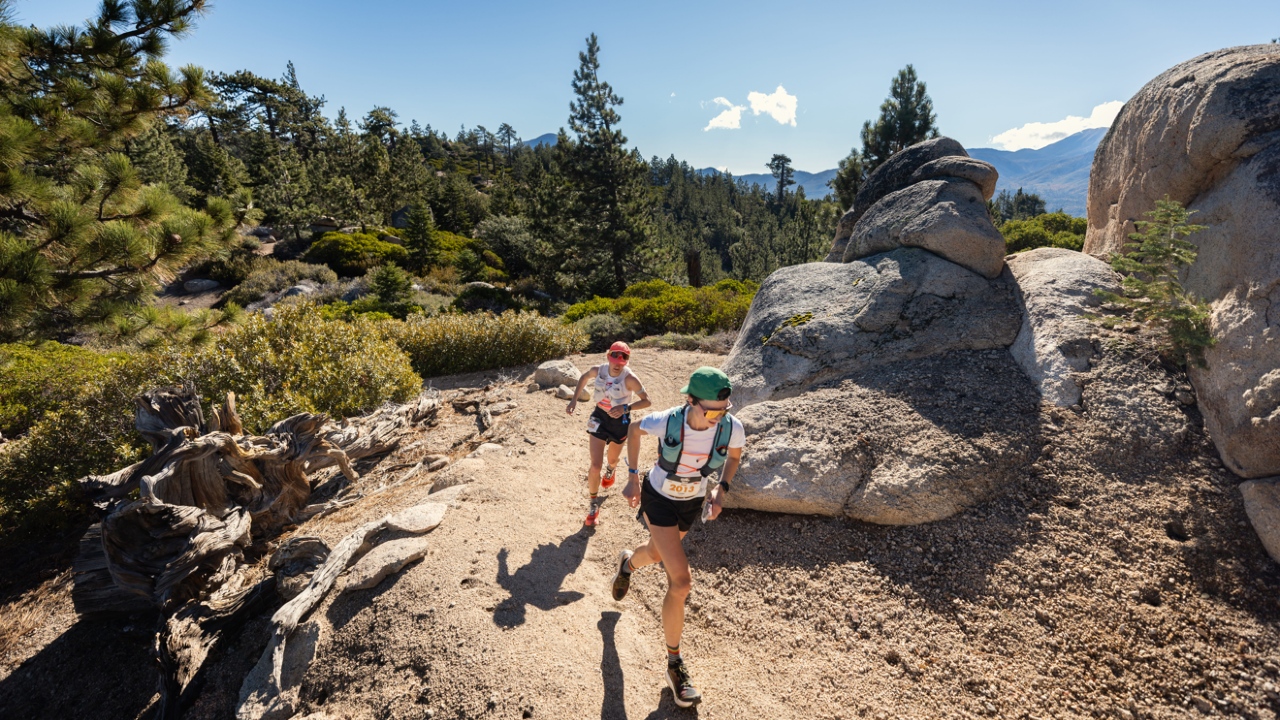
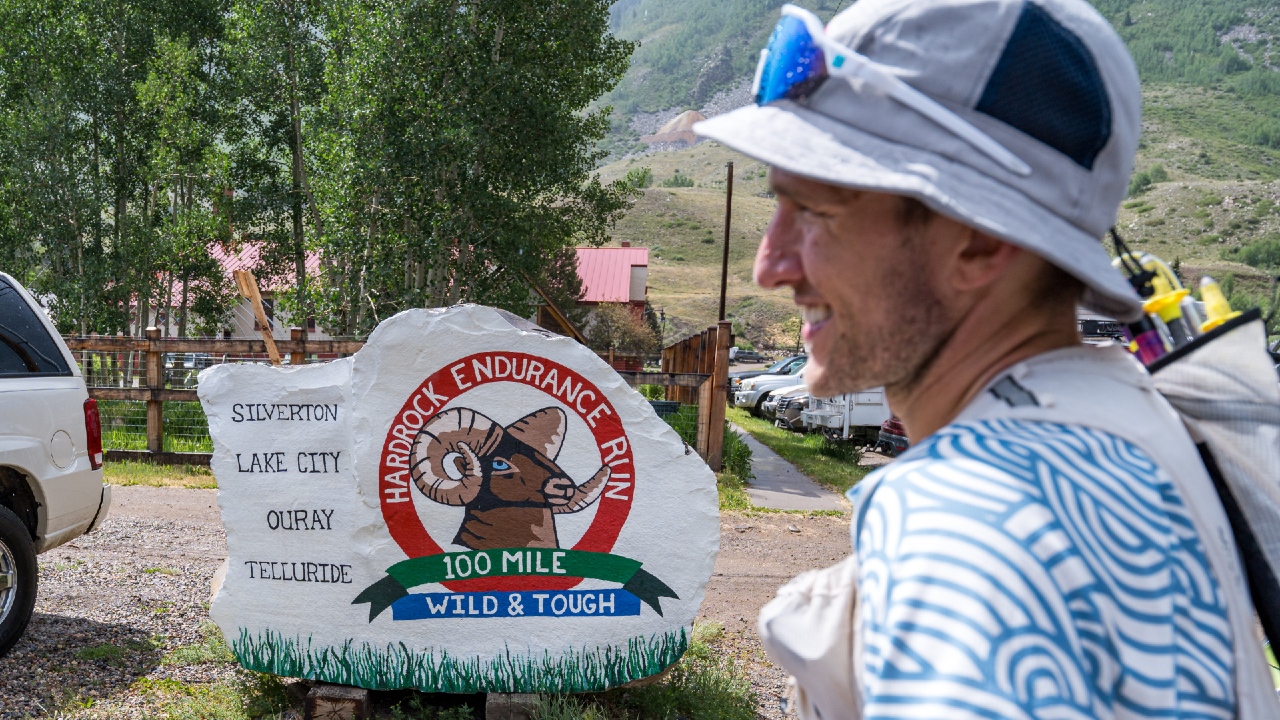
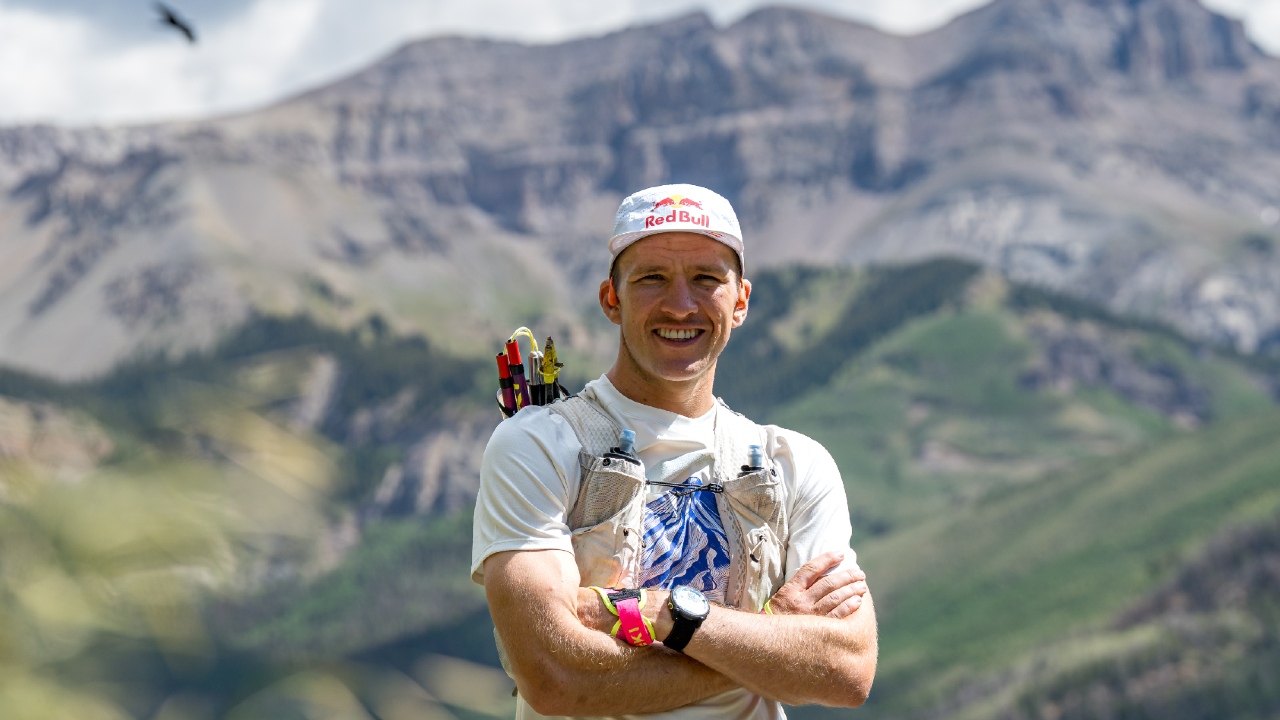
Tom Evans has already climbed high into Colorado’s San Juan Mountains, spending the last couple of weeks before Hardrock 100 becoming acquainted with one of the most demanding courses in ultrarunning.
For an athlete who has already won Western States and UTMB, Hardrock represents another step into the unknown. The altitude is higher, the climbs steeper, the descents more punishing. It is a race unlike anything else on the calendar.
Evans has certainly been reminded of that during his reconnaissance runs.
“This course is unlike anything I’ve ever run – rugged, relentless, and ridiculously beautiful,” he said.
“Every mile (in training) has only made me more excited to take on the full thing.”
Behind the scenes, however, months of planning have already gone into ensuring the Brit arrives in Silverton as well prepared as possible. According to long-time coach Scott Johnston, who helped mastermind Evans’ UTMB win last year as well as Ruth Croft’s in the women’s race, one significant change has defined Evans’ build-up compared with previous mountain races.
Simulating what can’t be found at home
While the foundations of Evans’ training remain similar to the programme that carried him to UTMB victory last year, Johnston says Hardrock’s extreme altitude demanded a different approach.
“The big change for Hardrock was to incorporate the use of simulated altitude using hypoxic air mixtures in some of his sessions,” Johnston told RUN247.
“Since he lives at sea level we felt it was important to include some altitude preparation work.”
Rather than relying solely on arriving early in Colorado, Evans spent months completing selected treadmill sessions using a Hypoxico altitude system, allowing his body to adapt before ever leaving the UK.
The results, Johnston says, have been encouraging.
“The laboratory tests have shown an impressive adaptation over the past few months of this approach. Now we will put it to the test at actual, not simulated altitude, in Colorado.”
That final sentence neatly captures the uncertainty that still surrounds Hardrock. Laboratory data can point in the right direction, but only race day will reveal whether those gains translate onto a course where runners spend much of the day above 11,000 feet and repeatedly climb beyond 14,000 feet.
One build, two huge objectives
Perhaps the biggest insight into Evans’ season is that Hardrock has never been viewed as a standalone target.
With just seven weeks separating Hardrock and a return to Chamonix to defend his UTMB crown, Johnston has effectively built one training programme designed to serve both races.
“These two races share similar profiles in terms of their overall elevation gains and losses, so the training we use for these is the same,” he explained.
That represents a significant contrast to 2023, when Evans won Western States before attempting to transition to the vastly different demands of UTMB only six weeks later.
“We don’t need to shift gears from training for a flatter, faster race course like we did the year Tom won Western States and then attempted to come back for UTMB six weeks later.”
Instead, Hardrock itself becomes part of the bigger plan.
“Tom will need two to three weeks of recovery after Hardrock and a 10-day taper into UTMB. That leaves maybe a week or two maximum where we can really load him up without risk of too much fatigue.
“So we’ll be relying on the fitness base he built going into Hardrock to carry over into UTMB.”
It also explains why Johnston insists the real work has already been completed.
“He is now in Colorado at real altitude, and we feel that all the fitness training for Hardrock was done before he left home in the UK.
“Intensity is much reduced and the running volume there is mainly for course recce and exposure to real altitude.”
Training smarter, not simply harder
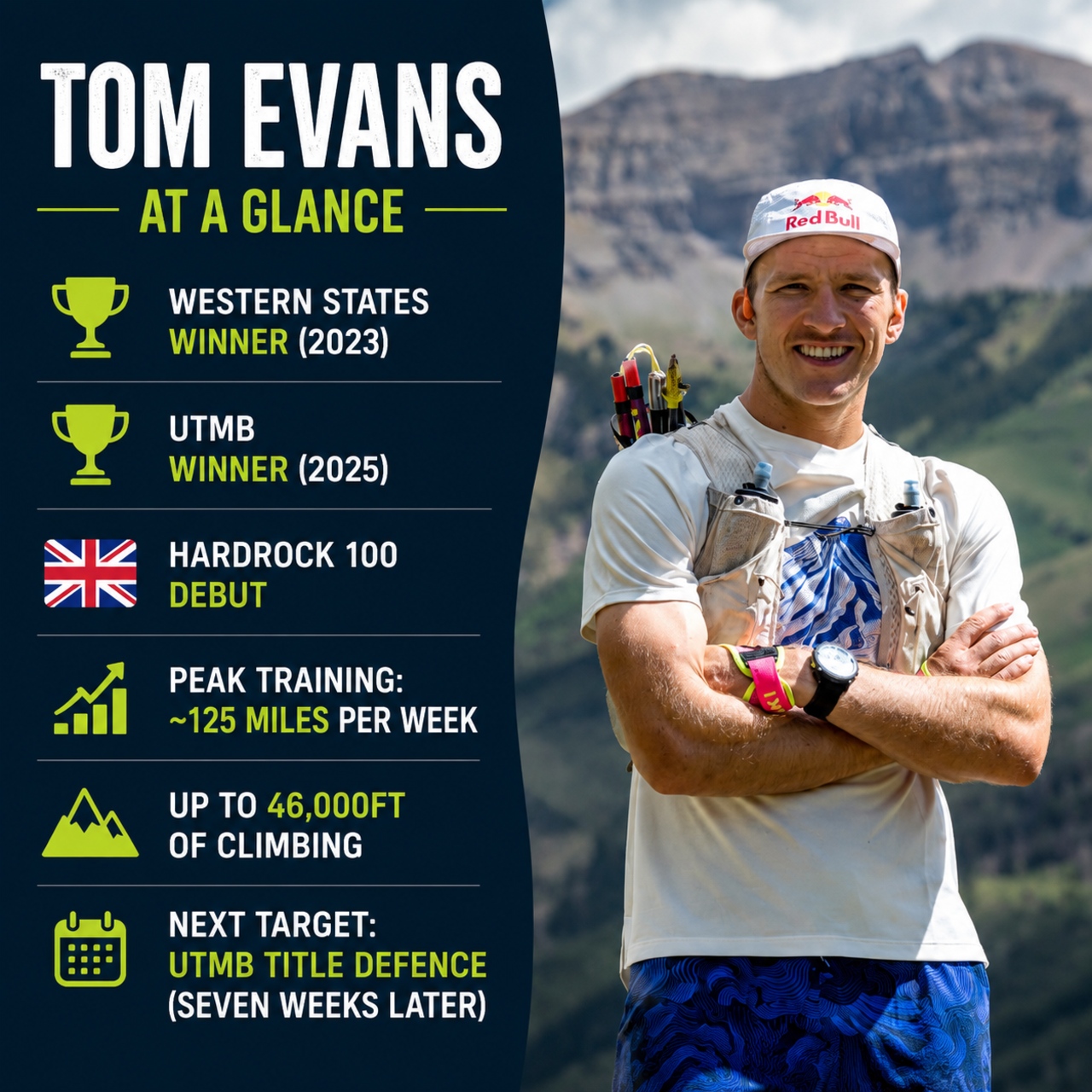
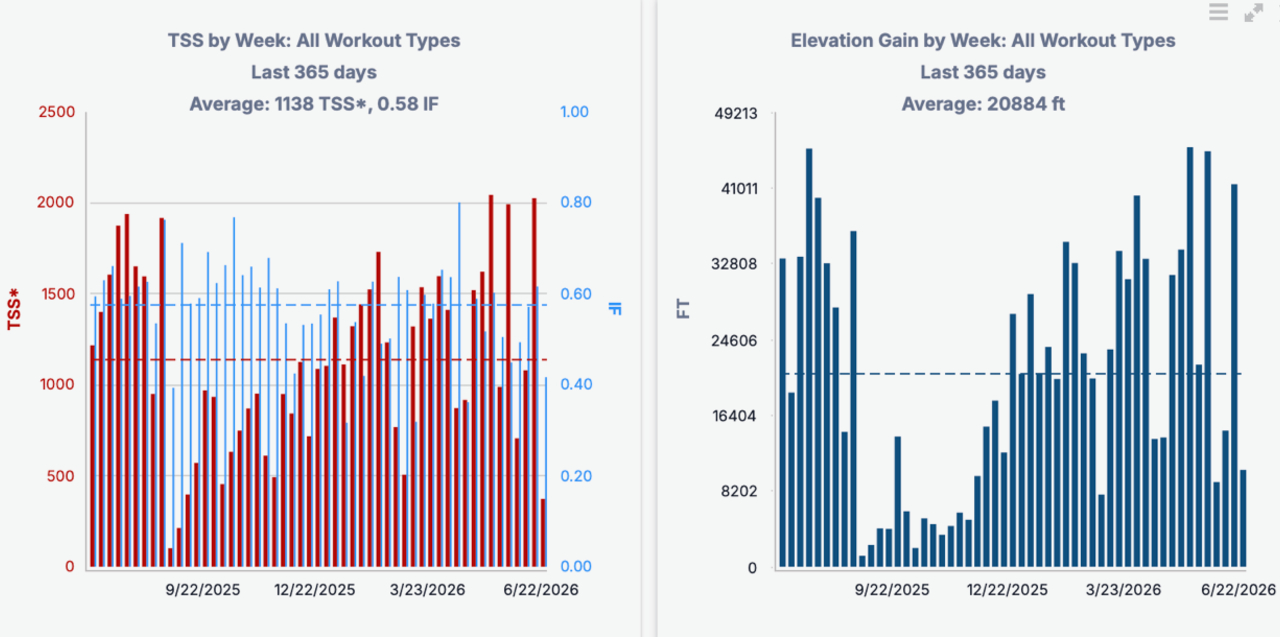
TrainingPeaks data shared with RUN247 illustrates the consistency of Evans’ preparation, with peak weeks reaching around 125 miles of running and as much as 46,000 feet of elevation gain as Johnston balanced volume, climbing and recovery across the build [graphic see below].
But Johnston believes the biggest gains come not from simply adding more training, but from carefully controlling every hard session.
“We carefully control his intensity using blood lactate and keeping it below 3mMol/L in all his intensity sessions.”
His philosophy is strikingly simple.
“The goal here, as it should be for any endurance athlete, is to run, cycle, ski or climb as fast as possible, as aerobically as possible.”
“Training at very high intensities signals the body to increase the anaerobic metabolism rather than signalling the maximal development of the aerobic system.”
TrainingPeaks also allows Johnston to compare Evans’ current preparation with previous successful campaigns.
“I rely heavily on the full array of TrainingPeaks metrics.”
“With as much training history as I have with Tom, it allows me to compare not only today’s workout with a similar workout in weeks past but to compare this build-up to previous builds to successful races.”
Preparing the legs for the final hours
One of the defining sessions in Evans’ programme combines sustained climbing with dedicated downhill work, specifically targeting the muscular fatigue that often decides mountain ultramarathons.
“We typically include one downhill training session per week,” Johnston explained.
“This is combined with a weighted uphill segment, so we condense these two important stimuli on to one day.”
This year has also brought another subtle evolution.
“This year is the first year we have had Tom use weight on the downhill. I caution less advanced athletes about the use of weight downhill. Not because of the knees as you might think but more the danger of twisting an ankle.
“Tom is only doing this on the treadmill.”
The science behind the sessions may be complex, but Johnston reduces the objective to something every runner understands.
“The athlete slows down because their legs get tired.”
“If we can improve the fatigue resistance of the main propelling muscles, we can improve the speed the athlete can sustain, which results in improved endurance performance.”
Whether months of meticulous preparation prove enough will soon be decided high in the Colorado mountains.
For Evans, though, the work is already complete.
“Huge thanks to the great company out on the trails and to TrainingPeaks for helping keep the training on track all the way to the start line,” he said.
“Now it’s time to trust the process and see what race day brings.”