


Stomach sloshing is the uncomfortable sensation of fluid moving around inside your stomach while you run. You may hear or feel liquid with every stride, along with bloating, fullness, nausea, or an urge to slow down. It commonly appears during long runs and races when runners are drinking and eating while exercising. The problem is not always that you drank too much overall. Drinking a large amount at once, running too hard, combining excessive fluid with concentrated nutrition, or using a fueling strategy your stomach has not practiced can all contribute. Preventing sloshing requires a simple approach: spread fluid intake across the run, avoid unnecessary overdrinking, practice race nutrition, and adjust intake to your individual needs and conditions.

In Short
- Avoid drinking large amounts at once.
- Spread fluid intake across longer runs.
- Do not deliberately overhydrate before starting.
- Match drinking to conditions and individual needs.
- Practice drinking while running.
- Avoid suddenly increasing carbohydrate intake on race day.
- High intensity can make digestion more difficult.
- Test gels, drinks, and food during training.
Why Does Your Stomach Slosh While Running?
Fluid entering your stomach does not immediately move into the intestines and bloodstream. If fluid accumulates faster than it leaves the stomach, you may notice it moving with each stride. Running makes this particularly noticeable because of the repetitive movement of the body.
Common contributing factors include:
- Drinking too much at once.
- Drinking immediately before starting.
- High running intensity.
- Large meals close to running.
- Concentrated fueling.
- Unfamiliar sports nutrition.
- Poorly practiced race nutrition.
Sloshing is therefore usually better addressed by reviewing your overall fueling and hydration strategy rather than simply eliminating water.
Stop Drinking Large Amounts at Once
One of the simplest changes is to avoid consuming a large volume in one go.
A more consistent approach may be easier to tolerate:
- Drink progressively.
- Avoid repeatedly becoming very thirsty before drinking.
- Do not automatically finish every cup or bottle.
- Adjust intake according to conditions.
- Practice the pattern during training.
A structured hydration strategy for runners can help you develop a plan based on your needs rather than alternating between long periods without drinking and sudden large intakes.
Do Not Overhydrate Before Running
Some runners try to prevent dehydration by drinking excessive amounts immediately before a run. This can start the session with an uncomfortably full stomach. Instead, aim to begin normally hydrated through sensible fluid intake across the hours before running. You should not need to rapidly consume a large bottle just before leaving. Your pre-run food matters too. Planning what to eat before running can help you avoid combining a large meal, excessive fluid, and exercise within an unnecessarily short period.
Give your stomach enough time to process what you consume.
Match Fluid Intake to the Run
Not every run requires the same drinking strategy.
Consider:
- Duration.
- Temperature.
- Humidity.
- Intensity.
- Sweat rate.
- Access to fluids.
- Personal tolerance.
A short easy run in cool conditions may require little or no fluid during the session for many runners. A multi-hour summer trail run is completely different.
High Intensity Can Make Sloshing Worse
Running harder can make eating and drinking more difficult to tolerate. This becomes important when runners start races aggressively and then try to consume substantial amounts of fluid while maintaining an unsustainable pace. If your stomach repeatedly becomes uncomfortable during races but rarely during easy training, intensity may be part of the problem. Understanding why is your starting pace important for long distance running can help you avoid an aggressive opening that creates problems later. A controlled start gives both your cardiovascular system and fueling strategy a better chance of remaining manageable.
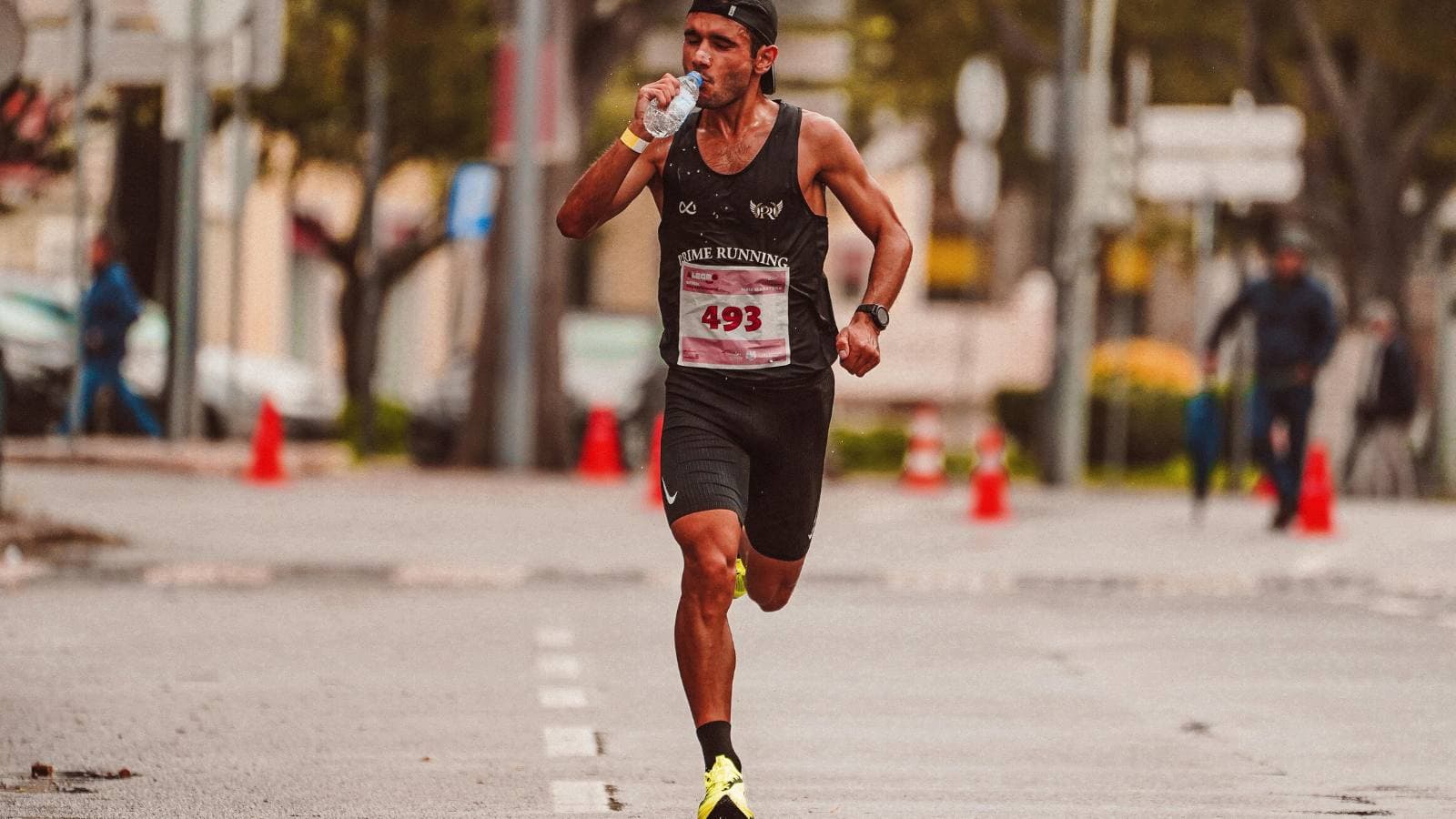
Practice Drinking While Running
Drinking on the move is a skill.
Training gives you the opportunity to determine:
- How frequently you prefer to drink.
- How much feels comfortable at once.
- Whether you tolerate water or sports drink better.
- How drinking interacts with gels.
- Whether you need to slow briefly.
- How weather changes your needs.
Do not wait until race day to answer these questions.
Long training sessions should sometimes reproduce the practical drinking conditions you expect during your target event.
Your Fueling Strategy Can Contribute
Fluid is only one part of what enters your stomach.
During a long race you might combine:
- Water.
- Sports drink.
- Gels.
- Chews.
- Bars.
- Solid food.
Taking several products close together can create a large gastrointestinal load. Following what to eat during long runs can help you build a simpler nutrition plan rather than consuming whatever becomes available at every aid station. Know approximately when you intend to eat and drink. Consistency is usually easier to manage than repeatedly alternating between too little and too much.
Watch Concentrated Fueling
More carbohydrate is not automatically better if your stomach cannot tolerate the amount or concentration you are consuming. For example, runners sometimes take several gels close together with inadequate fluid or combine gels with a concentrated carbohydrate drink without considering the total intake. This may contribute to gastrointestinal discomfort. Your fueling plan needs to consider the complete combination of food and drink rather than treating each product separately. Practice the exact combinations you expect to use during races.
Train Your Gut
Your gastrointestinal system can adapt to consuming nutrition during exercise. That makes fueling practice part of training. Start with an amount you tolerate and progressively practice your intended race strategy during appropriate sessions. Using how to train your gut for marathons and ultras can help runners become more comfortable consuming carbohydrate and fluid while moving.
Gut training is particularly valuable if you are preparing for:
- Marathons.
- Ultramarathons.
- Long trail races.
- Hot races.
- Events requiring several hours of fueling.
Do not dramatically increase intake for the first time on race morning.
Long Trail Runs Need More Planning
Trail runners can spend substantially longer on course than they would covering the same distance on a road.
- Elevation
- Technical terrain
- Weather
- Aid station
spacing can all increase total duration. That makes both fueling and hydration more important. Following how to fuel for a trail run can help you estimate what you need to carry and when you plan to consume it. The goal is not to fill your stomach before every long section. Carry enough supplies to meet your needs while distributing intake across the run.
Ultramarathons Increase the Challenge
Ultramarathons create a more complicated gastrointestinal challenge because runners may need to eat and drink for many hours. A strategy that works for a two hour run may not automatically work for an all-day event.
Long events require practice with:
- Different food textures.
- Fluid intake.
- Carbohydrate timing.
- Aid station foods.
- Hot and cold conditions.
- Changes in appetite.
Using how to fuel and hydrate for an ultramarathon can help combine these elements into one strategy instead of treating food and fluid independently. The longer the event, the more valuable repeated training experiments become.
Do Not Wait Until You Are Depleted
Some runners avoid eating and drinking because they are worried about stomach problems. They then become extremely thirsty or low on energy and try to compensate by consuming a large amount at once. That can create the exact gastrointestinal overload they wanted to avoid. It can also increase the risk of a major performance decline. Understanding how to avoid bonking when running reinforces why fueling should begin before severe energy depletion develops.
A steady strategy is usually more manageable than repeatedly trying to catch up.
What Should You Do if Sloshing Starts?
Do not panic.
If the sensation is mild, temporarily reducing intake and slowing your pace may give your stomach time to settle.
Try:
- Reducing intensity.
- Avoiding another large drink immediately.
- Walking briefly if necessary.
- Waiting before consuming more food.
- Reassessing what you recently consumed.
Once the sensation improves, return gradually to your normal fueling and hydration plan rather than immediately consuming everything you skipped. If sloshing repeatedly occurs during training, review the pattern afterward.
Keep a Simple Fueling Record
You do not need complicated data analysis.
After important long runs, note:
- What you ate beforehand.
- How much you drank.
- What nutrition you used.
- Approximate timing.
- Weather conditions.
- Running intensity.
- When stomach discomfort appeared.
Patterns often become clearer after several sessions. You might discover that problems appear after a particular product, large drink, hard effort, or combination of foods. That information is much more useful than randomly changing your entire nutrition strategy after one bad run.
Sloshing Is Not Always a Hydration Problem
Do not assume every stomach issue means you need less water. Gastrointestinal symptoms during running can have multiple causes.
Possible contributors include:
- Poor food timing.
- Excessive intake.
- Unfamiliar nutrition.
- High intensity.
- Heat.
- Stress or race nerves.
- Certain foods.
- Individual gastrointestinal sensitivity.
This is why copying another runner’s exact plan often fails. Training mistakes can also interact. Understanding what training errors slow down running progress can help runners look at pacing, recovery, preparation, and workload rather than treating every race problem in isolation.
When Should You Take Stomach Problems Seriously?
Occasional mild sloshing that resolves after slowing down is different from severe or persistent gastrointestinal symptoms. Stop running and seek appropriate medical attention when symptoms are severe or accompanied by concerning signs such as:
- Fainting.
- Confusion.
- Severe abdominal pain.
- Repeated vomiting.
- Blood in vomit or stool.
- Severe weakness.
- Inability to safely continue.
Frequent gastrointestinal problems during otherwise normal runs may also justify discussing your symptoms with a qualified healthcare professional. Do not repeatedly train through severe symptoms without investigating them.
Common Mistakes
- Drinking a large amount immediately before running.
- Waiting until extreme thirst before drinking.
- Drinking excessively at every aid station.
- Trying unfamiliar sports drinks during a race.
- Taking several gels close together.
- Combining too much concentrated nutrition.
- Starting a long race too fast.
- Avoiding all fluid because sloshing happened once.
- Failing to practice race nutrition during training.
Practical Tips
- Begin runs normally hydrated.
- Spread fluid intake across longer sessions.
- Avoid unnecessary large drinks.
- Practice your race-day products.
- Test gels with your planned fluids.
- Keep long-run fueling simple.
- Adjust drinking for weather and duration.
- Slow temporarily if your stomach becomes uncomfortable.
- Record what triggers repeated problems.
Actionable Takeaways
Preventing stomach sloshing while running is mainly about managing how much enters your stomach and when. Avoid excessive drinking immediately before exercise and large catch up drinks during the run. Instead, develop a consistent hydration strategy matched to the duration, weather, intensity, and your individual needs.
Practice the complete combination of gels, food, sports drink, and water you intend to use during races. Train your gut progressively rather than introducing a much larger intake on race day. If sloshing begins, reduce intensity and give your stomach time to settle.
The best solution is rarely to stop drinking completely. It is to develop a better practiced balance between fluid, fuel, timing, and running intensity.
FAQs
Stomach sloshing can occur when fluid accumulates in the stomach faster than it moves onward, making the liquid noticeable during the repetitive movement of running.
Not necessarily. Total fluid intake, how quickly you drank it, exercise intensity, food intake, and gastrointestinal emptying can all contribute.
Reduce your intensity, avoid immediately consuming another large drink, and give your stomach time to settle before gradually returning to your fueling and hydration plan.
Not automatically. The better approach is to avoid excessive amounts at once and match fluid intake to your individual needs and running conditions.
Yes. Consuming a large volume shortly before starting can leave your stomach feeling full and make fluid movement more noticeable while running.
Gels can contribute to gastrointestinal discomfort when intake, timing, fluid, or carbohydrate concentration is poorly tolerated. Practice your gel strategy during training.
High running intensity can make food and fluid harder to tolerate for some runners. Starting long races at a controlled effort may help reduce gastrointestinal problems.
There is no universal cutoff. The goal is to arrive normally hydrated without rapidly consuming excessive fluid immediately before starting.