Aid stations are an important part of many trail races, particularly longer events where runners may depend on them for water, food and other supplies. They can also become places where considerable time is lost because runners arrive without a plan, browse through every available food option or remain stationary longer than necessary. Efficiency does not mean racing through every aid station as quickly as possible. Sometimes spending an extra minute eating, refilling bottles or solving a developing problem can save far more time later. The goal is to complete the tasks you genuinely need and then continue moving.
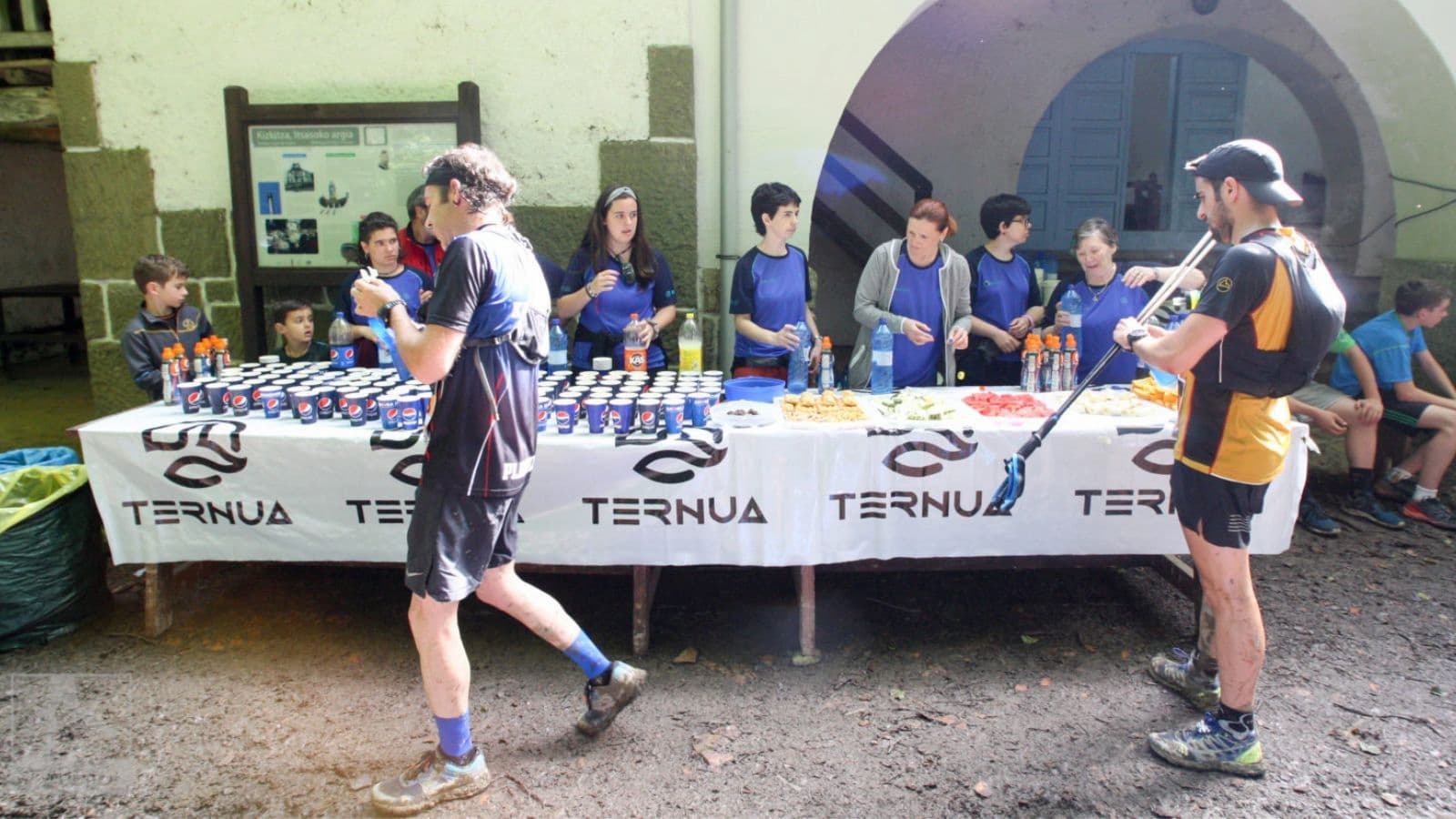
Good aid station management begins before race day. Understanding the course, knowing what each station provides and practising your nutrition strategy can make each stop simpler and help you maintain momentum throughout the race.
In Short
- Study aid station locations before the race.
- Know what food and drinks will be available.
- Decide what you need before arriving.
- Refill bottles or hydration flasks first.
- Eat foods you have already tested when possible.
- Deal with developing problems before they become serious.
- Avoid standing around without a purpose.
- Leave once your essential tasks are complete.
Why Does Aid Station Efficiency Matter?
A few unnecessary minutes may seem insignificant during a long trail race, but repeated stops can accumulate. If you spend five extra minutes at six aid stations, that becomes 30 minutes of stationary time. However, efficiency should not become an obsession with stopping as briefly as possible. Skipping food, failing to refill water or ignoring a developing blister can cost considerably more time later. An efficient aid station stop balances speed with preparation for the next section of trail.
Study the Course Before Race Day
Start by understanding where the aid stations are located.
Race organisers normally provide information about:
- Aid station distances.
- Food and drink availability.
- Drop bag locations.
- Crew access.
- Cut off times.
- Water only stations.
Do not assume every station provides the same supplies. Knowing what lies ahead helps you decide how much food and fluid you need to carry between stations.
Know the Distance Between Aid Stations
Trail races can have large gaps between support points. Distance alone also does not tell you how long the next section will take. Ten kilometres across smooth trails may take much less time than ten kilometres containing steep climbing and technical terrain. Estimate your needs according to expected time between stations, not simply distance.
This is one reason should you train by time or distance for trail running is useful when preparing for terrain where pace varies dramatically.
Learn What the Race Provides
Read the organiser’s aid station information before developing your nutrition plan.
Depending on the event, stations might provide:
- Water.
- Sports drink.
- Gels.
- Fruit.
- Salty foods.
- Sandwiches.
- Soup or warm food.
- Other race specific options.
Long races often provide a much wider selection than shorter trail events. Do not assume a particular product will be available unless the organizer confirms it.
Test Race Nutrition During Training
Aid station efficiency becomes much easier when you already know what your stomach tolerates. Practice eating and drinking during longer training runs.
Test:
- Carbohydrate sources.
- Sports drinks.
- Gels.
- Solid foods.
- Fluid intake.
- Timing.
Following how to fuel for a trail run can help you develop a basic strategy before trying to solve nutrition problems during the race itself.
Have a Plan Before You Reach the Station
As you approach an aid station, decide what you need.
For example:
- Refill both bottles.
- Take carbohydrate.
- Pick up food for the next section.
- Check shoes.
- Leave.
A simple mental checklist prevents you from reaching the table and then trying to remember everything. This becomes particularly valuable later in an ultra when fatigue can make simple decisions surprisingly difficult.
Drink or Refill First
If fluid is one of your priorities, deal with it early.
Refill:
- Bottles.
- Soft flasks.
- Hydration reservoirs.
Make sure lids are properly secured before leaving. A rushed refill that leaks into your pack is not efficient. If the next section is long, verify that you are carrying enough fluid for the expected time rather than simply filling whatever container happens to be empty.
Do Not Wait Until You Are Depleted to Eat
Aid stations should support an ongoing nutrition strategy rather than repeatedly rescue you from low energy.
If you arrive extremely hungry or depleted, you may be more likely to:
- Overeat.
- Choose unfamiliar foods.
- Spend longer at the station.
- Experience stomach problems afterward.
Regular fueling throughout the race can make aid station decisions simpler. For runners preparing for very long events, how to fuel and hydrate for an ultramarathon provides a broader framework for maintaining energy and fluids across many hours.
Carry Food Between Stations
Do not assume all your nutrition needs to be consumed while standing beside the aid station table. You can often pick up appropriate food and continue eating while walking an easy section after the station. This can reduce stationary time without compromising intake. However, make sure the event allows food to be taken away from the station and dispose of packaging only in designated areas.
Never leave litter on the trail.
Use Walking Strategically
Sometimes walking through or immediately after an aid station is more efficient than stopping completely.
Walking can allow you to:
- Eat.
- Drink.
- Organise equipment.
- Settle your stomach.
- Check the route ahead.
Once those tasks are complete, resume running when the terrain allows. This is particularly useful when an aid station is followed by a steep climb.
Consider the Terrain After the Station
What comes next should influence what you do at the aid station. If the next section begins with a long climb, you may want to eat before effort increases. If it begins with a technical descent, eating while running may be difficult and unsafe. Study the course profile so you can anticipate these situations. Understanding how does elevation gain improve trail running performance can also help you appreciate why the same distance between aid stations can require very different amounts of time and energy.
Avoid Trying Every Food Available
Long trail race aid stations can look extremely inviting. That does not mean you need to sample everything. Eating large amounts of several unfamiliar foods at once can cause digestive problems.
Choose foods that:
- Fit your nutrition strategy.
- You know you tolerate.
- Are appropriate for the next section.
- Appeal to you enough to actually eat.
Variety can be useful in long events, but uncontrolled eating is not the same as effective fuelling.
Do Not Introduce Too Many New Foods
Your preferences can change during an ultramarathon, and sometimes an unfamiliar food may become useful when your normal nutrition is no longer appealing. Still, avoid making unnecessary experiments early in the race. Your stomach is already dealing with prolonged exercise. Familiar options provide fewer unknowns.
Training your nutrition strategy over long sessions helps you identify alternatives before race day.
Know When Solid Food Makes Sense
Some runners tolerate solid foods well during long trail events, particularly at lower intensities. Others prefer liquids, gels or softer foods. There is no requirement to eat solid food simply because you are running an ultra.
Your nutrition should reflect:
- Race duration.
- Intensity.
- Personal preference.
- Gut tolerance.
- Available foods.
Practise enough options that you have alternatives if your preferred food becomes difficult to consume.
Use Aid Stations to Check Your Nutrition
Before leaving, ask yourself:
- Have I been eating regularly?
- Do I have enough food for the next section?
- Have I been drinking appropriately?
- Am I carrying enough fluid?
- Does my stomach feel normal?
These quick checks can identify small mistakes before they become significant.
Do Not Overdrink at the Station
Arriving thirsty does not mean you should immediately consume a very large volume of fluid. Excessive drinking can create discomfort and does not instantly correct accumulated dehydration. Maintain a sensible drinking strategy throughout the race.
Your needs will change with:
- Temperature.
- Humidity.
- Effort.
- Sweat losses.
- Time between aid stations.
Drink according to your individual plan and conditions rather than treating every station as an opportunity to consume as much as possible.
Refill According to the Next Section
Carrying unnecessary fluid adds weight. Carrying too little can leave you without enough water. Use your knowledge of the course to decide how much you need. A short cool section between stations may require less than a long exposed climb in hot weather.
Weather, terrain and expected pace should all influence your decision.
Deal With Blisters Early
A small hot spot can become a significant blister after several more hours of running. If you notice developing foot discomfort, an aid station may be a good place to address it.
Depending on what you carry and what race support is available, this could involve:
- Adjusting socks.
- Removing debris.
- Drying the foot.
- Applying your usual blister treatment.
- Changing socks when appropriate.
The guide what causes blisters during trail running and how to avoid them can help you reduce the chance of foot problems disrupting a long race.
Check Your Shoes and Laces
Long descents and repeated climbing can change how your feet sit inside your shoes. If something feels wrong, take a moment to check it. A loose lace, stone inside the shoe or folded sock can become increasingly uncomfortable. Fixing a simple issue early may save much more time later.
Use Drop Bags With a Clear System
Some longer races allow runners to access drop bags at selected aid stations. Organize them before the race.
Separate items into clear groups such as:
- Nutrition.
- Clothing.
- Batteries.
- Foot care.
- Emergency items.
Do not throw everything loosely into one large bag. You should be able to find what you need quickly even when tired.
Pack Only What You Might Realistically Use
An enormous drop bag can make decision making slower. Pack according to likely needs rather than every imaginable scenario.
Useful items may depend on the event and could include:
- Replacement nutrition.
- Dry socks.
- Extra clothing.
- Headlamp batteries.
- Personal care items.
Always follow the race’s mandatory equipment rules.
Prepare for Night Sections
Aid station needs can change as daylight disappears.
Before entering a long night section, check:
- Headlamp.
- Spare battery or backup light.
- Clothing.
- Food.
- Fluids.
- Navigation equipment if required.
If your race continues after dark, how to prepare for a night trail run can help you develop the skills and equipment habits needed before reaching this point in an event.

Adjust Clothing Before You Need It
Mountain and trail conditions can change rapidly. If temperatures are dropping or you are approaching an exposed section, an aid station may provide a convenient place to adjust clothing. Do not necessarily wait until you are extremely cold. Similarly, remove unnecessary layers if conditions become warmer and you are beginning to overheat.
Planning clothing changes around aid stations can make them quicker and easier.
Use Crew Efficiently
If your race allows crew assistance, give your crew clear instructions beforehand.
They should know:
- What food you might request.
- Which bottles need filling.
- Where spare clothing is located.
- What equipment you may need.
- What they are permitted to do under race rules.
A crew can save time when everyone understands the plan. Without preparation, several people asking questions simultaneously can make the stop more confusing.
Keep Crew Communication Simple
Later in a long race, complicated decisions become harder. Instead of asking yourself ten questions at every crew point, establish priorities.
For example:
- Physical condition.
- Fluids.
- Food.
- Equipment.
- Clothing.
- Leave.
A consistent routine reduces decision fatigue.
Do Not Sit Down Automatically
Sitting can be useful if you genuinely need to:
- Treat your feet.
- Change shoes.
- Address a medical problem.
- Complete another task requiring it.
But sitting simply because a chair is available can make stops much longer. If you can complete your tasks standing or walking, you may find it easier to maintain momentum.
But Do Not Rush a Real Problem
Efficiency should never prevent you from dealing with something important.
Take the necessary time if you have:
- Significant foot problems.
- Equipment failure.
- Concerning physical symptoms.
- Severe cold.
- Navigation concerns.
- A nutrition issue that needs attention.
Ignoring a serious problem to save two minutes can cost much more later.
Know the Difference Between Tired and Unwell
Long trail races naturally create fatigue. However, severe or unusual symptoms should not simply be treated as something to push through. Aid stations may have volunteers or medical support who can assist when appropriate.
If you are experiencing serious symptoms, seek help rather than worrying about your finishing time.
Use Aid Stations as Mental Checkpoints
Breaking a long event into smaller sections can make the race easier to manage mentally. Instead of thinking about the entire remaining distance, focus on reaching the next aid station.
Once there:
- Complete your checklist.
- Reset your plan.
- Focus on the next section.
This approach can be especially helpful when fatigue makes the remaining race feel overwhelming.
Do Not Let Other Runners Control Your Stop
Some runners will barely stop. Others may spend ten minutes eating and talking. Neither strategy automatically suits you. Follow your own race plan. Leaving early because everyone else has gone can be just as unhelpful as staying because your friends are still eating.
Watch Cut Off Times
Long trail races may have cut off times at particular checkpoints. Know these before the race. If you are approaching cut offs closely, aid station efficiency becomes increasingly important. However, do not respond by skipping essential food or fluid.
Instead, reduce unnecessary stationary time while continuing to meet your basic race needs.
Practise Aid Station Skills in Training
You can practise without having a real aid station. During a long training run, use your car, home or another permitted location as a simulated checkpoint.
Practise:
- Refilling bottles.
- Choosing food.
- Changing clothing.
- Organising your pack.
- Leaving promptly.
This is particularly useful when preparing for how to train for your first 50 mile ultramarathon, where repeated stops and nutrition decisions can become a significant part of race execution.
Avoid Turning Aid Stations Into Recovery Breaks
An aid station should usually help you continue racing, not become the place where you repeatedly recover from poor pacing. If you reach every station completely exhausted, look at what is happening between them.
Possible problems include:
- Running too hard.
- Climbing too aggressively.
- Inadequate fuelling.
- Poor hydration.
- Insufficient endurance.
Better pacing between stations often improves efficiency at the stations themselves.
Pace the Race for the Entire Distance
Trail races reward patience. Early enthusiasm can make runners move faster than their sustainable effort, particularly on runnable sections. That can create longer aid station stops later because they need more time to recover. Consistent pacing and how to stay consistent with trail running without overtraining both reflect the same broader principle: sustainable effort usually produces better long term outcomes than repeatedly pushing until fatigue forces you to stop.
Create a Simple Aid Station Checklist
A useful checklist might be:
| Task | Question |
|---|---|
| Fluids | Do I have enough until the next station? |
| Fuel | Do I have enough carbohydrate and food? |
| Body | Are there any problems developing? |
| Feet | Any hot spots, debris or shoe issues? |
| Gear | Do I need clothing, lights or equipment? |
| Course | What terrain and distance come next? |
| Exit | Have I completed everything necessary? |
You do not need to physically carry this table. With practice, the process becomes automatic.
Common Mistakes
- Arriving without knowing what you need.
- Spending too long choosing food.
- Trying unfamiliar foods unnecessarily.
- Forgetting to refill bottles.
- Ignoring developing blisters.
- Sitting down without a reason.
- Carrying too little for the next section.
- Staying because other runners are still there.
Practical Tips
- Study aid stations before race day.
- Make decisions before reaching the table.
- Refill fluids early in the stop.
- Keep food choices simple and familiar.
- Check the next section before leaving.
- Address small problems before they grow.
- Organise drop bags clearly.
- Leave once your essential tasks are complete.
Actionable Takeaways
Using trail race aid stations efficiently is not about getting through them in the fewest possible seconds. The purpose of each stop is to prepare yourself properly for the section ahead while avoiding unnecessary stationary time.
Know the course and aid station locations before race day. Practise your nutrition, organise any drop bags and develop a simple routine for checking fluids, food, feet, clothing and equipment. As you approach each station, decide what you need before you arrive.
Most importantly, distinguish between useful time and wasted time. Spending two minutes fixing a developing blister or refilling enough water for a long climb is worthwhile. Spending ten minutes standing beside a food table because you have forgotten what you need is not. Efficient runners leave an aid station prepared, calm and ready to keep moving.
FAQs
There is no ideal time. Stay long enough to complete essential tasks such as refilling fluids, collecting food and addressing problems, then continue once you are prepared for the next section.
Not necessarily. Whether you need to stop depends on race length, station spacing, your supplies and your nutrition and hydration strategy.
Aid stations can be useful places to obtain food, particularly during longer races. Choose foods that fit your nutrition strategy and that you know you can tolerate whenever possible.
Sometimes. Walking while eating can reduce stationary time and make chewing easier than trying to eat while running, particularly when the following terrain is suitable.
Only when sitting serves a useful purpose, such as treating your feet or changing equipment. Sitting automatically at every station can make stops considerably longer.
Carry enough for the expected time, weather and terrain before the next reliable water source. The correct amount varies between runners and races.
Changing socks may be useful if they are causing problems, are very wet or if changing them is part of a tested foot care strategy. It is not necessary at every station.
Depending on race rules and conditions, useful items may include familiar nutrition, spare clothing, socks, batteries and personal care supplies. Organize the bag so important items are easy to find.
Know what you need before arriving, use a simple checklist, organize equipment carefully and leave when the necessary tasks are complete rather than remaining without a clear reason.
No. Remove unnecessary delays, but do not skip essential nutrition, hydration, equipment checks or problem solving merely to produce a faster stop.