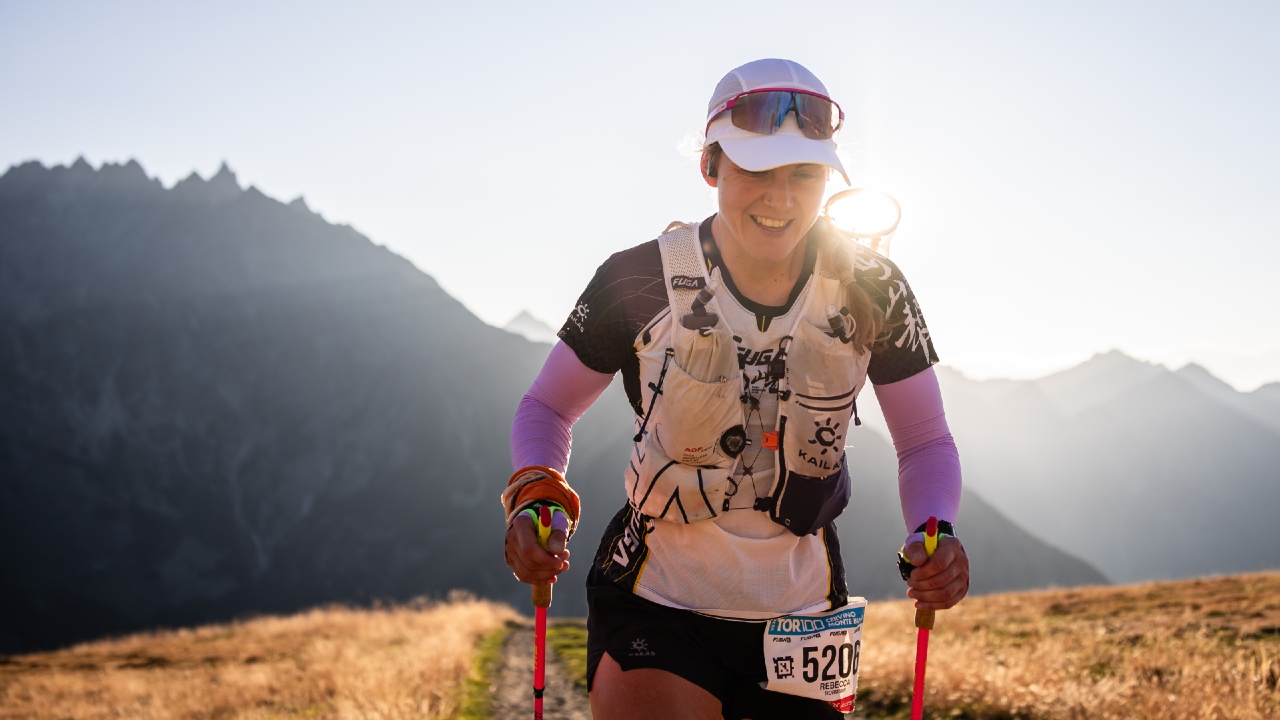
Pacing a trail race with lots of hills is very different from pacing a flat road race. Trying to maintain one target pace can lead to excessive effort on climbs, unnecessary braking on descents and poor energy management over the complete course. A better approach is to distribute effort according to terrain. Your pace should naturally slow when climbing, increase when the trail becomes easier and change again when technical sections demand more control. The goal is not identical kilometre or mile splits. It is a sustainable effort that allows you to continue moving efficiently as fatigue accumulates.
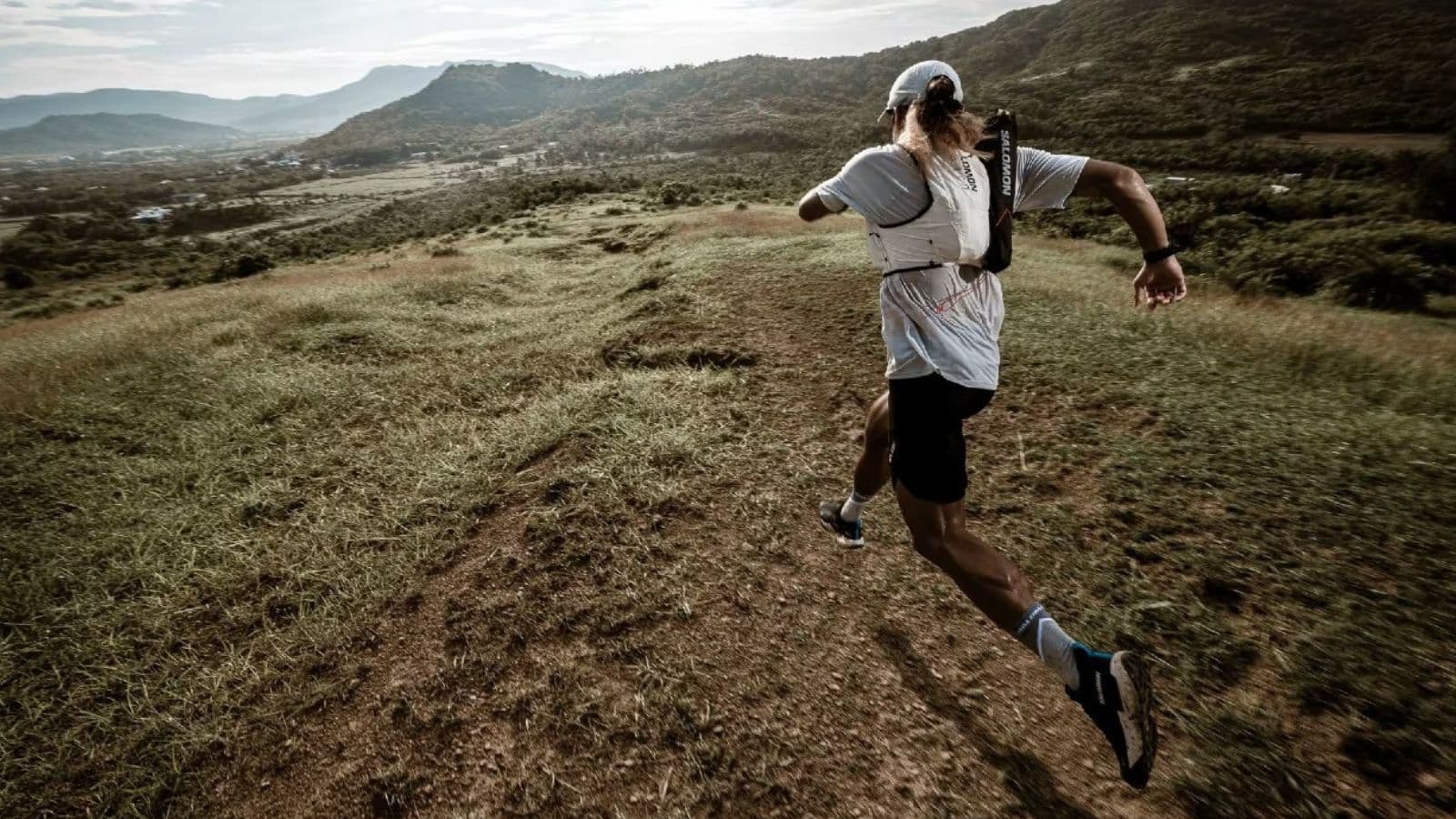
Good hill pacing also requires patience. Many trail races are lost through excessive effort early rather than insufficient effort late. Understanding the course, managing climbs carefully and saving enough strength for the final hills can produce a much stronger race.
In Short
- Pace hills by effort rather than trying to maintain flat ground speed.
- Run manageable climbs and walk when steep terrain makes running inefficient.
- Use descents to gain time without exhausting your legs.
- Save enough energy for the final climbs and runnable sections.
Why Is Pace Different in a Hilly Trail Race?
Elevation changes the energy required to cover each kilometre. Running uphill requires more work against gravity. Downhill running may be faster, but it places greater braking demands on the legs. Technical terrain can slow you further even when the gradient appears favorable. Your pace can therefore vary dramatically while your effort remains relatively stable. Expect this variation. A slower uphill kilometre does not automatically mean you are racing badly.
Pace by Effort on the Climbs
Your watch may show a much slower pace as soon as the trail begins climbing. Do not automatically respond by working harder.
Instead, monitor:
- Breathing.
- Leg effort.
- Heart rate when useful.
- Perceived exertion.
- Remaining race distance.
The longer the race, the more important it becomes to keep early climbing effort under control.
Let Your Pace Slow Naturally
Trying to maintain flat ground pace uphill is one of the easiest ways to waste energy.
As gradient increases:
- Shorten your stride.
- Reduce speed.
- Maintain rhythm.
- Keep breathing controlled.
The correct uphill pace may look slow on your watch while still representing an appropriate race effort. This is one reason how to pace a 5k 10k half marathon marathon cannot be applied directly to a hilly trail course where elevation constantly changes the relationship between speed and effort.
Study the Elevation Profile Before Racing
Do not judge a trail race from total distance alone.
Look at:
- Total elevation gain.
- Number of major climbs.
- Length of each climb.
- Location of the steepest sections.
- Long descents.
- Elevation late in the race.
A race containing most of its climbing in the final third requires a very different pacing strategy from one with one major early climb followed by mostly runnable terrain.
Look Beyond Total Elevation Gain
Two races with the same elevation gain can feel completely different.
For example:
Race A
- Two long steady climbs.
- Wide runnable trails.
- Gradual descents.
Race B
- Twenty short steep climbs.
- Technical descents.
- Constant changes in gradient.
Race B may repeatedly disrupt your rhythm even if the total elevation is identical. Study how the climbing is distributed.
Know Which Climbs Matter Most
Identify major climbs before race day.
Ask:
- How long is the climb?
- How steep is it?
- What comes afterward?
- Is another major climb close behind?
- How far into the race does it occur?
This helps you decide where restraint will matter most. The first climb should rarely be approached as though it is the final climb.
Start More Conservatively Than You Think
Fresh legs make early hills feel deceptively easy.
Race excitement can encourage runners to:
- Chase competitors.
- Attack short climbs.
- Run steep gradients unnecessarily.
- Accelerate after every crest.
These efforts may feel manageable early. The cost often becomes obvious much later. Allow stronger starters to move ahead if matching them would push you beyond your intended effort.
Avoid Racing the First Climb
The first significant climb often creates separation between runners. Do not panic if competitors begin moving away. Your position early in the race matters less than your ability to maintain useful speed later. Climb at an effort appropriate for the entire race. If you still feel strong during the final major ascent, you can become more aggressive then.
Run Moderate Climbs Efficiently
When a hill remains runnable, use a compact stride.
Focus on:
- Shorter steps.
- Stable posture.
- Relaxed shoulders.
- Consistent rhythm.
- Controlled breathing.
Do not try to produce large powerful strides.
Small efficient steps generally make it easier to adjust as the gradient changes.
Walk When Running Stops Being Efficient
Walking steep climbs is a legitimate racing strategy. There comes a point where running may require much more energy while providing only a small increase in speed.
Purposeful walking can:
- Reduce cardiovascular strain.
- Control muscular fatigue.
- Maintain forward progress.
- Preserve energy for later running.
Practise uphill walking during training so you can use it efficiently in races.
Make the Run to Walk Decision Early
Do not wait until you are completely exhausted before walking.
A better sequence is:
- Notice the gradient increasing.
- Assess whether running remains efficient.
- Transition deliberately to a strong walk.
- Maintain purposeful steps.
- Return to running when terrain becomes suitable.
Constantly switching between exhausted running and unplanned walking wastes energy and disrupts rhythm.
Use Elevation Training to Improve Judgment
Experience helps you recognise which gradients you can sustain.
Regular hill training teaches you:
- How climbing effort feels.
- Which gradients remain runnable.
- When walking becomes efficient.
- How quickly you recover after climbing.
The principles in how does elevation gain improve trail running performance can help you progressively develop the strength and endurance needed for repeated climbing.
Use Heart Rate Carefully
Heart rate can provide useful information, particularly on longer climbs. However, it should not be treated as a perfect pacing tool.
Heart rate can change with:
- Heat.
- Hydration.
- Fatigue.
- Caffeine.
- Altitude.
- Race excitement.
Use it alongside perceived effort and breathing rather than relying on one number.
Control Your Breathing
Breathing is one of the simplest indicators of climbing intensity. Early in a longer trail race, breathing should generally remain controlled enough that you are not repeatedly reaching the top of climbs desperate to recover. If every hill requires a major recovery period, your climbing effort may be too high.
Adjust before fatigue accumulates.
Use the Crest Efficiently
Many runners reach the top of a hill and immediately stop working. Instead, gradually transition back toward your normal running rhythm.
As the gradient decreases:
- Increase stride naturally.
- Allow breathing to settle.
- Maintain forward momentum.
- Avoid an immediate sprint.
The crest can be a useful place to gain time on runners who completely switch off after climbing.
Do Not Sprint Over Every Summit
Maintaining momentum is useful. Launching into a hard acceleration is different. Your cardiovascular system may still be recovering from the climb. Allow effort to stabilize before increasing speed substantially.
This is particularly important when several climbs appear close together.
Descend With Control
Downhills provide opportunities to move faster at a lower cardiovascular effort, but descending is not free. Your quadriceps absorb considerable force as they control your body moving downhill. Aggressive descending early can damage your ability to run later.
Aim for:
- Quick controlled steps.
- Good balance.
- Awareness of footing.
- Relaxed movement.
- Appropriate speed for the terrain.
Do Not Brake Excessively
Constant heavy braking increases muscular demand. Overstriding in front of your body can make this worse. Try to maintain a controlled rhythm with your feet landing in positions that allow you to continue moving smoothly. Confidence and skill matter.
The guide how can trail runners run downhill faster without losing control can help you improve descending speed without simply taking greater risks.
Technical Descents Require a Different Strategy
Not every downhill should be fast. Roots, rocks, loose surfaces and sharp turns can make a steep descent slower than a gentle climb.
On technical terrain:
- Look ahead.
- Choose safe lines.
- Shorten steps when necessary.
- Maintain balance.
- Avoid chasing another runner blindly.
Losing a few seconds is preferable to making a mistake that ends your race.
Protect Your Legs Early
Downhill fatigue can become a major problem late in hilly races. The quadriceps may feel strong during the first few descents, encouraging aggressive running. Remember that every descent contributes to accumulated muscular stress. If your race contains substantial downhill running, training should prepare your legs for repeated descending.
How to reduce muscle soreness after downhill running explains why gradual downhill exposure is important for building this durability.
Do Not Try to Recover Lost Time Immediately
- Suppose a major climb produces a kilometre much slower than your average pace.
- Do not immediately try to compensate by sprinting the next kilometre.
- That slow split was caused by terrain, not necessarily poor performance.
- Return to appropriate effort and let the course determine your pace.
Race Distance Changes Hill Strategy
A trail 10K allows greater intensity than a 50 mile ultra.
Short races
You may:
- Run more climbs.
- Accept higher breathing rates.
- Descend more aggressively.
- Recover less between hills.
Long races
Prioritise:
- Energy conservation.
- Purposeful walking.
- Controlled descending.
- Regular nutrition.
- Sustainable climbing.
Always pace according to how long you expect to be racing, not simply the gradient in front of you.
Build the Endurance to Handle Repeated Hills
Climbing fitness is not only about leg strength. You need enough aerobic endurance to repeat hills without progressively slowing. Long easy running and steady trail sessions build this foundation. For athletes preparing for longer events, what is the best way to train for long trail runs can help develop the durability required to continue running after several hours of climbing and descending.
Train on Similar Terrain
Specificity matters:
- If your race contains long sustained climbs, include some sustained climbing.
- If it contains constant short hills, practise rolling terrain.
- If it includes technical descents, develop descending skills gradually.
You do not need an exact replica of the course, but your training should prepare you for its main demands.
Use Hill Workouts With a Purpose
Hill sessions can develop:
- Strength.
- Aerobic fitness.
- Technique.
- Climbing confidence.
However, more hill intensity is not automatically better. A runner already completing substantial elevation may not need multiple demanding hill workouts every week. What mistakes should you avoid during hill workouts can help prevent useful climbing training from becoming excessive training stress.
Fuel Before Energy Drops
Hills can make fueling harder because breathing becomes more demanding. Do not wait until the steepest climb to realize you need energy. Plan carbohydrate intake around sections where eating is easier.
For example:
- Fuel before a long climb.
- Eat on an easy section.
- Drink before a technical descent.
This allows nutrition to support your pacing rather than interrupt it.
Keep Fuelling Consistent
Hilly courses can distract runners from nutrition.
You may spend long periods concentrating on:
- Foot placement.
- Climbing.
- Descending.
- Navigation.
Hours can pass surprisingly quickly. Use time or course landmarks to remind yourself to fuel.
Following how to fuel for a trail run can help establish a strategy that remains practical when terrain constantly changes.
Hydration Should Reflect Conditions
Elevation often brings changing weather.
One section may be:
- Hot and exposed.
Another may be:
- Cool and shaded.
Your fluid needs can change accordingly. Carry enough to reach the next reliable water source without automatically carrying excessive amounts throughout the entire race.
Heat Makes Climbs More Expensive
Uphill running already increases metabolic demand. Heat adds further cardiovascular strain.
On hot days:
- Slow climbing pace.
- Walk earlier when necessary.
- Use available cooling strategies.
- Drink according to your needs.
- Avoid chasing cool weather pace.
Effort should guide the decision.
Altitude Can Change Your Pace
Mountain races may reach elevations where breathing becomes noticeably more difficult. Expect slower pace if altitude affects you. Do not judge your climbing ability solely from training completed near sea level.
Control effort and allow pace to adjust to the environment.
Fatigue Changes Your Pacing Decisions
A hill you comfortably run at kilometre five may be better walked at kilometre 35. Your strategy should evolve as fatigue accumulates.
Monitor:
- Leg strength.
- Breathing.
- Coordination.
- Nutrition.
- Overall energy.
Do not follow an inflexible rule that says a particular hill must always be run.
Save Something for the Final Climbs
Late climbs frequently determine how well a hilly trail race finishes.
If you have managed effort properly, you may still be able to:
- Run moderate gradients.
- Walk steep sections strongly.
- Resume running quickly.
- Descend with control.
If you have spent too much energy early, even gentle hills may force prolonged walking. Think beyond the climb you are currently on.
Use Competitors Carefully
Other runners can provide useful pacing references, but only when their ability and strategy resemble yours. Do not automatically follow someone who passes you uphill.
They may:
- Be stronger on climbs.
- Be racing too aggressively.
- Have different goals.
- Be weaker later in the race.
Use other runners as information, not instructions.
Break the Course Into Sections
A hilly race becomes easier to manage when divided into terrain based sections.
For example:
Start to first climb: Stay controlled.
Major climb: Maintain sustainable effort.
Long descent: Run smoothly without destroying the legs.
Middle rolling section: Settle into consistent running.
Final climb: Use remaining energy intelligently.
Finish: Increase effort if you still have capacity.
This provides clearer decisions than trying to manage the entire race at once.
Do Not Depend Completely on GPS Pace
Trees, mountains, valleys and twisting trails can affect GPS accuracy. Instant pace can also fluctuate considerably on uneven terrain. Use your watch as one source of information rather than the sole authority on your effort. The guide what affects gps accuracy during trail running explains why trail conditions can make pace and distance readings less reliable than runners expect.
Train Your Mind for Changing Pace
Road runners sometimes become uncomfortable when pace changes dramatically. Trail racing requires accepting that variation. A slow climb is not failure. Walking can be strategic. A technical descent does not need to match your normal downhill pace.
The more comfortable you become with these changes, the easier it becomes to race according to the course rather than constantly fighting your watch.
Common Mistakes
- Starting the first climb too hard.
- Trying to maintain flat road pace uphill.
- Refusing to walk steep gradients.
- Attacking every short hill.
- Descending aggressively too early.
- Trying to recover slow uphill splits immediately.
- Forgetting to fuel during technical sections.
- Following GPS pace regardless of terrain.
Practical Tips
- Study the elevation profile before racing.
- Identify the major climbs and descents.
- Keep early climbing effort controlled.
- Walk steep terrain purposefully.
- Resume running when gradients ease.
- Descend smoothly rather than recklessly.
- Fuel before long demanding sections.
- Save enough energy for the final climbs.
Actionable Takeaways
Pacing a trail race with lots of hills is primarily about managing effort rather than maintaining identical splits. Your speed should change as gradient, terrain and technical difficulty change.
Begin conservatively and allow your pace to slow naturally on climbs. Run gradients that remain efficient and use purposeful walking when steep terrain makes running disproportionately expensive.
Most importantly, pace for the hills you have not reached yet. The strongest trail race is rarely produced by winning the first climb.
FAQs
Use effort rather than trying to maintain one pace. Slow down on climbs, walk when running becomes inefficient, descend with control and preserve enough energy for later hills.
No. Walking steep climbs can be more efficient when running requires substantially more energy for only a small increase in speed.
Keep the first climb controlled, particularly during longer races. Early climbing should not require an effort that compromises later sections of the course.
Yes, when walking allows you to maintain strong forward progress with less energy than slow running. Practicing purposeful uphill walking can improve this skill.
Not automatically. Descending too aggressively can create substantial muscular fatigue. Use descents efficiently while maintaining enough control to protect your legs.
It can provide useful information, especially on sustained climbs, but heat, altitude, fatigue and delayed heart rate response can affect readings. Combine it with breathing and perceived effort.
Try to maintain relatively smooth effort. Avoid repeatedly surging up every short climb and then accelerating aggressively down the other side.
This can be useful because eating may become harder once climbing effort increases. Plan nutrition around sections where you can comfortably eat and drink.
Assess your remaining energy and distance. If you have paced well, gradually increase effort where appropriate while continuing to walk gradients that remain more efficient to hike.
Use GPS pace as supporting information rather than a strict target. Elevation, technical terrain and GPS accuracy can make trail pace highly variable, so sustainable effort is usually more useful.