
There is no single heart rate that every runner should aim for while trail running. A useful target depends on your individual physiology, fitness, training goal, terrain, elevation, temperature, fatigue, and how accurately your heart rate zones have been established. For an easy trail run, the goal is generally a comfortable aerobic effort rather than maintaining one exact number. Your heart rate may rise substantially on a steep climb and fall again when you walk, descend, or reach easier terrain. Heart rate is therefore most useful as one source of information rather than a number you must obey every second. Combine it with breathing, perceived effort, terrain, and the purpose of the workout to judge whether you are running at an appropriate intensity.
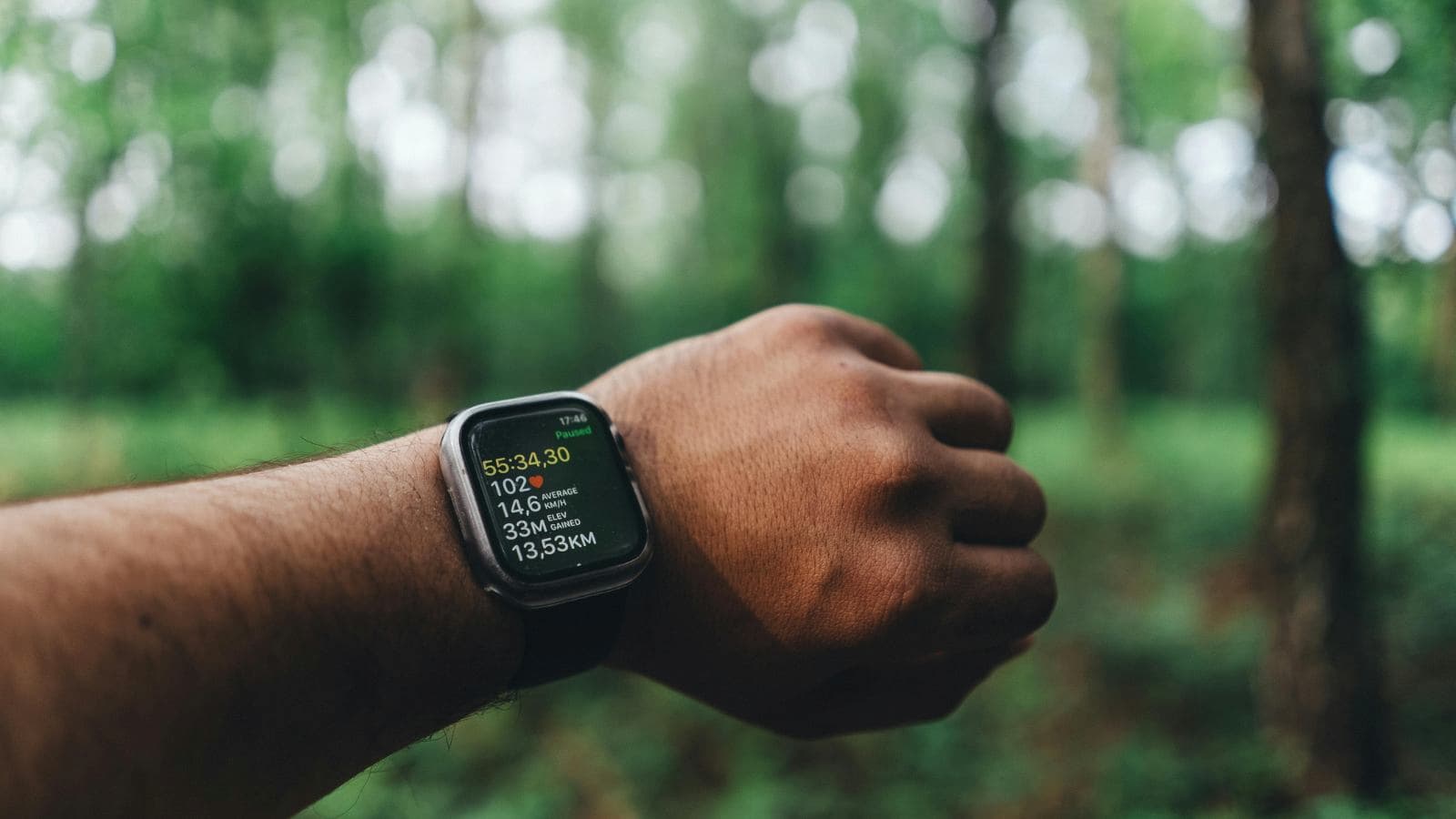
In Short
- There is no universal ideal trail running heart rate.
- Base targets on individual heart rate zones.
- Easy runs should usually feel aerobic and controlled.
- Heart rate naturally rises on climbs.
- Walking can help control effort.
- Descents may lower cardiovascular demand.
- Heat can increase heart rate.
- Altitude can change your response.
- Wrist monitors can sometimes be inaccurate.
- Use heart rate alongside perceived effort.
Use Heart Rate Zones Rather Than One Number
A fixed heart rate such as 140 bpm can represent very different intensities for different runners. It is more useful to think in terms of individual training zones.
A common five zone model progresses broadly from:
- Zone 1: very easy.
- Zone 2: easy aerobic.
- Zone 3: moderate.
- Zone 4: hard.
- Zone 5: very hard.
The exact boundaries depend on how your zones are calculated. For many easy endurance sessions, what is zone 2 running provides a useful framework for keeping intensity controlled without chasing a universal beats per minute target.
What Heart Rate Should an Easy Trail Run Be?
Easy trail runs should generally remain at an intensity where breathing feels controlled and conversation is possible for much of the session. For runners using a five zone system, this often corresponds broadly with Zone 2. However, trail terrain makes perfectly steady heart rate difficult. A steep climb may temporarily push you above your target even if your overall effort remains sensible.
Instead of reacting immediately to every small increase, consider:
- How steep the trail is.
- How long the climb lasts.
- How you feel.
- Whether heart rate settles afterward.
Why Heart Rate Rises on Trail Climbs
Running uphill requires more work against gravity. Your heart rate may rise because your muscles require more oxygen as effort increases. Steeper climbs can quickly move you into higher zones even at a slow pace. This is why pace alone is often misleading on trails. Using how should you pace a trail race with lots of hills can help you understand why sustainable effort matters more than maintaining the same speed across every part of a course.
Should You Walk to Keep Heart Rate Down?
Yes, walking can be an effective trail running strategy.
On steep climbs, power hiking may allow you to:
- Control heart rate.
- Reduce energy expenditure.
- Maintain steady progress.
- Avoid unnecessary fatigue.
Walking does not mean the training session has failed. The decision depends on the workout. During an easy aerobic run, walking a steep climb may be smarter than forcing yourself into a hard effort simply to continue running. Understanding should you run or walk steep hills in trail running can help you make this choice according to gradient and effort.
Do Not Chase Road Running Pace
Trail pace can vary dramatically.
Your speed may change because of:
- Elevation.
- Technical terrain.
- Mud.
- Loose surfaces.
- Sharp turns.
- Obstacles.
A 7:00 per mile pace on a road and the same pace on a steep technical trail may represent completely different workloads. Use heart rate and perceived effort to provide context when pace becomes unreliable. This is one reason should you train by time or distance for trail running can be useful when planning sessions on terrain where distance alone does not reflect workload.
Heart Rate Can Drift During Long Runs
Your heart rate may gradually increase during a long run even when pace stays similar. This is often called cardiovascular drift.
It can be influenced by:
- Rising body temperature.
- Fluid loss.
- Fatigue.
- Long duration.
- Environmental conditions.
If heart rate continues rising while your pace falls and effort feels harder, consider slowing down. For long trail sessions, how can you run longer without feeling exhausted can help you manage pace and effort before fatigue becomes excessive.
Heat Can Raise Your Heart Rate
Running in hot conditions places additional demand on your cardiovascular system. Your heart rate may be higher than usual at a pace that normally feels comfortable.
In hot conditions:
- Slow down when necessary.
- Use perceived effort.
- Adjust expectations.
- Drink appropriately.
- Watch for heat illness symptoms.
Do not force your normal cool weather pace simply because it appears on your training plan.
Altitude Changes the Picture
Higher elevation can make familiar efforts feel harder because less oxygen is available with each breath.
You may notice:
- Faster breathing.
- Higher perceived effort.
- Slower pace.
- Earlier fatigue.
Heart rate responses can vary between individuals and with acclimatization. The principles in how to run well at altitude are useful when interpreting training data because your normal low altitude relationship between pace and effort may change.
Fatigue Can Affect Heart Rate
Heart rate should always be interpreted in context. After poor recovery, you may notice that normal training feels unusually difficult.
Potential influences include:
- Poor sleep.
- Training fatigue.
- Illness.
- Heat.
- Dehydration.
- Stress.
One unusual reading does not automatically mean something is wrong. Look for patterns across several sessions. Following how to stay consistent with trail running without overtraining can help you avoid treating every heart rate change as a reason to train harder.
How Accurate Are Wrist Heart Rate Monitors?
Optical wrist sensors are convenient, but readings are not always perfect.
Accuracy can be affected by:
- Watch position.
- Arm movement.
- Cold conditions.
- Poor skin contact.
- Sensor limitations.
Trail running can involve substantial arm movement, particularly on technical terrain. If a reading suddenly appears unrealistic, compare it with your breathing and perceived effort before immediately changing your workout. Understanding what affects gps accuracy during trail running also reinforces a broader point: wearable data is useful, but no single device metric should be treated as infallible.
When Is a Chest Strap Useful?
A chest strap can be useful when accurate heart rate data is particularly important.
You might prefer one for:
- Structured intervals.
- Threshold sessions.
- Heart rate testing.
- Detailed training analysis.
For ordinary easy runs, some runners are satisfied with wrist based monitoring.
Whichever device you use, consistent measurement is often more useful than obsessing over tiny differences between readings.
Use Perceived Effort Too
Heart rate should not replace awareness of how you feel.
During an easy trail run, ask:
- Is my breathing controlled?
- Can I speak comfortably?
- Does the effort feel sustainable?
- Am I forcing the climbs?
- Am I recovering after harder sections?
This provides context that a watch cannot. If you are repeatedly out of breath during supposedly easy runs, how to avoid getting out of breath during trail running can help identify pacing and fitness factors beyond the heart rate number itself.
When Should Heart Rate Be Higher?
Not every trail run should stay easy.
Higher heart rates are expected during workouts such as:
- Hill intervals.
- Tempo efforts.
- Short races.
- Hard climbing sessions.
- Structured interval training.
The target depends on the purpose of the workout.
Do not deliberately keep heart rate low when the session is designed to develop higher intensity fitness.
Common Mistakes
- Using another runner’s heart rate target.
- Treating one bpm number as universally correct.
- Trying to keep heart rate perfectly steady on hills.
- Forcing road pace on technical terrain.
- Refusing to walk steep climbs.
- Ignoring heat and altitude.
- Trusting obviously unrealistic watch readings.
- Using heart rate without perceived effort.
- Turning every easy trail run into a hard session.
Practical Tips
- Establish individual heart rate zones.
- Match heart rate to the workout goal.
- Keep easy runs controlled.
- Expect increases on steep climbs.
- Walk when necessary.
- Slow down in hot conditions.
- Consider altitude and fatigue.
- Check suspicious sensor readings.
- Combine heart rate with breathing and perceived effort.
Actionable Takeaways
- There is no universal target heart rate for trail running.
- Use individual zones instead of copying another runner’s bpm.
- Expect heart rate to change with terrain.
- Judge effort using both data and how you feel.
Building how to build an aerobic base for running into your training can make it easier to sustain comfortable efforts as your trail running fitness develops.
FAQs
There is no universal number. Your target depends on your individual zones, workout purpose, terrain, fitness, and conditions.
Easy endurance trail runs are commonly performed around an easy aerobic intensity, often broadly described as Zone 2.
Yes. Zone 2 can be useful for building aerobic endurance, although steep terrain may cause temporary increases above the zone.
Hills, technical terrain, heat, altitude, and greater muscular effort can all increase cardiovascular demand.
Walking steep climbs can be appropriate when the goal is to keep an easy aerobic session controlled.
It can be at a comparable pace because trail terrain and climbing often require greater effort.
Heart rate and perceived effort are often more informative than pace when terrain changes frequently.
They can provide useful data, but readings may sometimes be affected by movement, fit, temperature, and sensor limitations.