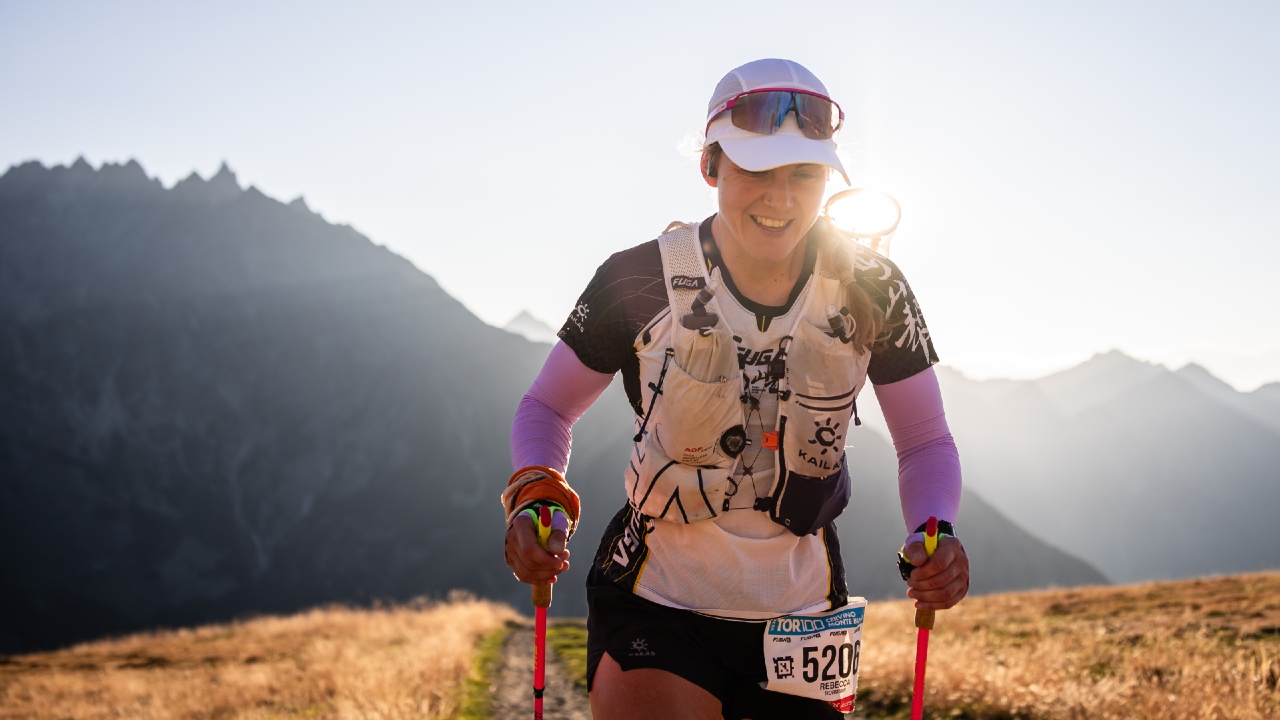
Good trail running goals do not have to involve running faster or setting a personal best. You can aim to run more consistently, increase endurance, become more confident on technical terrain, improve climbing and descending, build strength, or simply explore new trails. Pace is particularly difficult to compare in trail running because elevation, surface, weather, altitude, and technical difficulty can change dramatically between routes. A slower run on a steep rocky trail may represent greater progress than a faster run on smooth terrain. Setting goals around skills and habits gives you more ways to measure improvement. These goals can also keep training meaningful when you are not racing or when faster times are not your main priority.
In Short
- Build a consistent weekly running routine.
- Increase comfortable running duration.
- Improve climbing and descending skills.
- Become more confident on technical terrain.
- Develop strength and stability.
- Learn better pacing.
- Improve fueling and hydration habits.
- Explore new trails or distances.
- Prioritize recovery and long term consistency.
Build Greater Training Consistency
Consistency is one of the most useful goals because nearly every other improvement depends on regular training. Instead of targeting a specific pace, you might aim to complete three planned runs each week for two months or maintain a realistic training routine through a busy period. The target should be sustainable. A runner who repeatedly completes manageable training is usually in a better position than someone alternating between very large weeks and long interruptions. Building how to stay consistent with trail running without overtraining into your approach helps make consistency a long term goal rather than simply accumulating as many sessions as possible.
Increase How Long You Can Run Comfortably
Endurance provides another clear goal that does not depend on speed. You could aim to increase your longest comfortable run from 60 to 90 minutes, complete a particular trail without becoming excessively fatigued, or gradually prepare for longer adventures. Progress slowly. Longer runs increase stress on muscles, joints, and connective tissues even when the pace is easy. Increasing duration should therefore be balanced with recovery and your existing weekly workload. For runners who struggle with late run fatigue, how can you run longer without feeling exhausted connects endurance development with pacing, fueling, and sustainable effort.
Improve Your Climbing Ability
Trail running frequently involves hills, making climbing ability a useful target independent of race results.
Your goal might be to:
- Run a familiar climb without stopping.
- Maintain steady effort on longer hills.
- Improve hiking speed on steep gradients.
- Accumulate more weekly elevation.
- Recover more quickly after reaching the top.
Do not judge every climb by pace. Gradient and terrain strongly influence speed. Learning should you run or walk steep hills in trail running can help you choose the most efficient strategy rather than treating walking as failure.
Become a Better Downhill Runner
Descending requires coordination, confidence, strength, and good decision making. Instead of trying to descend as fast as possible, begin with goals based on control. You might aim to reduce excessive braking, look farther ahead, choose better foot placements, or maintain a relaxed upper body. Practice gradually on familiar terrain.
Technical downhill improvement takes time, and how can trail runners run downhill faster without losing control supports a progression where control develops before additional speed.
Improve Balance on Uneven Terrain
Balance is a practical performance goal because trail surfaces rarely remain completely predictable. Roots, rocks, loose gravel, mud, and uneven slopes require continuous adjustments. Set goals such as moving smoothly through a familiar technical section, becoming more confident on rocky trails, or improving single leg control during strength training. Progress from easier surfaces toward more difficult terrain.
Improving how can you improve stability while trail running can help connect strength and coordination work with the demands encountered on actual trails.
Improve Your Running Form
Running form does not need to look identical on every surface. Your stride naturally changes when climbing, descending, cornering, or crossing technical ground. A useful goal is becoming more adaptable rather than trying to maintain one perfect running style.
Focus on:
- Relaxed posture.
- Controlled foot placement.
- Appropriate stride length.
- Natural arm movement.
- Efficient movement at different speeds.
Small improvements matter. How to improve your running form without overthinking it is especially relevant because constantly analyzing every step can make running feel less natural rather than more efficient.
Learn Better Trail Pacing
Trail pace can change dramatically within a few minutes.
A flat section might be followed by:
- A steep climb
- Technical descent
- Muddy section
Trying to hold one pace across all of them is rarely useful. Instead, aim to control effort. A good pacing goal could be finishing long runs without a major drop in energy or completing a hilly route with relatively even effort. For events and longer training runs, how should you pace a trail race with lots of hills applies the same principle by adjusting effort according to terrain rather than forcing a fixed pace.
Improve Strength and Physical Resilience
Strength goals can provide measurable progress away from the trail. You might aim to improve your control during split squats, complete more controlled calf raises, strengthen your hips, or maintain a regular strength routine for several months.
Useful areas include:
- Calves.
- Quadriceps.
- Hamstrings.
- Glutes.
- Hips.
- Trunk.
Strength training should support running rather than leave you constantly too sore to train. Progress can mean better movement quality and control, not simply lifting heavier weights.
Improve Your Fueling Skills
Learning to eat and drink comfortably while running is a valuable goal, particularly as distances increase. Instead of waiting until race day, practice your strategy during longer training sessions.
You could aim to:
- Eat at planned intervals.
- Find foods you tolerate well.
- Carry enough fuel.
- Practice drinking while moving.
- Avoid large energy drops late in runs.
Longer trail events place substantial demands on energy intake, making how to fuel and hydrate for an ultramarathon useful even for runners who are gradually building toward longer distances.
Explore New Trails
Not every goal needs to improve a physical metric. Exploration is one of the major attractions of trail running. You could aim to run one new trail each month, visit a new trail system, complete a scenic route, or gradually explore more challenging terrain. Choose routes appropriate to your experience. Research:
- Navigation
- Weather
- Water availability
- Terrain
- Access before exploring unfamiliar areas
Progress can be measured by experiences as well as numbers.
Become More Confident Without Your Watch
GPS watches can provide useful information, but every run does not need to become a data test. Try occasional runs based on time and perceived effort rather than continuously checking pace. This can help you learn what easy, moderate, and harder efforts actually feel like. Trail conditions often make instant pace particularly misleading. Developing the ability to judge effort without constant data can make training more adaptable when terrain changes.
Make Recovery a Goal
Recovery can be treated as something you actively improve rather than time when training is not happening. Set simple targets around sleep, rest days, nutrition, and easy training.
For example:
- Maintain a consistent sleep schedule.
- Keep recovery runs genuinely easy.
- Take planned rest days.
- Eat adequately after long runs.
- Reduce training when unusually fatigued.
Recovery becomes particularly important when workload increases, and how do you balance training recovery and tapering effectively reinforces that adaptation depends on both training stress and enough time to recover from it.
Set Adventure Based Goals
Some runners find motivation in completing experiences rather than racing.
Examples include:
- Running a particular mountain route.
- Completing your first all day trail adventure.
- Running from one landmark to another.
- Exploring a local trail network.
- Completing a route with a specific elevation gain.
- Running your first trail distance beyond a previous limit.
Adventure goals can still require structured preparation, but there is no requirement to compete against anyone.
Success can simply mean completing the experience safely and enjoying the route.
Track Goals You Can Control
Race results depend partly on factors outside your control. Weather, trail conditions, competition, course changes, and unexpected problems can all influence finishing time. Process goals are easier to control. Examples include completing your planned training consistently, strength training twice per week, practicing fueling during long runs, or improving downhill technique.
These goals give you evidence of progress even when a finishing time does not.
Common Mistakes
- Measuring all progress by pace.
- Comparing times across completely different trails.
- Setting too many goals at once.
- Increasing distance too quickly.
- Ignoring recovery goals.
- Treating every climb as a test.
- Chasing watch metrics on technical terrain.
- Choosing goals based on other runners.
- Changing goals before giving them enough time.
Practical Tips
- Choose one or two main goals at a time.
- Make goals measurable when possible.
- Track consistency across several weeks.
- Include skill based goals.
- Review progress monthly.
- Adjust goals when circumstances change.
- Celebrate improvements that are not pace related.
- Keep recovery part of the plan.
- Choose goals that make trail running enjoyable.
Actionable Takeaways
Trail running progress can mean far more than racing faster. Consistency, endurance, climbing, descending, balance, strength, pacing, fueling, exploration, and recovery all provide meaningful goals. Choose targets that match your current experience and the type of trails you enjoy. Focus on one or two priorities long enough to see meaningful improvement rather than constantly changing what you are trying to achieve.
The best goals should support sustainable running and give you reasons to enjoy the trails even when there is no race on the calendar.
FAQs
Consistency, comfortable endurance, basic trail skills, and gradually exploring more varied terrain are useful starting goals.
Track consistency, running duration, elevation, technical confidence, perceived effort, strength, and recovery alongside pace.
It can be useful, but terrain and elevation strongly influence pace. Effort is often a better comparison across different trails.
Yes. Improving hiking speed and choosing when to walk can make steep climbing more efficient.
Practice progressively on uneven terrain while improving balance, strength, foot placement, and downhill control.
A good goal is one you can maintain consistently, such as completing a realistic number of planned runs each week.
Both can work. Time goals are often useful on trails because terrain can make the same distance take very different amounts of time.
Explore new routes, run without focusing constantly on pace, train with others, and set adventure or skill based goals.