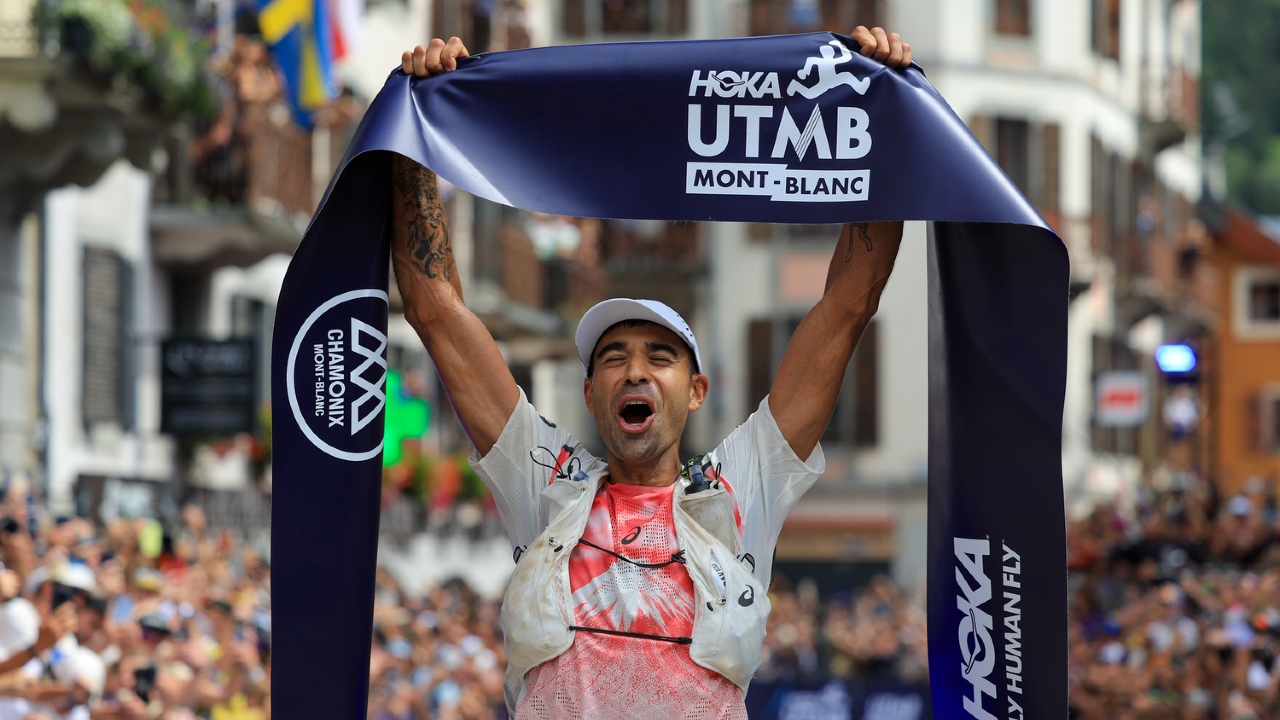


When Chris Myers lined up for his first ultra in 2019, he did exactly what most first-timers do: ran far too enthusiastically and fuelled far too little.
“I think I ate one gel the entire time,” he tells us. “I was cramping. I was so wrecked after.” Though it should be said he did cross the line first, a sign of what was to come!
Six years later he was second at Western States – one of the most competitive editions in years – and when he sat down for an in-depth interview with RUN247 recently he was talking like someone who’s spent an unusual amount of time reflecting on why things go wrong in ultras.
His central philosophy is disarmingly simple: “Give yourself every opportunity to not mess up.”
For Myers, ultra performance is often less about adding brilliance than removing preventable failures.
Here are the big things he wishes more athletes knew before they take on their first long race.
1 – Know your numbers and train your gut
Nutrition is the topic Myers returns to most. The learning curve was steep.
“The more you know your numbers, the better you can predict,” he says. “Cramping is very avoidable.”
Two practical pillars from him are:
- Sweat & sodium: “If you’re getting really serious, get your sweat tested so you know your numbers,” he says. “Cramping really sucks because everything else in your body can be working and then your legs just stop.”
- Carbohydrates: Ultras demand far more intake than most recreational athletes imagine, and Myers insists you can’t just hope the gut will cope on race day.
“You have to train your gut. You can’t just expect to eat a lot while running.”
He even suggests not saving “race nutrition” for race day: “I know running is relatively inexpensive as a sport, but buy your gels for your training runs and eat like you’re racing – you’ll have a better time.”
2- Respect the time on feet
Myers warns first-timers to respect how long they’ll be out there.
“Make sure you respect the amount of time you’ll be out there,” he says. “Bring enough fuel – don’t completely rely on aid stations because you never know what they’ll have mixed up.”
The takeout is that aid stations are a bonus. The core nutrition should be yours.
3 – Look for the failure points and remove them
Not everyone has the same vulnerabilities. Myers’ advice is to identify your ones and “remove the excuses”.
“If I normally cramp, I nail my nutrition. If I normally roll my ankles, I tape them. It’s just one less excuse to end my race.”
It’s a mindset shift: instead of hoping it won’t happen, assume it will and mitigate it early.
4 – Comfort matters more than aesthetics
It sounds unglamorous, but small discomforts can become race-ending over ultra distances.
“I can’t tell you how much a little bit of chafing becomes a lot of chafing as you start to run,” he says.
In both his Western States runs, Myers was repeatedly wet – dumping water over himself for cooling and crossing rivers (once with a snorkel!). That’s a perfect storm for skin issues over 100 miles.
This is where Myers gets specific. He’s a convert to wearing seamless underwear under half tights – a combination he credits with keeping him comfortable for 100 miles in the heat.
“As soon as the race gets wet, chafing happens,” he says. “Both years at Western States I used Runderwear under my half tights and I had no issues. 100 miles of being wet is the recipe to wreck your skin and I was happy.”
It’s the kind of detail experienced ultra-runners debate quietly – and first-timers tend to learn the painful way.
The logic is straightforward: seamless = less friction, supportive = less movement, breathable = less moisture retention, consistent fit = fewer pressure points.
Whether athletes go with Runderwear or not, the broader point lands: comfort isn’t a luxury in ultras – it’s performance protection.
5 – Don’t be afraid to enjoy it
For all the detail – carbs, salt, tape, seams, sweat tests – Myers circles back to something more human.
“Running is fun to me,” he says. “Why shouldn’t I have fun while I race? It’s a celebration of training.”

He encourages first-timers not to let fear or self-seriousness smother the curiosity that led them to ultras in the first place.
If in doubt, explore. “One of my big pieces of advice for someone travelling to a new city is to run there,” he says. “You’re going slow enough to see more, but fast enough to see a lot.”
The takeaway is that there’s no single trick to surviving (or thriving in) an ultra. But Myers’ hierarchy is refreshingly grounded: Fuel → Comfort → Curiosity
Know your numbers, remove the obvious failure points, and don’t forget why you signed up in the first place.
In a sport built on suffering, he’s a reminder that optimism can be a strategy too.
Click here for the first part of our interview with Chris Myers as he switches his focus from Western States to UTMB in 2026.