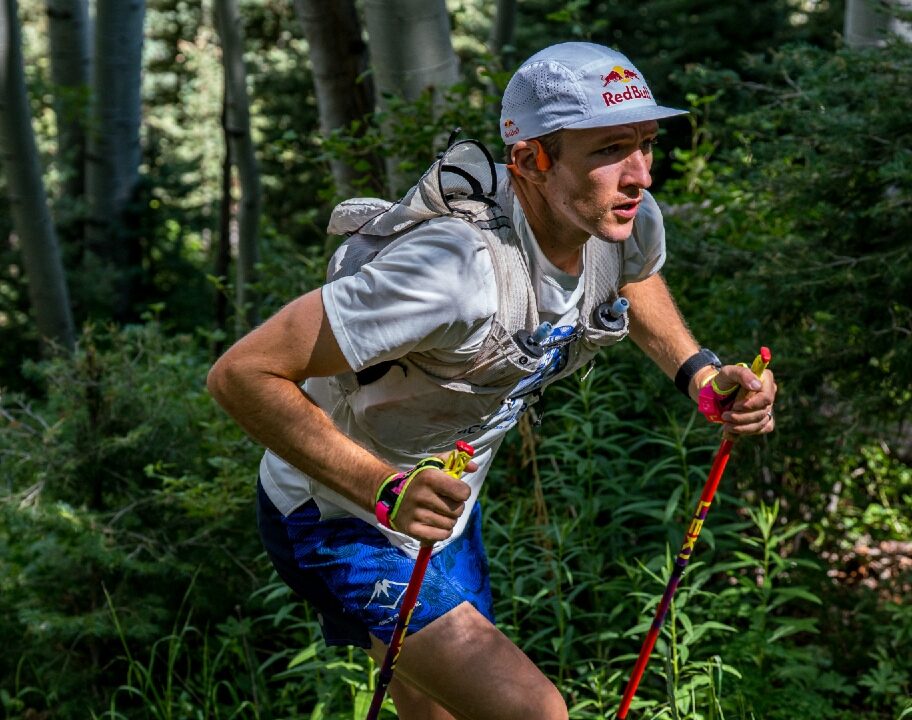


Sam King doesn’t see his life as one dramatic before-and-after moment. Instead, he breaks it into phases – each connected by the same personality traits, for better or worse.
The 32-year-old recently became a world record holder for the most consecutive number of ultramarathons, though the bigger aim was to raise money for the charity Headway UK who have helped his Mum Penny since she suffered a near-fatal brain bleed earlier this year.
She continues to recover and was the inspiration behind King’s feat – but he was already a powerful example of how to turn your life around for the better.
RELATED CONTENT: The powerful ‘why’ behind Sam King’s 79 ultramarathons in 79 days
‘I’m a no-half-measures guy’
When we catch up with Sam soon after the challenge which saw him run 50 kilometres every day for nearly three months, he told us: “There have been three phases of my life – the gaming phase, the weight-loss phase and the running phase.”
On the surface, being a world-leading ‘Call of Duty’ gamer and completing 79 ultramarathons in 79 consecutive days could hardly appear further apart. But for King, the similarities run deeper than most would expect.
“They’re all very much linked in terms of my mindset,” he says. “I’m determined, disciplined and relentless. I’ve got an addictive personality – I’m a no-half-measures guy.”
That same drive once saw him sitting still for up to 18 hours a day, staring at a screen, smoking, drinking and neglecting everything else. “I was just applying that mindset to the wrong thing,” he admits.
When he finally walked away from gaming, the fallout was severe. He was overweight, disconnected and unsure where his life was heading.
“I’d messed up my education. I didn’t want to game anymore. I was quite lost,” he says. “But I knew if I found something healthier to apply that mindset to, I could go a long way.”
How the body really adapts
Running became that outlet – not as a miracle cure, but as a vehicle.
Despite years of multi-day ultramarathons behind him, King admits the 79-day challenge exposed just how unpredictable adaptation can be.
“I thought I’d adapt quickly,” he says. “Usually it takes two or three days. This time it took two or three weeks.”
The early phase was marked by injury, illness and broken sleep. “It felt like my body was rejecting what I was doing,” he explains. “When you throw something extreme at it, it almost tries to find a way to stop you.”
But once adaptation came, it arrived decisively. “From week four or five onwards, I felt unbelievably strong,” he says. “Injuries that would normally need weeks to recover from just… didn’t. Illnesses came and went within 24 hours.”
The most striking evidence came right at the end. Throughout the challenge, King ran each daily 50K in roughly five hours. On day 80 – the run he didn’t need to do – he covered the distance in around four hours and 20 minutes.
“I felt better than I did on day one,” he says. “That’s pretty unbelievable after 79 straight days.”
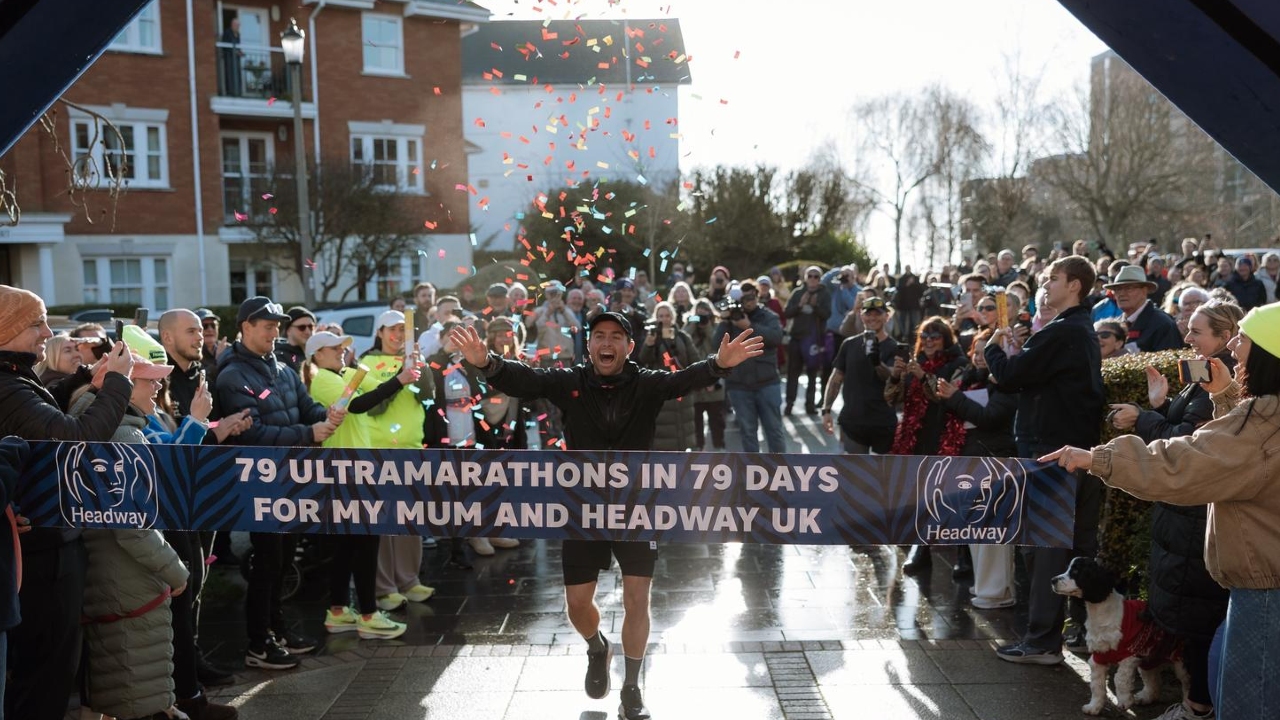
For King, it reinforced a belief he now holds strongly. “Our bodies are incredibly capable if we look after them and allow them to adapt.”
Running didn’t save him – it revealed him
King is careful not to over-romanticise running as a cure-all.
“I wouldn’t say running saved me,” he says. “It gave me a platform to express what was already inside me.”
Through running, he discovered structure, confidence and purpose – and a lifestyle he genuinely enjoys living.
“It’s made me want to be a better person. A better son. It’s helped me professionally,” he says. “It’s forced me into a healthy life that I’m happy in.”
He’s equally honest about his past.
“When I came out of gaming, I was lost – but that was because I had no purpose.”
Running filled that gap – not overnight, but gradually. “It helped me find my potential and live the life I actually want to live.”
The myth of overnight transformation
If there’s one thing King believes people misunderstand about turning their lives around, it’s the idea that it happens quickly.
“Lasting change has to be sustainable,” he says. “And most people are scared of change.”
His own transformation came not from drastic interventions, but from consistency.
“When I decided to lose weight, I didn’t do anything extreme,” he says. “I just ate a bit less and exercised a bit more.”

He’s particularly wary of quick fixes.
“I hate fad diets. You’ll probably just go back to your old ways,” he says. “If you want lasting change, you have to change the way you live – but do it slowly.”
There’s a phrase he returns to often. “Slowly is the fastest way to get to where you need to be.”
Taking responsibility for the life you want
Asked what this current period of his life stands for, King pauses – then answers with clarity.
“It’s about doing the things I’ve always wanted to do,” he says.
He believes many people feel trapped by comfort, routine or expectation. “A job they don’t like. A relationship they don’t like,” he says. “People get consumed by the life they’re in.”
This year, King chose to step away from that.
“I’ve tried to grab life by the horns,” he says. “To build a life around running, around what I love, and to spend my time the way I want to spend it.”
More than records or distances, that decision defines the transformation.
“Taking responsibility for my life and creating the life I want to live – that’s what this period stands for.”
- Headway UK is a charity that supports people and families affected by brain injury – to find out more about Sam’s challenge or if you would like to donate, click here.