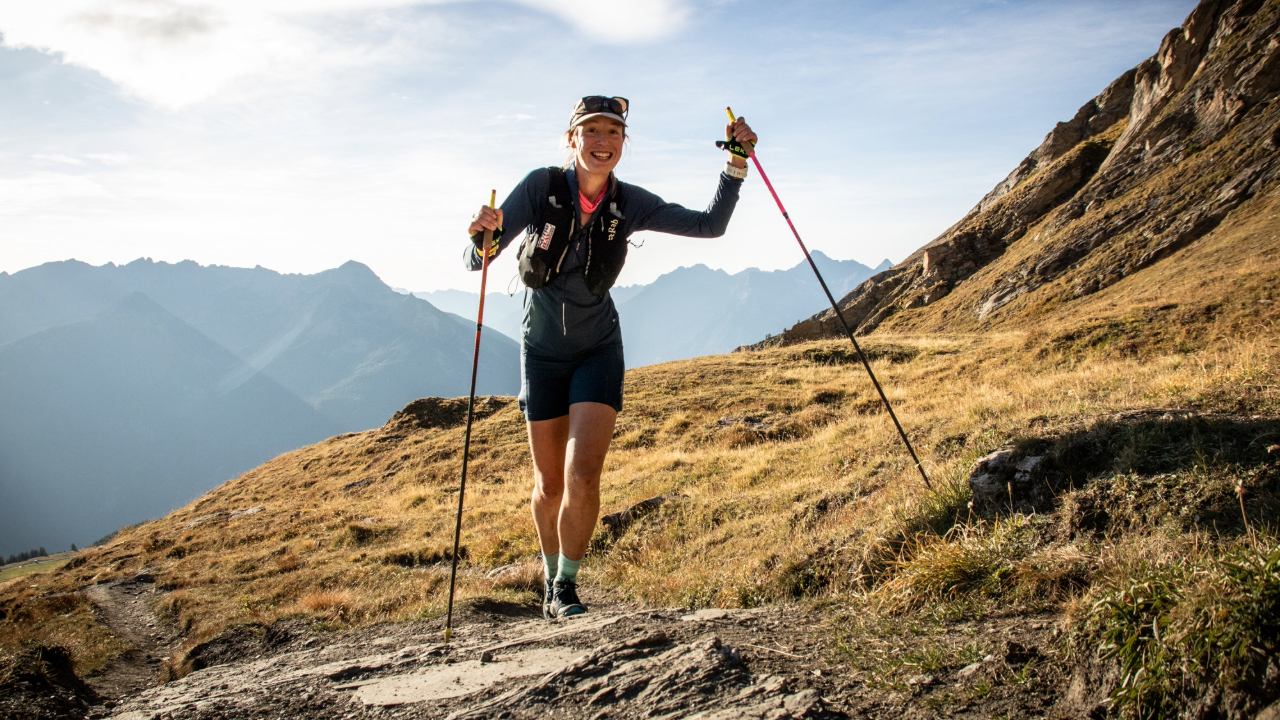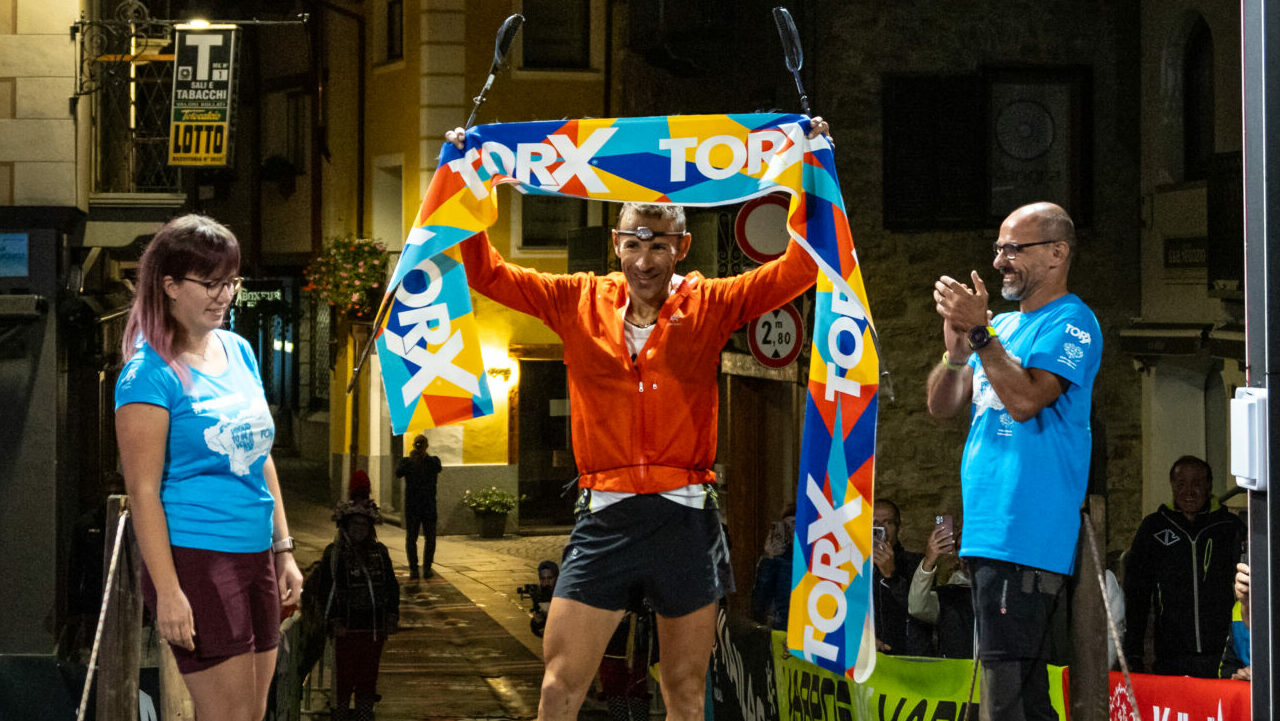


Katharina Hartmuth hopes her record-breaking performance at the TOR330 – Tor des Géants will inspire more women to “dare to dream” after she became the first female athlete in the race’s history to reach the overall podium.
The German completed the formidable 330km course in 67:10:09, taking 12 hours off the women’s record she had set when winning the race in 2024.
Hartmuth finished third overall, just 15 minutes and three seconds behind runner-up Jonathan Schindler and 1:14:47 adrift of outright winner Jiaju Zhao.
Her time was the sixth fastest in TOR330 history and made her the first woman to break the 70-hour barrier. It was also only the 11th sub-70-hour performance ever recorded by any athlete at the race.
‘A great signal for women’
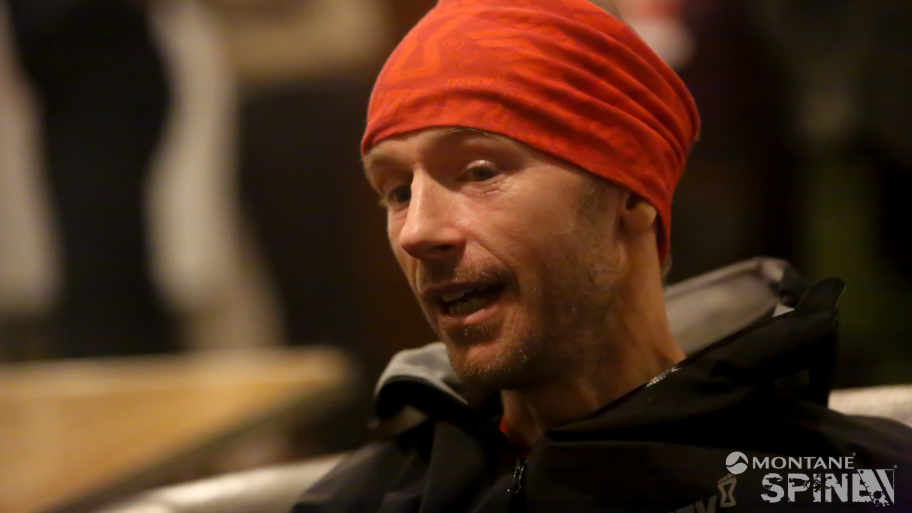
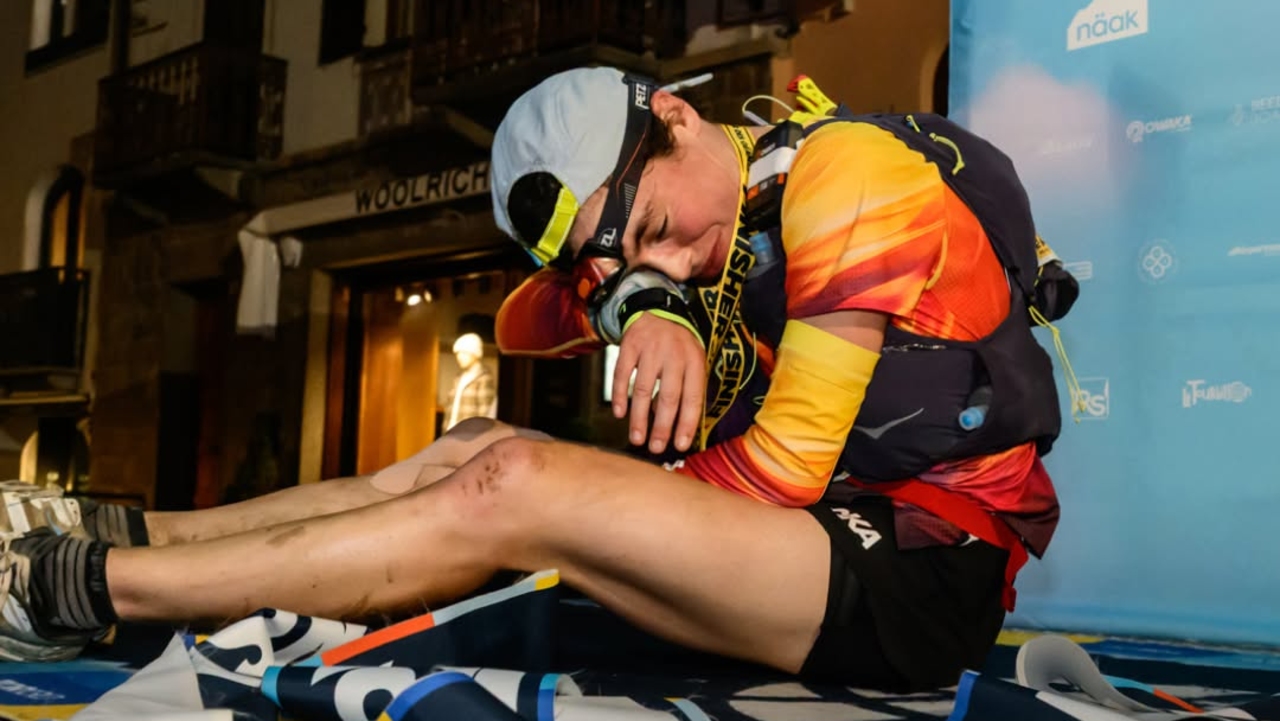
Talking to TORX soon after crossing the finish line in Courmayeur, an exhausted Hartmuth admitted that the magnitude of her achievement had yet to sink in.
“It’s hard to understand anything right now because my mind is just like, ‘I want to sleep.’ I want to sleep so badly,” she said in an interview which is also embedded below.
“Honestly, in the last couple of hours of the race, I was sometimes not even sure what I was doing and whether I was in the race anymore because I didn’t get enough sleep.
“But it’s definitely beyond everything I could imagine for myself coming into this race. I’m very pleased and I just hope it’s a great signal for women in the sport.”
Hartmuth’s place on the overall podium represented an unprecedented moment in the history of an event first held in 2010.
But while she was delighted by the personal achievement, she hopes its greatest impact will be to encourage other women to approach the sport’s most extreme challenges with greater ambition and self-belief.
“That’s pretty cool, actually. I don’t know if I’ve ever had a race where I made the overall podium,” she said.
“For me, of course, it’s a nice thing, but I hope much more that it can serve as an inspiration and motivation for other women to not only try these races, but actually have confidence in themselves.
“It’s such a long race and it’s not just about pure performance. Of course, in the end I had to have a high level of performance, otherwise that wouldn’t have worked, but there are so many other things to consider in these races as well.
“Dare to dream and have high goals.”
Just 15 minutes of sleep
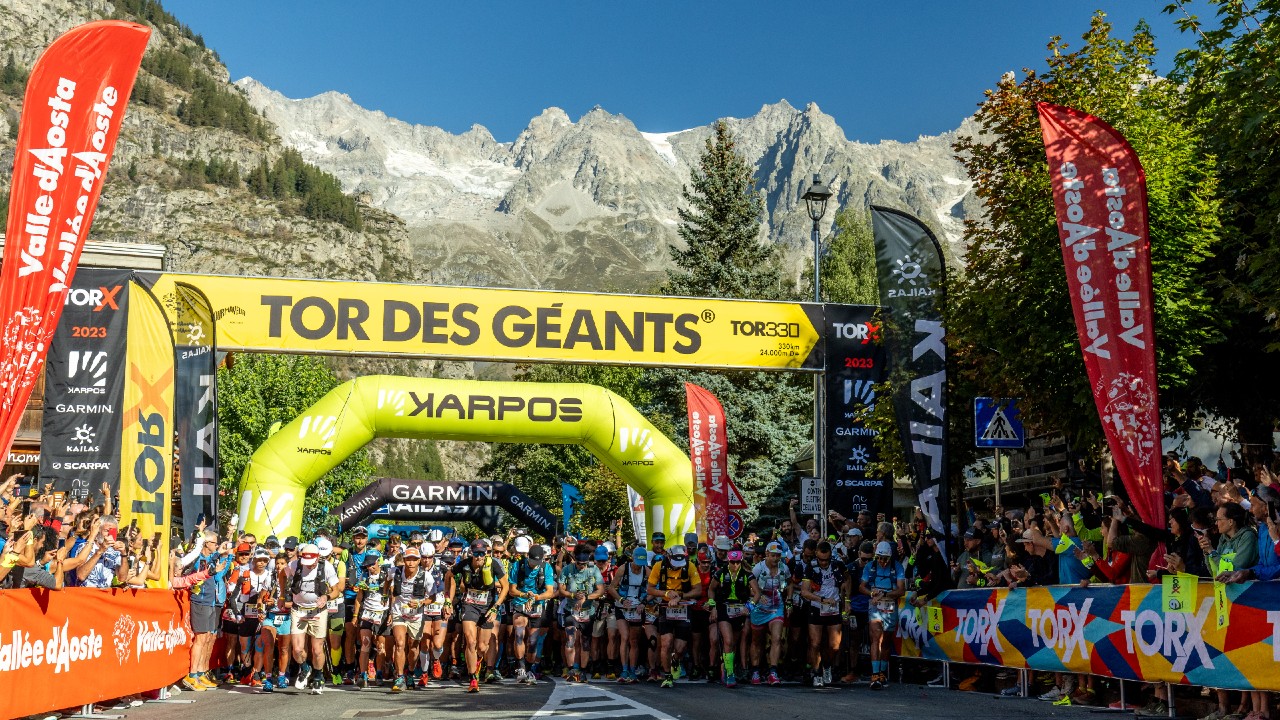
The TOR330 takes athletes on a continuous journey around Italy’s Aosta Valley, beginning and ending in Courmayeur.
Its 330km route features approximately 24,000 metres of elevation gain, with competitors given a maximum of 150 hours to reach the finish.
There are no compulsory stages, leaving each athlete to decide when – and for how long – to stop for food, rest and sleep.
Hartmuth estimated that she slept for only around 15 minutes during her 67-hour effort.
She had planned to sleep twice and lay down for 30 minutes during the second night. However, the time it took her to fall asleep meant she believed she rested for no more than 20 minutes.
A second planned sleep during the third night was abandoned when Hartmuth realised she was involved in a genuine race with the leading men.
“The plan was actually to sleep in the third night as well, but since there was a little race going on suddenly and none of us slept, I was like, ‘Well, okay, screw it. I want to get this done anyway, no matter what the guys do,’” she explained.
“In hindsight, I thought maybe I should have slept for 10 minutes or something like that.”
Racing the men
Hartmuth had entered the event believing that she might need to measure her performance against the men rather than her female rivals if she was to substantially improve upon her 2024 record.
![Katharina Hartmuth at the Tor des Géants [Photo credit: Tor des Géants press office | Stefano Coletta - Zzam Agency]](https://run247.com/wp-content/uploads/2024/09/Katharina-Hartmuth-Tor-des-Geants-2024.jpg)
“I already knew that I might have to orientate myself more towards the men’s field than the women’s field if I wanted to reach for a much faster time than my time from two years ago,” she said.
“It was super cool to have this dynamic there, taking turns with people, seeing them again at the aid stations and kind of racing together. That was motivating for sure.”
Schindler provided a particularly useful reference point as the race developed, regularly leaving aid stations shortly before Hartmuth arrived.
“For me, that was a sign: ‘Okay, he has already left. I should leave soon too.’”
People alongside the course began telling Hartmuth she could potentially win the race outright, although that was not something she wanted to contemplate while deep into an effort of such extraordinary length.
“It was almost a little annoying because people were telling me all the time, ‘Hey, you could actually win this overall,’” she said.
“I was like, ‘No, I’m just here for the finish right now,’ because I was cooked. I was like, ‘You don’t understand how hard this is, so please just let me focus on my own race.’
“But then, of course, you see some stuff happen. I didn’t sleep because I was like, ‘Okay, I’m in a race now.’ It’s kind of interesting how that works.”
The gap has almost disappeared
Hartmuth had initially viewed a time of around 75 hours as realistic and believed breaking 72 hours would represent an exceptional performance.
She ultimately went almost five hours faster than even that ambitious target.
Her time also reduced the gap between the men’s and women’s TOR330 records to only 1:14:47 after Zhao won the race in 65:55:22.
“I went into the race and thought 75 hours was something I could do,” Hartmuth explained. “Seventy-two would be super cool, but I wasn’t sure if I could do it.
“But the overall goal was to reduce this gap to the men’s record. Now I’m pretty pleased to say that the gap is almost non-existent anymore.
Hartmuth’s achievement continues a landmark year for women’s ultrarunning. In May, American Rachel Entrekin became the first woman to win the Cocodona 250 outright, completing the 253-mile race in 56:09:48 and breaking the overall course record.
“We’ve seen it in other races this year, with women winning outright or finishing very close to the top,” Hartmuth added. “It’s a really strong and needed signal, and it’s pretty cool to hopefully contribute to that.”