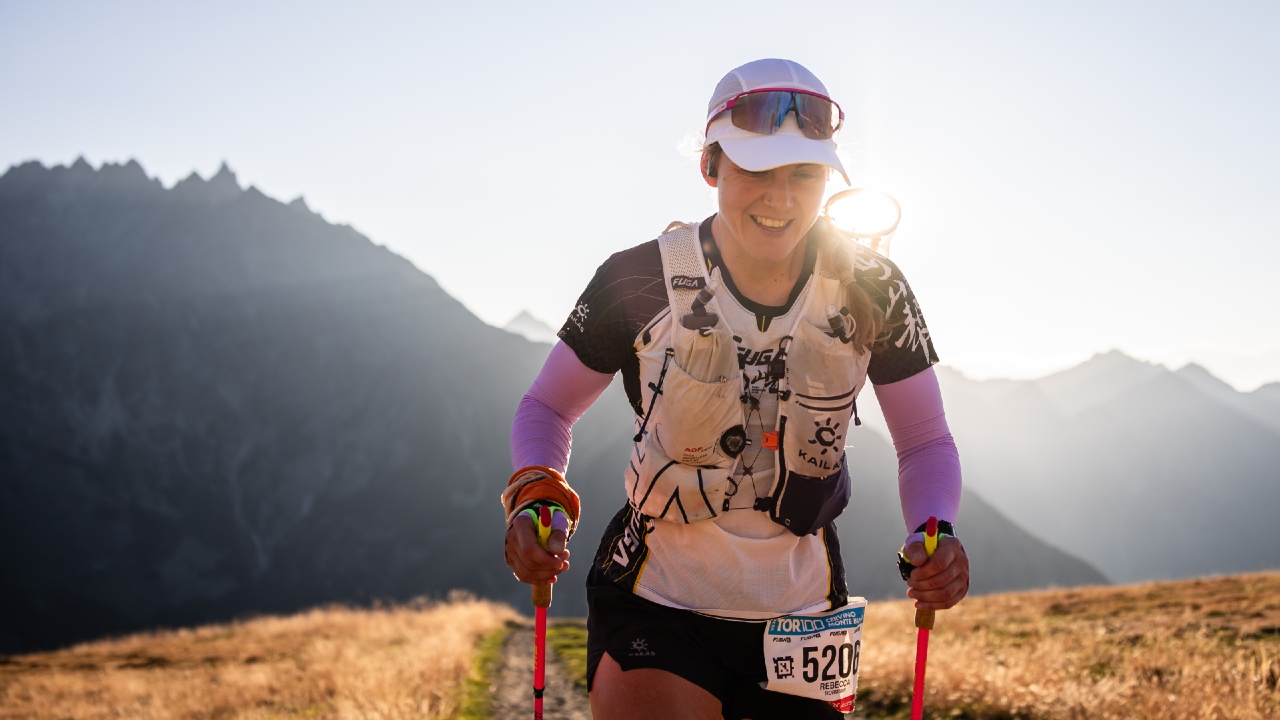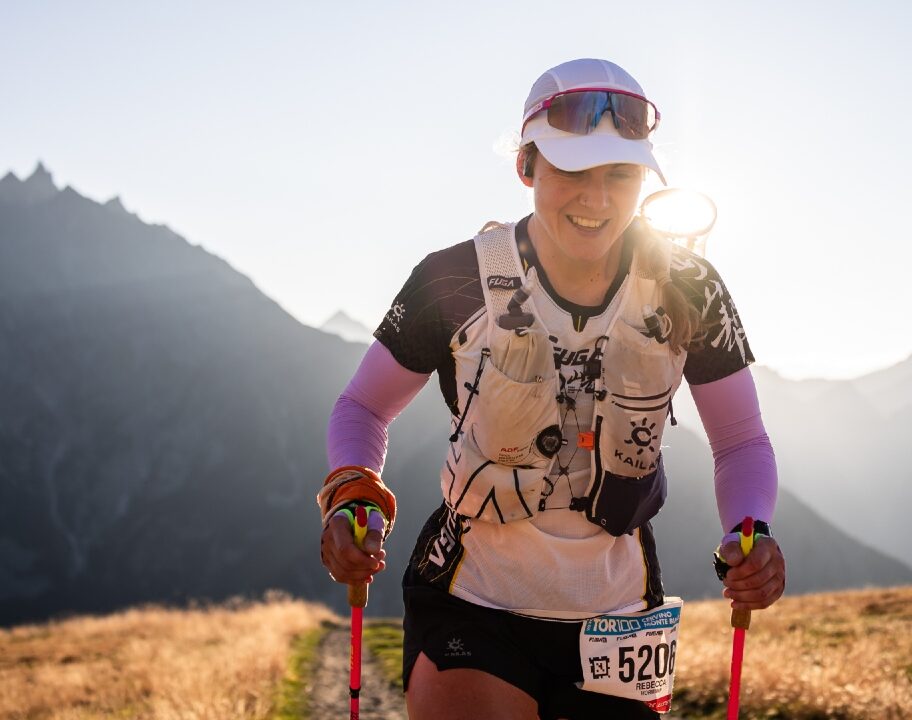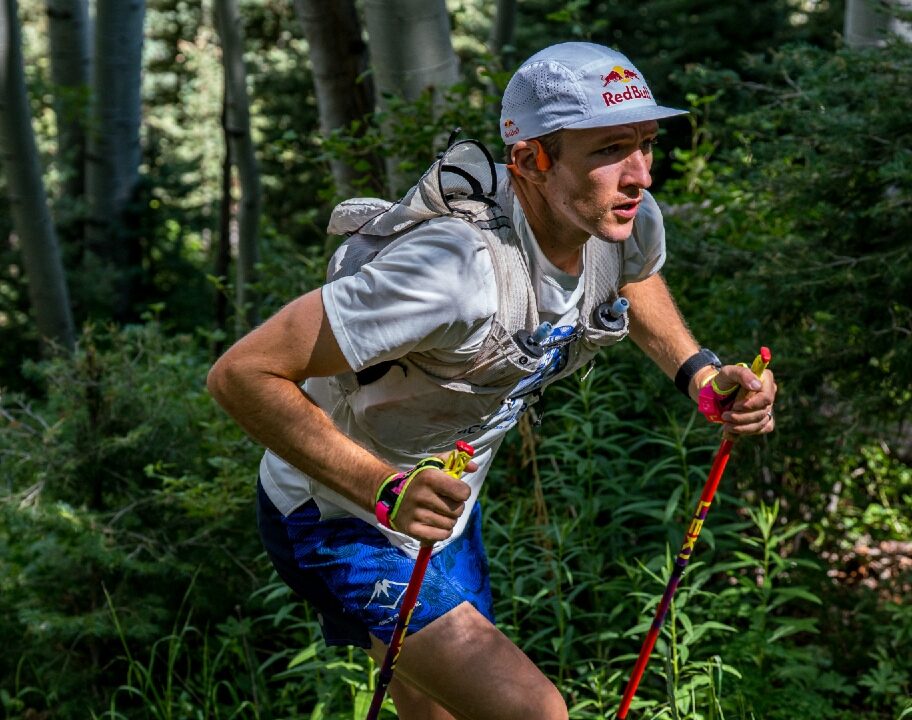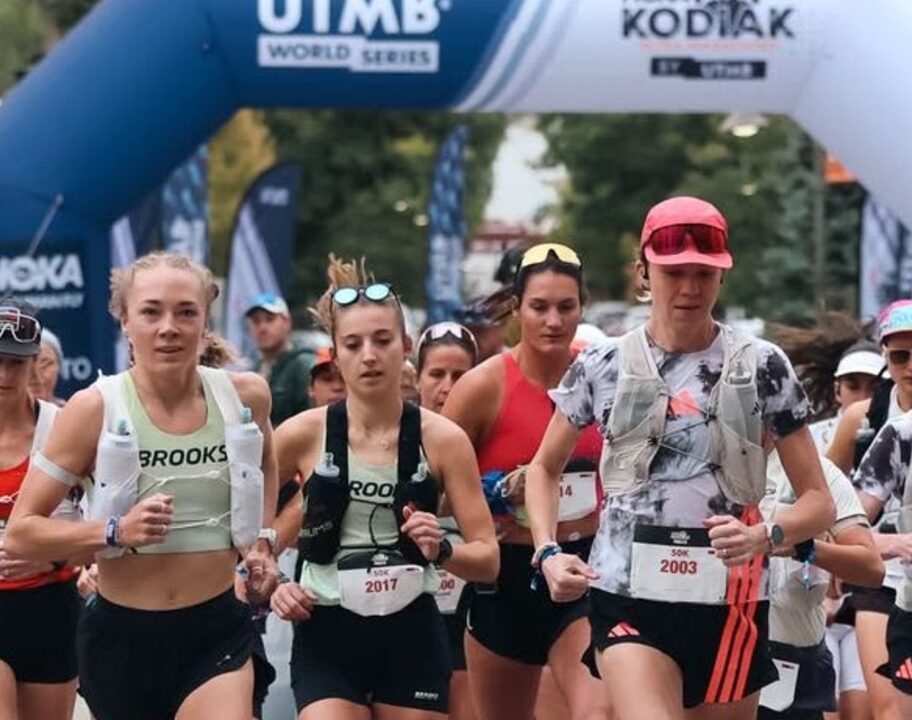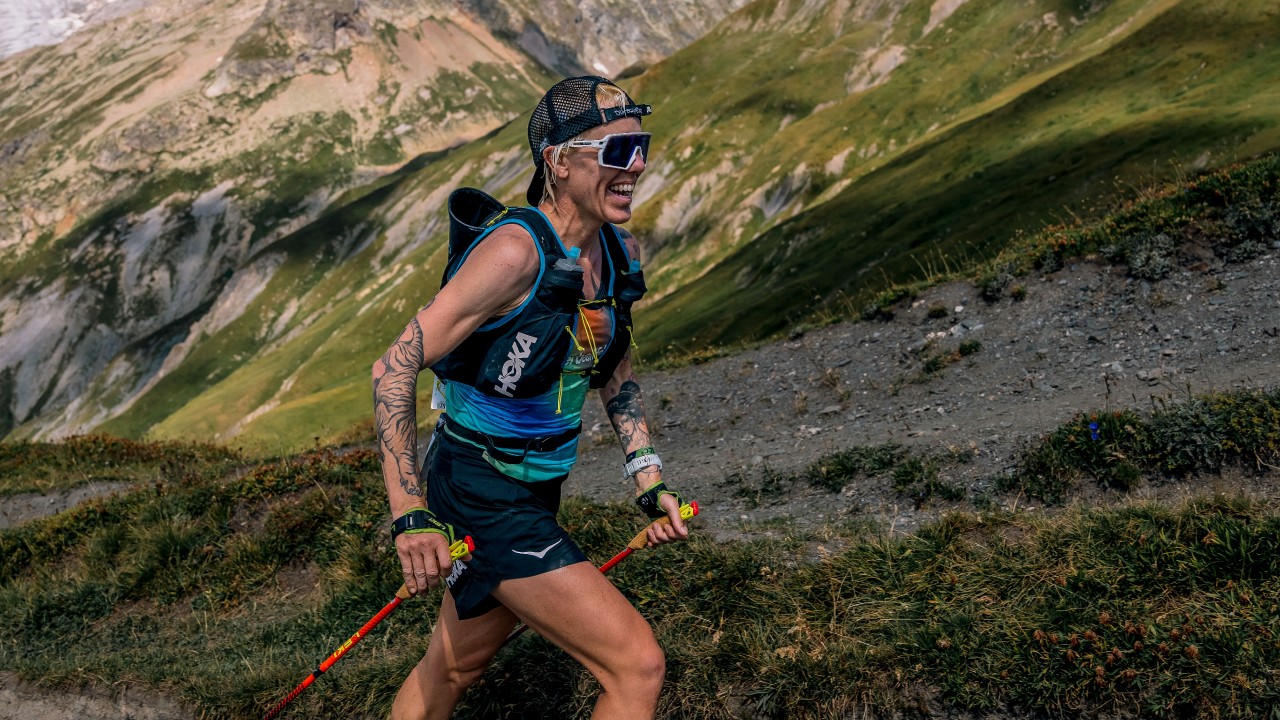


When Rachel Entrekin crossed the line at the 2026 Cocodona 250 in 56:09:48, she had not only shattered the course record but become the first woman ever to win the race outright.
The sheer scale of the performance immediately placed it among the greatest ultramarathon achievements in recent years.
But buried inside the training and heart-rate data behind the run was one detail that stood out above almost everything else.
She was attacking the descents.
While many ultrarunners use downhill sections to recover, conserve energy and protect damaged legs, Entrekin appeared to treat them as opportunities to gain time.
And according to data released by COROS, some of those downhill efforts pushed her heart rate beyond 170 beats per minute.
A different approach to ultrarunning
Conventional ultra wisdom often centres around restraint.
Run the climbs carefully. Protect the legs on descents. Keep the effort controlled and avoid spikes that can become catastrophic deep into a race.
Especially over 250 miles.
But Entrekin’s preparation for Cocodona suggested something different entirely.
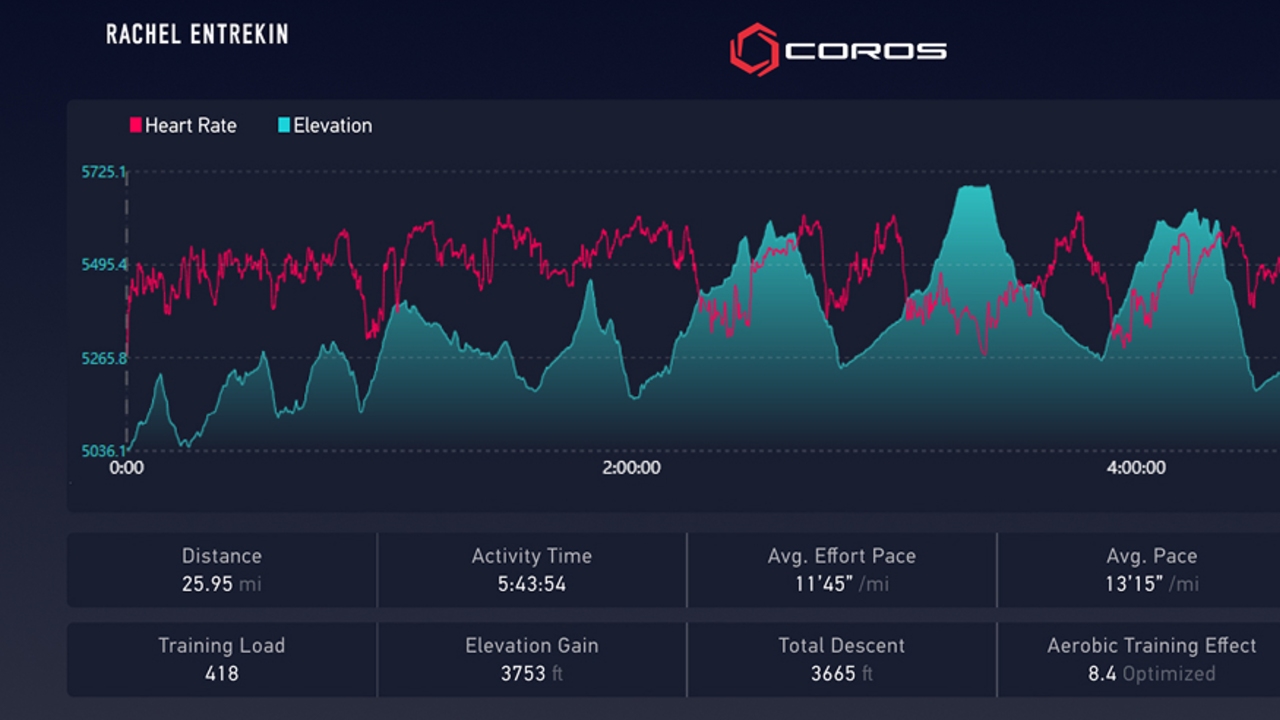
During one five-hour training run in February featuring 3,753 feet of climbing, Entrekin averaged 147 beats per minute while moving at roughly 13:15 per mile pace across mountainous terrain.
Yet the most revealing data came once the trail pointed downward.
Instead of backing off, Entrekin’s heart rate regularly surged above 170bpm as she aggressively trained the eccentric load that downhill running places on the body.
You can see the detail in the graphic below.
The strategy became one of the defining principles of her Cocodona build.
Conserve energy climbing. Push when gravity takes over.
Training to race fast, not survive
The downhill approach formed part of a broader training philosophy that separated Entrekin from many of her competitors.
Between December 1, 2025 and May 1, 2026, she accumulated 1,711.63 miles and more than 329 hours of training. Significant numbers, but not unusually high by elite ultrarunning standards.

What stood out more was how intentionally the work was distributed.
Rather than endless back-to-back mileage, many weeks consisted of only four to five sessions with deliberate recovery days built in afterwards. Her focus appeared less about accumulating fatigue and more about preparing her body for the exact demands Cocodona would impose.
That specificity also showed up in her heart-rate distribution.
According to COROS, only 50.7% of her training came in zones one and two, unusually low for an elite ultrarunner. Meanwhile, 44.5% came in zones three and four, with another 4.8% at VO2 max or above.
In other words, Entrekin was not simply preparing to endure Cocodona.
She was preparing to run it aggressively.
Why the descents mattered
Cocodona’s terrain creates a unique challenge.
The race features huge amounts of climbing across Arizona’s mountainous desert terrain, but it also contains long runnable descents where athletes can either gain enormous amounts of time or completely destroy their legs.
Entrekin’s strategy suggested she viewed those sections as opportunities rather than risks.
And the results support that theory.
Although her opening half was predictably fast, one of the defining characteristics of her course-record performance was how well she sustained pace late into the race while others faded dramatically.
That durability became especially important after Jerome, when fatigue and sleep deprivation began stacking up.
if you’d like to take a closer look at the stage-by-stage detail and figures from Rachel’s actual race at Cocodona then click here.
According to COROS, Entrekin later relied on two thoughts to continue driving forward: improving her own second-half split from the previous year, and a simple mantra:
“Why not me?”
Rewriting what is possible
Perhaps the most remarkable aspect of Entrekin’s performance is that even she did not initially believe a run this fast was achievable.
Using spreadsheets and projected splits before the race, she repeatedly calculated a best-case finish time of around 61 hours and 50 minutes.
Instead, she obliterated the barrier entirely.
The data behind her Cocodona victory paints a picture of an athlete who refused to follow conventional ultra templates. The carefully controlled recovery days. The unusual heart-rate distribution. The downhill aggression. The highly specific preparation.
Everything pointed toward one goal.
Not surviving Cocodona.
Winning it.